Book Review: Break the Mold - 5 Tools to Conquer Mold and Take Back Your Health by Jill Crista, ND
Last updated: June 2026 Reading time: 12 minutes
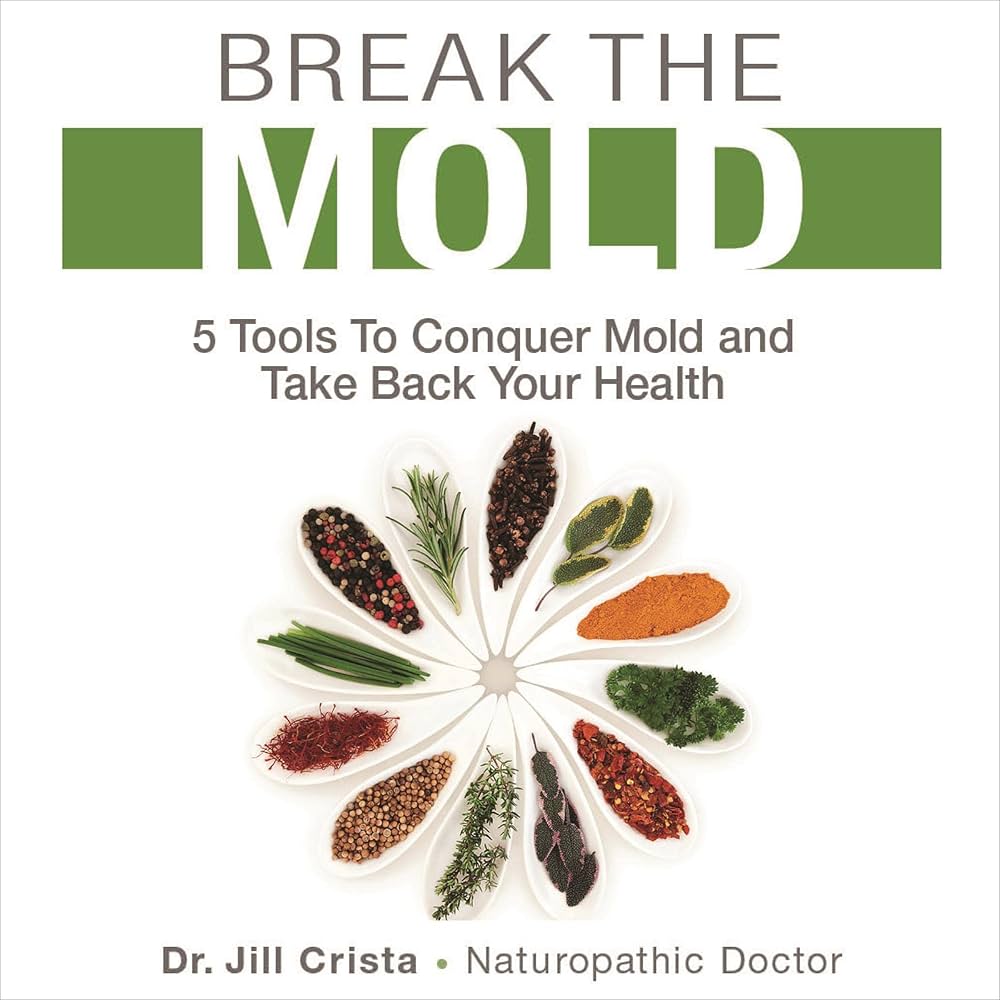
Mold illness has a literature problem. Most of the credible writing on it is dense, clinical, and aimed at practitioners. The books accessible enough for patients often trade rigor for simplicity in ways that cost people time and money. Jill Crista's "Break the Mold" is an attempt to solve that. A naturopathic doctor who spent years treating mold-ill patients, she wrote the book she wished her patients could hand to their families: enough explanation to be believed, enough protocol to actually start.
The result is a genuinely useful guide for people early in their mold-illness journey, and an honest complement to the more clinical work in Neil Nathan's "Toxic." Where Nathan writes from the perspective of a practitioner who has seen the sickest patients and built an advanced protocol around CIRS and Shoemaker's work, Crista writes more like a teacher. The tone is warmer, the framework simpler, and the entry point lower. That is both its strength and its limit.
Crista organizes the book around five tools: Avoid, Ventilate, Eat, Nutrients, and Detox. The framework is easy to remember and easier to start on than the full Shoemaker sequence. For someone newly diagnosed, or newly suspicious, this book can move them from overwhelmed to oriented in a weekend's read.
This review takes the book on its own terms. It steelmans what Crista argues, honestly assesses where the evidence holds and where it doesn't, and tells you who will actually benefit from reading it.
Who Crista Is and Why the Naturopathic Frame Matters
Jill Crista is a naturopathic doctor with a clinical focus on mold and mycotoxin illness. Her practice experience is the engine of this book. She is not a researcher building from published trials. She is a clinician who has treated hundreds of mold-ill patients, watched what worked, and codified it into a teachable framework. That's worth holding in mind as you read.
Naturopathic medicine's approach to mold illness differs from the more rigidly protocol-driven Shoemaker model in a few important ways. It tends to emphasize supportive care across multiple systems simultaneously, including diet, drainage, and foundational lifestyle factors, before reaching for stronger interventions. It also tends to treat the liver, gut, and lymphatic system as drainage pathways that need to be open before aggressive binding or antifungals can work without making the patient feel worse. This "open the drain before pushing the water" logic is clinically reasonable and matches what integrative practitioners observe, even if the formal trial evidence for sequencing mold treatment this way is sparse.
Crista also writes from the understanding that mold illness is frequently underrecognized and underdiagnosed. She devotes time to explaining how conventional medicine often misses it, which means her reader is often someone who has been told they are fine by doctors who didn't test for mycotoxins. She validates that frustration without feeding paranoia. That is harder to do than it sounds.
The Five Tools: What Crista Actually Recommends
The book's structure is the framework: AVEND. Avoid, Ventilate, Eat, Nutrients, Detox.
Avoid covers the exposure side. Crista spends real time here because exposure reduction is the intervention most often skipped. Sick patients focus on treatments and supplements while continuing to live or work in moldy environments. Her argument is that no downstream protocol works without upstream exposure control. She walks through what mold assessment looks like, when to test, what testing approaches she prefers, and how to evaluate whether a building is safe to inhabit. This section is genuinely practical and often the most useful in the book for readers whose home or workplace has never been properly assessed.
Ventilate addresses airflow, air filtration, and the building-level changes that reduce ongoing mycotoxin load. For people who can't immediately move or remediate, this section gives actionable steps: improving fresh air exchange, running high-quality HEPA filtration, and reducing indoor humidity. For air filtration guidance that goes deeper into product selection, the best air purifier for mold detox guide covers the technical criteria.
Eat is the section most distinctive to Crista's naturopathic approach. She recommends an anti-mold diet that reduces dietary mycotoxin load and supports the liver and gut as detoxification organs. This means lowering grain intake (especially corn, wheat, and peanuts, which carry significant mycotoxin contamination at commodity scale), reducing sugar that feeds fungal overgrowth, and prioritizing foods that support detox pathways. The dietary guidance is practical and grounded in known food-mycotoxin data. It isn't a fringe claim that corn is contaminated with aflatoxins and fumonisins: regulatory bodies in multiple countries monitor this.
Nutrients is where Crista gets protocol-specific without veering into dangerous territory. She discusses the antifungal and drainage-support roles of specific nutrients and herbs, including glutathione support, B vitamins, N-acetylcysteine, and various herbal antimicrobials. She frames these as support for the body's own detoxification rather than as pharmaceutical alternatives. The evidence base here varies. Some of these interventions have solid mechanistic rationale and meaningful human data. Others are primarily supported by animal studies, practitioner experience, and reasonable biological plausibility. Crista does not overstate the clinical trials, which gives the reader a reasonable expectation.
Detox addresses the binding and elimination phase. Binders like activated charcoal, clay, and cholestyramine (the pharmaceutical option endorsed by Shoemaker) are covered, along with Crista's preferred sequencing. She is clear that binders should follow drainage support, not lead it. For a wider look at binder options and their evidence base, the best binders for detox guide covers the comparison across protocols.
The framework is its own strongest argument: five words, five phases, a logical sequence, and a low enough barrier that someone newly diagnosed can start reading on a Tuesday and have a plan by Thursday. That matters for a patient population that is often years into seeking help.
Where the Science Holds
The dietary sections are on solid ground. Mycotoxin contamination of commodity grains and legumes is real and documented at the regulatory level. Reducing those food sources for someone with active mold illness is a reasonable and low-risk intervention.
The logic of exposure control is airtight. No practitioner in this space, from Shoemaker to Nathan to functional medicine physicians, disputes that ongoing environmental exposure prevents recovery. Crista's emphasis on this is not a soft or naturopathic opinion. It is a hard prerequisite that the medical literature on CIRS fully supports.
The drainage-before-detox sequencing also has good mechanistic backing, even if the formal RCT evidence for the exact sequence is thin. Mobilizing toxins with binders when elimination pathways are compromised is a recognized risk in clinical practice, and the cautious approach of opening drainage first is supported by practitioner consensus and biological reasoning, if not by large randomized trials.
Some of her nutrient recommendations land on firmer ground than others. Glutathione and NAC are among the better-studied supportive interventions in toxic-exposure contexts. B vitamins in methylation support have a solid mechanistic rationale for people with MTHFR variants, which are overrepresented in the mold-ill population.
The section on sleep and nervous system regulation is practically useful and underemphasized in most mold books. Crista correctly identifies that the mold-ill patient's nervous system is typically in a state of chronic activation, and that supporting sleep and lowering inflammatory burden supports every other intervention. This aligns with the broader literature on chronic illness and allostatic load.
Where the Evidence Is Thinner
Crista's herbal antimicrobial recommendations are where the most evidence-weight is carried by practitioner experience and case-report level data. Oregano oil, berberine, undecylenic acid, and related compounds have demonstrated antifungal activity in lab settings and some clinical case series. Controlled trials in mold-ill human populations are sparse. That doesn't make them wrong choices, but a reader should calibrate expectations accordingly. These are reasonable clinical tools for an integrative practitioner, not proven first-line treatments with FDA-level evidentiary support.
The book also covers mold's relationship to symptoms quite broadly. Crista connects mold to a wide range of complaints, including cognitive symptoms, fatigue, mood instability, hormonal disruption, and immune dysregulation. The mechanistic reasoning for these connections is generally coherent, and there is published research linking mycotoxin exposure to systemic effects beyond the respiratory tract. But the clinical picture of "mold illness" as a unified syndrome with a clear diagnostic boundary remains contested in mainstream medicine. Crista's clinical framing is more expansive than what most academic medical institutions would currently endorse.
This is not a reason to dismiss the book. It's a reason to read it as one honest practitioner's synthesis of a genuinely unsettled area, rather than as a settled medical consensus. That's a fair position for a book written by a clinician in the naturopathic tradition, and the distinction matters for readers calibrating how much weight to give various claims.
The AVEND framework is also primarily Crista's own clinical organization. It is not drawn from a published treatment protocol validated in a trial. This makes the framework teachable and useful, but not the same thing as an evidence-based protocol in the way Shoemaker's VCS and cholestyramine work has been documented. Anyone pursuing advanced treatment should use this book as a foundation, not a ceiling. For the clinical depth that a more severely ill patient needs, Neil Nathan's work remains the more rigorous companion. The Neil Nathan Toxic review covers the clinical protocol in detail.
How This Fits a Real Mold Protocol
For someone who suspects mold illness and is just starting to piece together what to do, this book is a more accessible entry point than Nathan's "Toxic" and a more grounded one than most of what fills the functional-medicine supplement space on this topic.
The mold protocol covers the full spectrum of approaches at MadWorldDetox, including both the Crista framework and the Shoemaker-based clinical approach Nathan represents. These aren't competing methodologies so much as different rungs on the same ladder. Crista gives you the foundational rungs: clean up the exposure, support the drainage, eat to reduce ongoing load, add targeted nutrients, then bind. Nathan gives you the advanced rungs when the foundational work isn't enough.
The mycotoxin symptoms guide is a useful read before or alongside this book for anyone still figuring out whether mold is the right frame for what they're experiencing. Crista covers symptoms throughout the book, but the guide gives a standalone reference for the diagnostic picture.
If you are working through the Shoemaker protocol overview, Crista's dietary and nutrient guidance can run in parallel as supportive care. The two frameworks are not in conflict. Shoemaker's work is more precise on the immunological mechanism (CIRS, the cytokine and TGF-beta dysregulation) and provides specific testing and pharmaceutical interventions. Crista's work is broader on the lifestyle and nutritional support side. Together, they cover more ground than either alone.
For air quality support, the best air purifier for mold detox guide translates Crista's general HEPA and ventilation guidance into specific product recommendations and technical criteria.
Who Should Read It
Read it if:
- You are newly diagnosed or newly suspecting mold illness and need a framework that orients you without drowning you
- You want to understand the naturopathic approach to mold recovery, including diet, drainage, and nutrient support, before or alongside more clinical protocols
- You have already worked through the exposure-reduction and foundational steps and want a clear guide to the nutrient and detox phase
- Your household members or support network need to understand what you're dealing with. This book is readable enough to hand to someone who has never heard of mycotoxins
Read with caution, or pair with a practitioner, if:
- You are severely ill, with complex neurotoxic symptoms, significant cognitive impairment, or documented CIRS. Crista's framework is a foundation, not a ceiling, and the sicker you are, the more you need the clinical depth Nathan represents
- You are inclined to treat herbal antimicrobials as equivalent to pharmaceutical antifungals. They are not. If you have diagnosed fungal infections, that distinction matters
- You want to use the nutrient recommendations without professional guidance. Most of them are low-risk at sensible doses, but interactions with medications and individual biochemistry can complicate things
The Bottom Line
"Break the Mold" is a good book doing exactly what it sets out to do: give the mold-ill patient a teachable, organized, actionable framework that doesn't require a medical degree to understand. Crista's AVEND system is logical and clinically reasonable, built from years of treating real patients and translated into language that empowers rather than overwhelms.
The honest limits are there and real. The herbal antimicrobials rest more on practitioner consensus and in-vitro data than on human trials. The AVEND framework is Crista's own clinical synthesis, not a validated protocol in the trial-registration sense. The book's scope is broad enough that it occasionally treats contested clinical territory as more settled than the formal evidence base would support.
None of that makes it a bad book. It makes it what it is: an expert clinician's best synthesis of a genuinely difficult and underserved area, written for people who need a map, not just a symptom list.
Read it early in your mold journey, run the AVEND framework, and when you need more, you'll know where to look.
Related MadWorldDetox Guides
- Mold Protocol - The full MadWorldDetox overview of mold illness approaches
- Mycotoxin Symptoms Guide - Identifying the signs that mold may be the root cause
- Shoemaker Protocol for Mold Illness - The clinical CIRS protocol in depth
- Best Air Purifier for Mold Detox - Filtration criteria and product picks for mold recovery
- Best Binders for Detox - Comparing activated charcoal, clay, cholestyramine, and more
- Neil Nathan Toxic - Book Review - The clinical companion to this book
Products Mentioned
The Book:
Break the Mold: 5 Tools to Conquer Mold and Take Back Your Health - Jill Crista, ND. Practical naturopathic guide to mold recovery, organized around the AVEND framework (Avoid, Ventilate, Eat, Nutrients, Detox).
Affiliate Disclosure: This review contains affiliate links. We may earn a small commission on purchases made through these links at no additional cost to you. We only recommend books and products we've researched and believe provide value. Our assessment of the book itself is independent of any affiliate relationship.
Last updated: June 2026