Book Review: Toxic: Heal Your Body from Mold Toxicity, Lyme Disease, Multiple Chemical Sensitivities, and Chronic Environmental Illness by Neil Nathan, MD
Last updated: June 2026 Reading time: 16 minutes
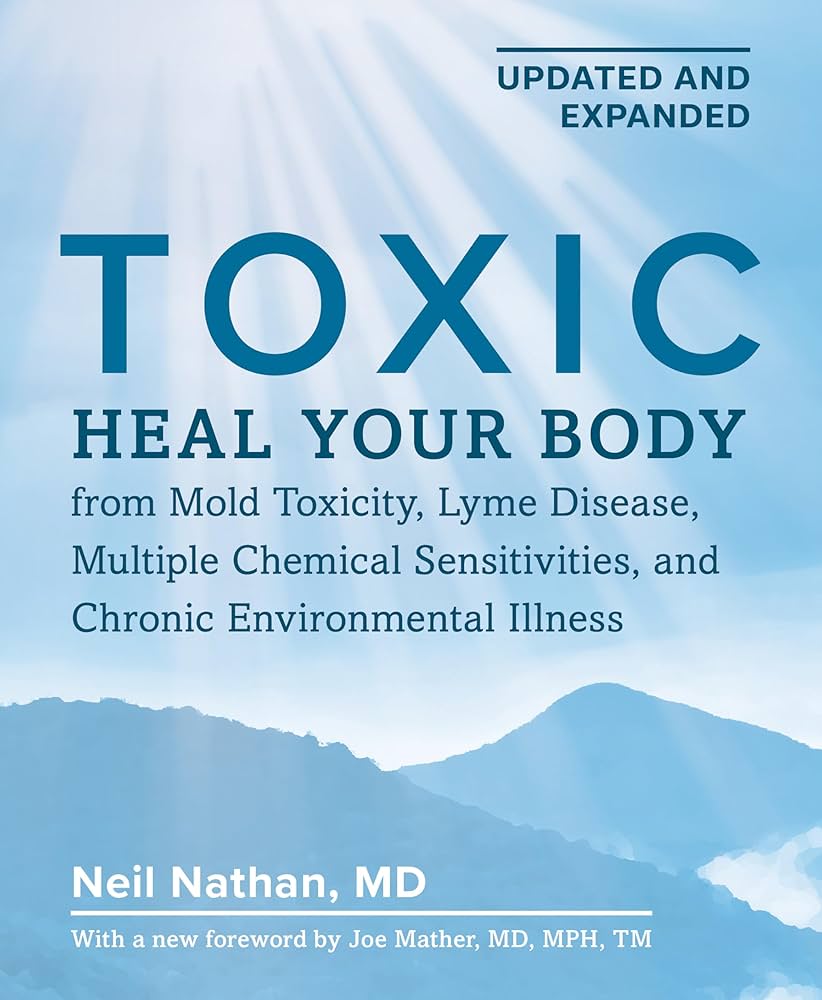
Some patients are genuinely difficult. Their symptoms don't fit any clean diagnosis. They've been tested, medicated, referred, dismissed, and eventually handed a verdict that amounts to "we can't find anything wrong." Then they come across a doctor who takes a different kind of history, orders different labs, and says: your building might be killing you.
Neil Nathan, MD has spent decades in that room. A board-certified physician with backgrounds in family medicine and functional medicine, Nathan worked extensively with patients carrying impossible charts, people sick enough to be disabled, clear-headed enough to describe their symptoms in careful detail, and consistently failed by standard workups. "Toxic" is what he learned.
The book argues that a cluster of overlapping chronic illnesses, including mold toxicity, Chronic Inflammatory Response Syndrome (CIRS), tick-borne illness, and Multiple Chemical Sensitivities (MCS), affects far more people than mainstream medicine recognizes, shares common biological mechanisms, and requires a clinical approach that standard medicine doesn't yet offer at scale. Nathan is not a fringe figure making fringe claims. He trained alongside Ritchie Shoemaker, the physician who built the foundational diagnostic framework for CIRS, and he cites published research throughout.
This is not an easy book to read neutrally, because the patient population it describes is one that conventional medicine has largely failed. A fair review has to honor that failure while still asking hard questions about what the evidence actually supports.
Who Neil Nathan Is
Nathan's credibility within this space matters, because mold illness and CIRS attract both rigorous clinicians and practitioners making claims far beyond their evidence base.
He spent years working in family medicine before moving into integrative and functional medicine, and he trained in the Shoemaker Protocol, the most documented diagnostic and treatment approach for CIRS. His practice in Fort Bragg, California served patients who had traveled long distances because they couldn't find help locally. His patient load was self-selected: the treatment-refractory cases, the multi-system symptomatic patients that other clinicians had exhausted their diagnostic options on.
That clinical experience gives the book unusual depth. Nathan is describing patients he actually treated over years, not constructing a theoretical framework. He saw what helped, what didn't, and what the order of operations needed to be. That practical grounding is one of the book's genuine strengths.
The Framework: Overlapping Illnesses With a Common Biology
Nathan's central argument is that several conditions that look different on the surface share a core mechanism: a dysregulated immune and inflammatory response triggered by biotoxin exposure.
CIRS and mold illness. Chronic Inflammatory Response Syndrome, originally defined and studied by Ritchie Shoemaker, is the condition where certain genetically susceptible individuals cannot properly clear biotoxins from water-damaged buildings. The toxins in question come primarily from mold species, but also from actinomycetes bacteria and other organisms that thrive in moisture-damaged environments. In roughly a quarter of the population, a specific HLA-DR genetic variant means the immune system can't tag these biotoxins for normal clearance. They circulate, trigger ongoing inflammatory signaling, and produce a wide-ranging symptom constellation: cognitive impairment, fatigue, joint pain, mood disturbance, shortness of breath, unusual thirst and urination patterns, light and sound sensitivity, and others.
Lyme and co-infections. Nathan covers tick-borne illness in parallel with mold, arguing that the two conditions are frequently co-occurring and mutually reinforcing. Active or undertreated Lyme disease can drive the same kind of immune dysregulation that mold illness produces, and patients with both exposures are harder to treat than patients with either alone. His approach to Lyme is to take the patient's clinical picture seriously even when standard testing is negative, a stance that puts him at odds with current CDC and IDSA positions but aligns with a growing community of Lyme-literate physicians.
Multiple Chemical Sensitivities. MCS is the state where a patient's nervous system has become sensitized to levels of environmental chemicals that most people tolerate without symptoms. Nathan treats this not as a psychological phenomenon but as a biological one, involving the phenomenon of neural sensitization, where repeated low-level exposures progressively lower the nervous system's tolerance threshold until ordinary exposures become disabling. His approach draws on the work of Theoharis Theoharides on mast cell activation and Martin Pall on oxidative stress pathways.
The book's key structural claim: these conditions aren't really separate. A patient with mold illness often has Lyme co-infections or MCS alongside it, and treating one while ignoring the others frequently fails. Nathan's framework insists on looking at the whole picture before deciding on a treatment sequence.
The Diagnostic Picture: Testing That Standard Medicine Doesn't Order
One of the most practically useful sections of the book covers the laboratory markers Nathan uses to evaluate patients with suspected CIRS or mold illness.
The Shoemaker Protocol includes a battery of biomarkers that reflect the downstream effects of biotoxin exposure on the body: TGF-beta-1, MMP-9, VIP, VEGF, C4a, MSH, and several others. These are not obscure or invented labs. They are ordered through standard reference laboratories, though they are not included in routine workups and require a physician familiar with interpreting them in this context. The HLA-DR haplotype test, which identifies genetic susceptibility to CIRS, is straightforward genetic testing.
Nathan also covers the Visual Contrast Sensitivity test developed by Shoemaker, a visual function assessment sensitive to biotoxin neurological effects that serves as a rapid screening tool. It's not diagnostic on its own, but it flags patients who warrant further investigation.
The honest appraisal of this testing: it's real medicine using real laboratory assays, not energy-field measurements or live blood analysis. The interpretive framework, developed primarily by Shoemaker over decades of clinical practice, remains contested in mainstream medicine. The criticism from conventional immunologists and allergists is that the specific pattern of markers Nathan describes as characteristic of CIRS hasn't been validated through large prospective controlled trials. Nathan's position, and Shoemaker's before him, is that the clinical evidence from thousands of patients is compelling enough to act on while that validation is pursued.
Both positions are defensible. The frustrating reality is that the patients don't have time for the research timeline.
The Protocol: Sequence Matters
Nathan is emphatic on one point that distinguishes his approach from both standard medicine and some integrative approaches: order of operations.
Rushing into aggressive detox, or treating Lyme while living in a moldy building, or addressing mold while underlying nervous system sensitization is at its most acute, tends to make patients worse. Nathan describes many cases where prior treatment attempts failed because the sequence was wrong, not because the interventions were.
His general sequence works roughly as follows. First, identify and leave the moldy environment, or remediate it thoroughly enough to be safe. Nothing else works if the exposure continues. Second, stabilize the nervous system and address the most acute symptoms. For patients with severe MCS or CIRS, some basic support for inflammation and cellular function comes before aggressive binders or antifungals. Third, implement the Shoemaker binder protocol, which centers on cholestyramine or Welchol to interrupt the biotoxin recirculation through the enterohepatic cycle. Fourth, address remaining CIRS markers with Shoemaker's sequential treatment protocol. Fifth, treat Lyme or co-infections if present and if the patient is stable enough. Sixth, support ongoing recovery.
This sequencing reflects something important about how biotoxin illness works. The gut recycles biotoxins through bile. Binders interrupt that cycle. But binders in a patient whose nervous system is in acute overload, or who is still inside the building that's making them sick, accomplish limited good and can produce significant reactions. The protocol architecture has clinical logic behind it.
The primary binder Nathan emphasizes is cholestyramine, a prescription cholesterol-binding resin with decades of safety data. He discusses Welchol as an alternative. Alongside this he covers supportive approaches: VIP nasal spray (a prescription peptide involved in several of the affected biological pathways), antifungals where appropriate, and a range of supportive supplements for the cellular and mitochondrial dysfunction that CIRS produces. Our best binders for detox guide covers the broader landscape of binder options.
Where the Evidence Is Solid
Nathan's framework rests on a body of work that has more published support than most conventional physicians realize.
The basic biology of CIRS is well established. Water-damaged buildings produce biotoxins. Those toxins cause inflammatory responses. Certain HLA-DR variants correlate with inability to clear specific biotoxins. Shoemaker has published peer-reviewed work on this, and the specific biomarker abnormalities he identified are reproducible. This is not alternative medicine fantasy; it's immunology that mainstream medicine has been slow to integrate.
The genetic susceptibility piece is solid. HLA-DR typing is standard genetic testing. The correlation between certain HLA haplotypes and chronic inflammatory response to biotoxin exposure has published support. This explains why one person in a moldy office gets sick while a colleague sitting next to them doesn't: it's not hysteria, it's genetics.
Cholestyramine as a binder has a real mechanism. The enterohepatic cycle recirculates bile-soluble compounds, including biotoxins, back into circulation after the liver tries to eliminate them. Bile acid sequestrants like cholestyramine interrupt that cycle. This is basic pharmacology. The application to biotoxin illness is the contested part, but the mechanism is not.
The symptom constellation of CIRS is clinically described in enough detail to be recognizable. Brain fog, unusual fatigue, multi-system symptoms, sensitivity to light and sound, ice-pick headaches, temperature dysregulation, shortness of breath in unusual contexts. For clinicians trained to recognize it, the pattern is distinct enough to generate a working hypothesis worth testing.
Neural sensitization in MCS has a biological basis. The literature on central sensitization, mast cell activation, and oxidative stress pathways in chemically sensitive patients is not large but it's real. Martin Pall's nitric oxide/peroxynitrite vicious cycle hypothesis, which Nathan discusses, offers a biochemical model for how low-level chemical exposures can produce progressive nervous system sensitization. It hasn't been confirmed at the level of randomized controlled trials, but it's a plausible and internally consistent mechanism.
Where the Evidence Is Emerging or Contested
Intellectual honesty requires the harder accounting alongside the supportive one.
The Shoemaker Protocol's clinical validation is thin by conventional standards. Most of the published work comes from Shoemaker himself or his collaborators. Independent replication by research groups with no stake in the outcome has been limited. This doesn't mean the protocol doesn't work; the clinical evidence from patients is extensive. It means the level of confidence appropriate to the evidence is different from what Nathan's tone sometimes implies.
The HLA-DR testing story is more complex than Nathan sometimes conveys. While HLA haplotypes clearly matter for many immune responses, the specific claim that these variants determine CIRS susceptibility in the precise way Shoemaker described is still being worked out in immunology. The genetic susceptibility is real, but the determinism can be overstated.
Lyme-literate medicine occupies contested territory. Nathan is clearly sincere and well-read on tick-borne illness, and the genuine controversy within infectious disease medicine over "chronic Lyme" is worth taking seriously. Mainstream infectious disease holds that standard treatment courses clear active infection and that persistent symptoms reflect post-treatment syndrome rather than ongoing infection. Lyme-literate physicians point to patient populations who remain clinically ill after standard treatment and respond to extended antibiotic courses. Both sides have data. Nathan's position puts him clearly in the Lyme-literate camp, and readers should know that's a contested position, not a fringe one, but not a consensus one either.
VIP (vasoactive intestinal peptide) nasal spray is a prescription intervention with limited public data. VIP is a real neuropeptide involved in multiple biological pathways affected in CIRS. Shoemaker developed a VIP protocol based on his clinical experience. The evidence base for it is primarily observational. It's not a fringe compound but it's also not a validated treatment for CIRS in the randomized trial sense.
The cost and access barrier is real and Nathan doesn't adequately address it. The full Shoemaker/Nathan workup, including specialty lab panels, genetic testing, VIP nasal spray (not covered by most insurance), and extended follow-up with a trained clinician, is financially prohibitive for many patients. This is not a criticism of the clinical approach, but the book presents a protocol that most sick people will not be able to access as written.
The Mold Environment Question: The Step Most Books Skip
Nathan's most practically important point may be the one that sounds simplest: if you're still in the building, no protocol will work.
The reason this matters for a detox audience is that most detox frameworks treat the environment as a given and focus on what you do to your body inside it. Nathan treats environment as the first variable. You can take every binder, every supplement, every prescription medication in the Shoemaker sequence, and if you're sleeping in a water-damaged building or working in one eight hours a day, the exposure load continues and the treatment fights the current.
The practical implication is harder than it sounds. Mold remediation is expensive and frequently done inadequately. Moving is disruptive and not always possible. Many patients become reactive enough that new environments also present problems initially. Nathan doesn't have a simple answer to this, and the book is honest about that. But naming the environment as the first treatment target is a clinical insight that most practitioners, even integrative ones, underweight.
Our mycotoxin symptoms guide covers the symptom patterns to look for, and the best air purifier for mold detox guide addresses what's possible when environment modification is partial.
Who Should Read This Book
Read it if:
- You or someone close to you has been chronically ill without a clear diagnosis, particularly with brain fog, multi-system symptoms, and sensitivity to chemicals or environments that most people tolerate without trouble
- You have confirmed or suspected mold exposure and want to understand the clinical framework for how to address it systematically
- You're a practitioner or informed layperson who wants a working map of CIRS biology, even if you're going to question parts of the framework
- You've worked through basic detox protocols and feel there's something deeper driving your symptoms that those protocols didn't resolve
- You're dealing with Lyme or co-infections and want perspective from a clinician who takes persistent symptoms seriously
Approach carefully if:
- You're looking for the kind of protocol you can implement entirely without a clinician. Some of Nathan's most important interventions, cholestyramine, VIP, the specific sequencing of CIRS treatment, require physician involvement. The book gives you a framework, but this isn't a self-treatment manual for serious biotoxin illness.
- You're at an early stage of illness where basic diet, gut, and toxin-load interventions haven't been tried. Nathan's protocols are for complex, refractory cases. Starting there without the basics covered is like running for a specialist before seeing a GP.
- You're prone to finding one explanatory framework and fitting everything into it. CIRS is real and underdiagnosed. It's also not the root of every chronic symptom pattern.
How This Fits a Real Detox Practice
For most people working through a detox protocol, the Shoemaker/Nathan framework is relevant at a specific decision point: when foundational interventions haven't resolved the picture.
If you've cleaned up diet, supported gut health, done parasite work, reduced chemical exposures, addressed sleep, and still have brain fog, exhaustion, multi-system symptoms, and unusual reactivity to your environment, mold and biotoxin illness belongs on the differential.
The practical steps Nathan points toward, short of the full clinical protocol, are:
Test your environment. An ERMI (Environmental Relative Moldiness Index) test provides a quantitative measure of mold burden in your home compared to a population sample. It's orderable without a physician. If your ERMI is elevated, that's a finding that changes the clinical picture.
Consider the HLA-DR test. Knowing whether you carry a susceptibility haplotype doesn't diagnose CIRS, but it contextualizes why some people who spend time in the same building have very different health outcomes.
Use binders thoughtfully. Even outside the full Shoemaker protocol, good quality binders taken away from food and supplements can support biotoxin elimination through the gut. The Shoemaker protocol mold illness guide covers how binders fit into that specific framework. For general binder use, our best binders for detox guide is the starting point.
Read the mold protocol alongside this book. Our mold protocol gives a practical entry point for someone who suspects mold illness and wants to know where to begin.
For those who suspect Lyme is part of the picture, the Lyme disease detox support guide provides context on how detox support layers with whatever treatment course is being pursued.
The Bottom Line
"Toxic" is the most clinically grounded book in a space that often lacks that quality. Nathan writes as a physician who has seen these patients for decades, who trained under the physician who developed the primary diagnostic framework, and who is trying to communicate a complex clinical model to a lay audience without losing the complexity that matters.
The honest verdict: the CIRS framework is real medicine with real published backing, at a level of validation that falls short of the RCT standards conventional medicine applies to interventions it wants to adopt, but far above the evidence base for many treatments that mainstream medicine does adopt. The patient population Nathan describes is genuinely underserved. The protocol he describes is sequenced with clinical logic and doesn't rely on implausible mechanisms.
Where the book asks for more confidence than is warranted, it's usually in the direction of optimism about what the protocol will deliver, rather than implausible biology. That's a forgivable kind of overreach for a clinician whose patient population has frequently been failed everywhere else.
For anyone dealing with chronic, unexplained, multi-system illness, particularly with environmental sensitivities and a history of possible mold or tick exposure, this is the most useful map currently available in book form. Read it with the awareness that it reflects one experienced clinician's framework, that clinical experience is genuinely valuable, and that the full protocol will require clinical help to implement well.
The patients Nathan wrote this for have usually read everything they could find and tried many things before arriving at this book. Most of them will recognize something true in what he describes. That recognition is itself information.
Related MadWorldDetox Guides
- Mold Protocol - Where to start if you suspect mold illness, with practical entry points before a clinical workup
- Shoemaker Protocol Mold Illness Guide - The foundational diagnostic and treatment framework Nathan trained in and built on
- Mycotoxin Symptoms Guide - Identifying the symptom patterns associated with biotoxin exposure
- Best Air Purifier for Mold Detox - Reducing ongoing airborne mycotoxin exposure when environment modification is partial
- Lyme Disease Detox Support - How detox support layers with tick-borne illness treatment
- Best Binders for Detox - Cholestyramine, activated charcoal, zeolite, and how to use them
Products Mentioned
The Book:
Toxic: Heal Your Body from Mold Toxicity, Lyme Disease, Multiple Chemical Sensitivities, and Chronic Environmental Illness - Neil Nathan, MD. The clinical framework for CIRS, mold illness, Lyme, and chemical sensitivities from a physician who trained with Ritchie Shoemaker and worked with the most complex cases.
Affiliate Disclosure: This review contains affiliate links. We may earn a small commission on purchases made through these links at no additional cost to you. We only recommend books and products we've researched and believe provide value. Our assessment of the book itself is independent of any affiliate relationship.
Last updated: June 2026