Book Review: Healing Lyme: Natural Healing of Lyme Borreliosis and the Coinfections by Stephen Harrod Buhner
Last updated: June 2026 Reading time: 15 minutes
The standard medical playbook for Lyme disease runs short. You get a few weeks of doxycycline, perhaps another round if symptoms persist, and then the conversation often hits a wall. For patients whose symptoms continue months or years after treatment, mainstream medicine has a frustrating answer: chronic Lyme disease is not recognized as a clinical entity, and there is nothing further to offer.
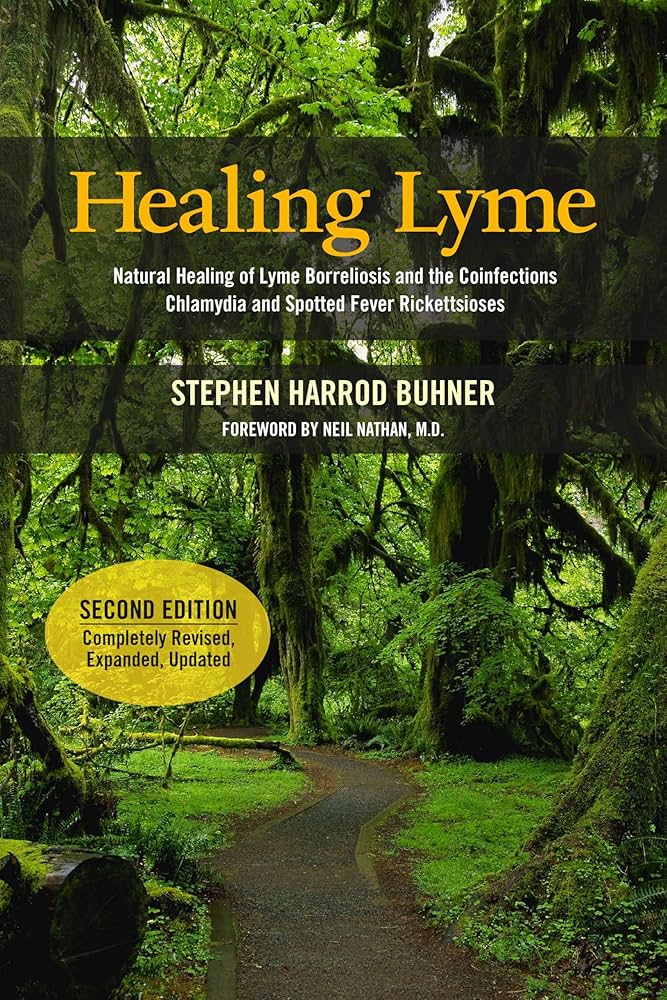
Stephen Harrod Buhner is not interested in that wall. "Healing Lyme," first published in 2005 and expanded in this second edition, presents a detailed herbal and immunological framework for addressing Lyme borreliosis and its coinfections without the antibiotic-only model. Buhner spent years working with Lyme patients and researching the ethnobotanical record, and the book he produced is dense, technically specific, and genuinely serious. It is not a wellness pamphlet. The core claim is that certain plants, particularly Japanese knotweed, cat's claw, and andrographis, possess antimicrobial and cytokine-modulating properties that address Borrelia infection and the immune cascade it triggers in ways that antibiotics alone do not.
The foreword is written by Neil Nathan, MD, one of the most credible voices in mold and complex-illness medicine. If you have read our review of Nathan's own book, Toxic, you already know the weight that name carries. His endorsement here signals something important: this is a book that serious clinicians in the integrative-medicine world take seriously, whatever its limitations.
This review examines what Buhner actually argues, what the herbal science supports, and where the evidence gets thin.
Who Is Stephen Harrod Buhner
Buhner is an herbalist, author, and researcher in the tradition of ethnobotany, the study of plants as medicine across human cultures. He is not a medical doctor and does not claim to be. His background is in research herbalism: reading deeply in phytochemistry, immunology, and pharmacology, then mapping what the scientific literature says about specific plants against what traditional herbalists across cultures have used those plants for.
He has written extensively on plant-based antimicrobials, on antibiotic resistance, and on the interface between herbal medicine and modern microbiology. His approach is closer to a scholar-practitioner than to the intuitive herbalist archetype, and "Healing Lyme" reflects that. The second edition is heavily footnoted, references primary research, and discusses Borrelia's biology at a level of detail that requires some patience from the general reader.
This matters for how you read the book. Buhner does not ask you to simply trust tradition. He marshals peer-reviewed literature alongside ethnobotanical evidence and explains his reasoning. Whether his reasoning holds up is a fair question, but the method is honest.
The Core Thesis: Borrelia Is Not Just a Pathogen Problem
Buhner's central insight is that Lyme disease is not, fundamentally, just an infection to kill. It is also an immune dysregulation problem.
Borrelia burgdorferi is a sophisticated organism. It uses multiple strategies to evade the immune system: altering its surface proteins, hiding inside cells, suppressing certain immune signaling, and triggering inflammatory cascades that damage host tissue more than the bacteria itself does. Much of the suffering in chronic Lyme, Buhner argues, comes not from the bacteria directly but from the immune response the bacteria provoke, specifically the cytokine storm and the neurological inflammation that follows.
This is not a fringe idea. Mainstream research on Lyme pathogenesis largely agrees that immune dysregulation is central to persistent symptoms. Where Buhner diverges from mainstream medicine is in arguing that herbal compounds can modulate this immune response in targeted ways, and that some plants have direct activity against Borrelia that antibiotics alone do not achieve.
The protocol he describes has two components: an antimicrobial layer that directly targets the infection, and an immune-modulating layer that calms the inflammatory cascade and supports the tissues most commonly damaged. The two are inseparable in his framework. Addressing one without the other, he argues, is why so many Lyme patients cycle through improvement and relapse.
The Protocol in Practice
The core herbs in Buhner's protocol are Japanese knotweed, cat's claw, and andrographis. Each serves a distinct function, and the protocol is additive rather than interchangeable.
Japanese knotweed (Polygonum cuspidatum / Reynoutria japonica). The cornerstone of Buhner's approach. The plant is an abundant invasive species across the Northern Hemisphere, and its root contains resveratrol and a complex of related stilbenes. Buhner argues that knotweed crosses the blood-brain barrier, targets Borrelia's affinity for collagen-rich tissues, modulates cytokine production, and provides both anti-inflammatory and neuroprotective effects. The blood-brain-barrier penetration is particularly relevant to neurological Lyme, where patients experience cognitive symptoms, nerve pain, and mood disturbance.
Cat's claw (Uncaria tomentosa). A vine native to the Amazon basin with a long history of use in Peruvian traditional medicine. Buhner uses it for its immunomodulatory alkaloids, particularly its apparent ability to stimulate immune function selectively without driving the inflammatory cascade that worsens Lyme symptoms. Some research supports anti-inflammatory and immunostimulant effects, though the evidence is preliminary in the Lyme context.
Andrographis (Andrographis paniculata). Used extensively in Ayurvedic and Chinese medicine. Buhner includes it for its reported direct antimicrobial activity and its action on Borrelia spirochetes in laboratory studies. He also notes its use in supporting the liver, a relevant consideration given the metabolic burden of any extended antimicrobial protocol.
The second edition expands considerably on coinfection treatment: Babesia, Bartonella, Ehrlichia, and others. Each coinfection receives its own herb list, rationale, and dosing guidance. This expansion is one of the book's most valuable additions, since coinfections are increasingly recognized as central to why some Lyme patients fail standard antibiotic treatment.
Supporting herbs round out the protocol. Eleuthero for adrenal support, smilax for cytokine modulation, colloidal silver in specific contexts, and various others appear throughout, each with an explanation of its proposed role.
Dosing is specific, in some cases quite high compared to standard supplement recommendations. Buhner advocates quality sourcing, notes significant batch variability in commercial preparations, and is candid that the protocol requires attention and adjustment.
What the Herbal Evidence Actually Says
Buhner's plant selections are not arbitrary. Each has a research basis, though the strength of that basis varies.
Japanese knotweed's resveratrol content has attracted significant scientific attention for its effects on inflammation, mitochondrial function, and several cardiovascular markers. The compound's ability to cross the blood-brain barrier is documented. What is less established is whether the concentrations achieved through oral supplementation are sufficient to replicate the effects observed in cell studies or whether the stilbene profile of whole knotweed root acts differently from isolated resveratrol.
Andrographis has genuine anti-inflammatory data. Studies have examined its compounds in several inflammatory and infectious contexts, and it is one of the more-researched medicinal herbs in the Asian pharmacopeia. A small number of studies have examined andrographolide (its primary active compound) against Borrelia in cell culture. Cell culture results do not automatically translate to clinical outcomes, but they are not nothing either.
Cat's claw carries a reasonably solid traditional record and some supportive modern research on immune-modulating alkaloids. Its anti-inflammatory credentials are better established than its specific antimicrobial profile in the Lyme context.
The ethnobotanical argument Buhner makes throughout is worth taking seriously: these plants have been used as antimicrobials and immune agents across cultures for centuries, and that record reflects empirical observation across many generations of use. It does not guarantee efficacy against Borrelia specifically, but it is not the same as an unsubstantiated claim.
Where the Evidence Gets Thinner
Honesty requires naming what the evidence does not support.
There are no randomized controlled trials of Buhner's full herbal protocol in Lyme patients. The individual herbs have studies, many of them promising, but compound protocols tested in controlled conditions simply do not exist for this approach. Practitioners who use Buhner's protocol are working from a coherent rationale and clinical observation, not from a completed evidence base.
The in vitro studies on andrographis and knotweed are real but limited. Cell culture is a useful early signal, not a clinical proof. What kills bacteria in a petri dish may be metabolized before reaching tissues, may not achieve effective concentration, or may behave entirely differently in a living system with the coinfections, tissue damage, and immune dysregulation that characterize complex Lyme cases.
Buhner himself is candid about this in places. He is an herbalist making the strongest honest case for his approach, not a clinical trialist presenting completed outcomes data. The distinction matters.
There is also the complexity problem. The protocol is demanding. Sourcing quality herbs consistently, managing dosing across multiple compounds, adjusting for coinfections, monitoring for adverse reactions: this is not something most people should attempt without guidance from a practitioner who understands both the protocol and the patient's full picture. Buhner recommends working with a practitioner, and that recommendation is not perfunctory.
Some of the causal language in the book runs ahead of the data. Claiming specific mechanistic actions at the cellular level, based on the constituents found in plant preparations, involves leaps the current research does not fully support. The proposed mechanisms may be correct; they have not been verified in clinical Lyme populations.
Neil Nathan's Foreword and the Clinical Overlap
Neil Nathan's endorsement in the foreword is worth addressing directly. Nathan is a physician who has treated hundreds of complex Lyme and mold patients and whose own book is one of the more medically credible treatments of these conditions in the integrative space. His recognition of Buhner's work signals that the core framework of herbal immune modulation has found a place in serious clinical practice.
Both men start from the same premise: Lyme and its coinfections are immune-dysregulation problems as much as pathogen problems, and the antibiotic-only approach leaves significant suffering on the table. The difference is methodological. Nathan layers pharmaceuticals alongside herbal support within a rigorous testing framework; Buhner works from an herbal-only premise. In the hands of a thoughtful practitioner, they are complementary.
For patients navigating complex Lyme or mold-Lyme overlap, the lyme disease detox support guide and our mycotoxin symptoms guide offer essential context for placing Buhner's protocol within a broader picture.
How This Fits a Real Detox Practice
Lyme is not a detox problem in the simple sense. You cannot cleanse out Borrelia with binders and bile support. But the overlap with MadWorldDetox's territory is real and worth naming clearly.
Die-off reactions are significant. When the herbal protocol begins killing spirochetes or modulating the inflammatory response, Herxheimer reactions are common, sometimes severe. This is the same principle as any antimicrobial or pathogen-clearing work: the release of dead organisms and their byproducts can temporarily worsen symptoms before improving them. Our die-off symptoms guide is directly applicable here, and pacing the protocol to allow for clearance is essential.
Binders become relevant. In the context of Lyme and its frequent comorbidity with mold exposure, binders help capture biotoxins and endotoxins during die-off phases and reduce recirculation. Buhner does not emphasize this in the same terms, but it aligns with the broader logic of supporting elimination pathways during any aggressive antimicrobial phase.
The detox context often matters. Many chronic Lyme patients carry significant toxic burden alongside the infection: mold exposure, heavy metals, pesticide accumulation. These loads compound immune dysregulation and can blunt the body's response to any protocol. Addressing those parallel burdens, through the lenses covered in our lyme disease detox support guide and mycotoxin symptoms guide, is part of why some Lyme patients see faster progress than others on similar protocols.
Supporting elimination before intensity. Before escalating any antimicrobial protocol, supporting the bowels, liver, and lymphatics matters. The best binders for detox guide and the die-off guide both address the preparation work that reduces the burden of clearing.
Who Should Read It
Read this book if:
- You or someone you know is dealing with Lyme disease, suspected Lyme, or post-treatment Lyme symptoms and you want the most thorough herbal framework available
- You are a practitioner working with complex Lyme patients and want to understand the herbal rationale in depth
- You appreciate a technically engaged author who explains his reasoning rather than asking for trust
- You already have a practitioner in place and want to understand what the herbal protocol literature actually says
- You are interested in plant antimicrobials and cytokine modulation as a field, independent of the Lyme application
Approach it carefully, and work with a practitioner, if:
- You are considering self-treating a serious Lyme or coinfection case without medical oversight. The complexity of coinfection management, Herxheimer severity, and drug-herb interactions makes solo navigation genuinely risky
- You are on anticoagulants or immunosuppressants. Several of the herbs in the core protocol have documented interactions with blood-thinning and immune-modifying medications
- You are pregnant or breastfeeding. Many of the protocol herbs are contraindicated in pregnancy
- You expect a quick protocol. This is an extended, demanding framework designed for complex, long-standing illness. Impatience will produce nothing
The Bottom Line
"Healing Lyme" occupies unusual ground. It is technically serious enough to be cited by integrative physicians, ethnobotanically grounded enough to carry real credibility as herbal medicine, and candid enough about its own evidence base to avoid the credulous cheerleading that marks lesser wellness books. Neil Nathan's foreword situates it appropriately: not as a cure, but as the most rigorous herbal framework available for a condition where the standard medical toolkit frequently comes up short.
Its limitations are real. Controlled clinical trials do not exist for the full protocol. Some of the mechanistic claims run ahead of the supporting evidence. The complexity of the program makes self-administration without guidance a serious risk. And the absence of blinded outcomes data means the protocol's effectiveness rests on clinical observation and a well-reasoned biological framework rather than the kind of evidence that would satisfy a systematic reviewer.
Steelmanning Buhner's position fairly: the plants he has chosen have documented antimicrobial and anti-inflammatory properties, many Lyme patients have failed antibiotic-only treatment, the immune-dysregulation model of chronic Lyme is scientifically coherent, and the ethnobotanical record of these plants is substantive. The case for exploring this approach, especially under practitioner guidance, is serious and deserves to be treated that way.
The honest read: a landmark in herbal Lyme medicine, produced by a scholar who did his homework. Worth reading by anyone navigating this territory, with eyes open about where its evidence base ends and the clinical leap begins.
Related MadWorldDetox Guides
- Lyme Disease Detox Support - Supporting the body during Lyme and coinfection treatment
- Book Review: Toxic by Neil Nathan, MD - The clinical mold and Lyme framework whose author wrote the foreword here
- Best Binders for Detox - Capturing biotoxins and die-off byproducts during antimicrobial protocols
- Die-Off Symptoms Guide - Understanding and managing Herxheimer reactions
- Mycotoxin Symptoms Guide - The mold burden that frequently runs alongside chronic Lyme
Products Mentioned
The Book:
Healing Lyme: Natural Healing of Lyme Borreliosis and the Coinfections, 2nd Edition - Stephen Harrod Buhner. The definitive herbal framework for Lyme borreliosis, cytokine modulation, and coinfection treatment.
Affiliate Disclosure: This review contains affiliate links. We may earn a small commission on purchases made through these links at no additional cost to you. We only recommend books and products we've researched and believe provide value. Our assessment of the book itself is independent of any affiliate relationship.
Last updated: June 2026