Book Review: Detoxify or Die by Sherry A. Rogers, MD
Last updated: June 2026 Reading time: 16 minutes
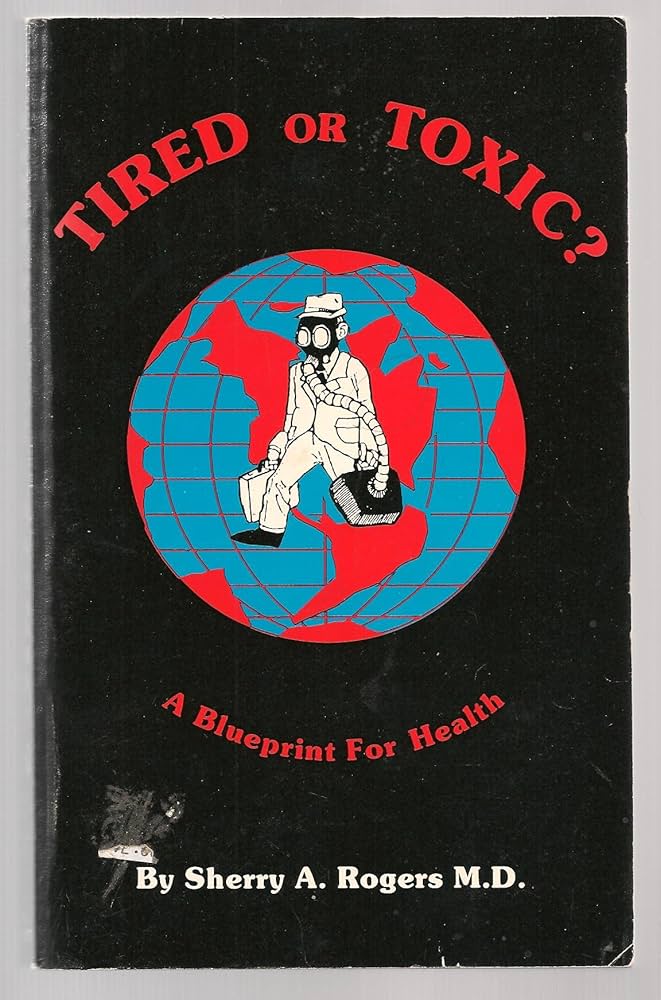
Most detox books are written by journalists, wellness coaches, or natural-health entrepreneurs who synthesized other people's work into an accessible program. "Detoxify or Die" is not that kind of book. Sherry A. Rogers is a board-certified internist and fellow of the American College of Nutrition who spent decades in environmental medicine treating patients that mainstream medicine had given up on. She is not interested in gentle protocols or gradual lifestyle upgrades. The title is not metaphor.
Her argument, stripped down: the human body is now carrying a chemical burden that would have been unimaginable even fifty years ago. Hundreds of industrial compounds have accumulated in our tissues over the course of our lifetimes. These chemicals were never tested in combination. Many are lipophilic, meaning they dissolve into fat, which means they concentrate in fatty tissues and the brain. They disrupt cellular function, block detox enzymes, and contribute to the spectrum of chronic disease that medicine now manages symptom by symptom without ever asking what put it there. Until you remove them, you are treating on top of a fire.
The centerpiece of her proposed solution is far-infrared sauna therapy, which she calls "depuration", the mobilization of stored chemicals through sweat. Combined with a targeted nutrient protocol designed to support the body's own detox pathways, Rogers argues this is the one intervention that can actually move the needle on accumulated chemical load. Everything else in conventional wellness, she suggests, is working at the margins.
Whether she's right, where the evidence is solid, and where she asks more of it than it gives: that's what this review is for.
Who Sherry Rogers Is
Medical credentials matter more for this book than for most, because Rogers's core case rests on the reality of chemical body burden and its clinical consequences, ground that requires someone who actually saw patients.
Rogers spent years in private practice in Syracuse, New York, specializing in environmental medicine and chemical sensitivity. She is a diplomate of the American Board of Family Practice and a fellow of the American College of Nutrition, and she trained under practitioners who were doing clinical environmental medicine when it was still considered fringe. She has written more than a dozen books, many of them focused on connecting chronic disease to chemical and nutritional root causes rather than suppressing symptoms.
Her newsletter, Total Wellness, has run for decades and has become the main channel through which she updates practitioners on new research and clinical findings. That she continued doing clinical work while writing books distinguishes her from the majority of health authors who speak largely from theory.
This matters because "Detoxify or Die" is not an academic text and it's not a wellness book. It reads like a very well-read clinician talking to a patient she considers intelligent enough to handle the full picture. The voice is urgent. It does not soften things for palatability. If you've spent years with mystery symptoms that specialists have shrugged at, the tone lands.
The Core Argument: Chemical Overload Is the Root
Rogers's thesis begins with a fact that is not disputed: synthetic chemicals have entered the human body in massive quantities since the mid-twentieth century, and many of them stay there.
Organochlorines, PCBs, dioxins, heavy metals like mercury and lead, phthalates, pesticide residues, solvents: biomonitoring studies have been confirming for decades that these compounds appear in virtually every person tested, regardless of geography, diet, or lifestyle. The CDC's National Report on Human Exposure to Environmental Chemicals is the most systematic documentation of this, and each new edition finds the same thing: industrial-era chemistry is inside us.
Rogers's clinical argument goes a step further. These stored chemicals, she contends, are not inert passengers. They interfere with cytochrome P450 enzymes, the liver's primary detox machinery. They compete with nutrient cofactors. They generate free radicals, promote inflammation, and disrupt hormonal signaling. They are not causing one disease; they are degrading the cellular environment across every organ system, so the particular disease a given person develops depends on their genetic vulnerabilities and the specific chemicals they've accumulated.
This is the part of her argument that has the most traction in contemporary research. Environmental medicine and functional medicine have increasingly converged on the same picture: chronic disease is downstream of accumulated metabolic and environmental insult, and treatment that only addresses the downstream is working against the current.
Rogers is more forceful about the causal role of these chemicals than the evidence strictly permits. She writes at times as though body burden is the single most important variable in chronic illness, which oversimplifies considerably. Genetics, diet, stress, sleep, microbial health, and many other factors shape disease. But her version of the argument, that chemical accumulation is seriously underweighted in standard medicine and that removing it meaningfully changes outcomes, is not a fringe claim.
The Depuration Protocol: Far-Infrared Sauna at the Center
Rogers's signature contribution is putting far-infrared sauna at the center of a structured detox program. She calls the process depuration, a term from industrial water treatment meaning the removal of impurities from a substance, and she distinguishes far-infrared from conventional sauna deliberately.
Conventional saunas heat air, which heats skin. Far-infrared saunas emit radiant energy that penetrates tissue more deeply before converting to heat, allowing the body to produce a robust sweat at lower ambient temperatures. For people who can't tolerate the intense heat of a traditional Finnish sauna, many chronically ill patients can't, far-infrared offers a more accessible alternative while still producing the sweat output that is the point.
Rogers's case for sweating as a detox route runs like this. Lipophilic chemicals concentrate in fat. When the body heats and begins to sweat, it mobilizes those compounds. Sweat analysis studies have found pesticide residues, heavy metals, and solvent compounds in sweat that are measurable and distinct from what appears in urine. The skin is the largest organ of elimination, and it is radically underutilized in modern life. A far-infrared sauna session done correctly may move chemicals that no other protocol reaches.
She recommends regular sauna use, typically daily or near-daily sessions in her program, combined with a specific protocol around each session: adequate hydration and electrolyte replacement beforehand, and a structured nutrient protocol before and after to support the liver and kidneys in processing what the sweat mobilizes.
The research on far-infrared sauna for chemical depuration is real but limited. Some peer-reviewed studies have found measurable excretion of BPA, heavy metals, and certain solvents in sweat during infrared sauna sessions. Occupational health research on PCB and solvent exposure has also documented sweat as a genuine elimination route. The evidence is enough to take seriously; it is not enough to declare the intervention fully characterized.
The Nutrient Foundation
Rogers's protocol pairs sauna with specific nutritional support, and this is the second major pillar of the book.
The logic is straightforward: the liver and kidneys handle what the sauna mobilizes, and both need specific nutrients to function at full capacity. If you sweat out chemicals and your glutathione is depleted, your liver's capacity to conjugate and eliminate those compounds is compromised. You've moved the toxins but not necessarily out.
The nutrients Rogers focuses on most heavily include magnesium (which she describes as depleted in virtually the entire modern population and essential to hundreds of enzymatic reactions), glutathione and its precursors (especially N-acetyl cysteine, as glutathione itself does not absorb well orally), phosphatidylcholine for membrane repair and liver support, and a spectrum of antioxidants to handle the oxidative load that detox generates.
She also addresses far-infrared sauna session management with care: the concern that mobilizing stored chemicals without sufficient nutrient support and hydration can leave people feeling worse, not better. This is a legitimate consideration. Far-infrared sauna done carelessly, especially in someone with a high chemical load, can produce symptoms reminiscent of die-off, headaches, fatigue, brain fog, as compounds enter circulation before the liver can clear them. Rogers's nutrient stack is her answer to this.
The nutrients she recommends have solid underlying science, even where the specific protocol hasn't been subjected to trials. Magnesium's role in enzymatic function is among the best-characterized in nutritional biochemistry. Glutathione's centrality to phase II liver detox is established. Phosphatidylcholine's role in liver health and membrane integrity has good research behind it. The particular doses and combinations she specifies are not the subject of clinical trials, but the individual components are legitimate.
What the Science Supports
Give Rogers credit where the evidence backs her up, because there is a real body of it.
Chemical body burden is documented and consequential. This is no longer a fringe position. Biomonitoring studies going back to the 1980s, and accelerating significantly through the EPA's National Human Adipose Tissue Survey and the CDC's biomonitoring program, have established that synthetic chemicals are present in human tissue across the entire population, including compounds that have been banned for decades (PCBs, DDT metabolites) because they persist in tissue. The link between specific exposures and specific disease outcomes is better established for some compounds than others, but the general case that this burden affects health has moved from environmental medicine into mainstream conversation.
Sweat as an elimination route is real. A number of studies have documented that sweat contains detectable levels of heavy metals, BPA, phthalates, and other compounds. Some research suggests that sweat produces meaningfully different excretion profiles than urine for certain lipophilic compounds. Whether regular sauna use produces clinically significant reductions in body burden over time is less established, but the mechanism is not speculative.
Far-infrared sauna's clinical record. Beyond the detox question, far-infrared sauna has accumulated a reasonable body of research on cardiovascular benefits, pain management, and fatigue in chronic conditions. Several studies in chronic fatigue syndrome and similar presentations have found improvements in symptom scores with regular far-infrared sauna use. This doesn't prove the chemical-depuration mechanism, but it suggests the intervention is doing something useful.
Nutrient depletion in chronic illness is real. Rogers's consistent emphasis on magnesium, glutathione precursors, and other nutrients as depleted in her patient population has parallel in functional medicine and in research showing that oxidative stress and chronic illness both consume antioxidant reserves. Replacing what chronic illness and a processed-food diet depletes is well-grounded.
Where She Reaches Further Than the Evidence Allows
Intellectual honesty requires naming the places where Rogers's framing outpaces the research, because readers who take the book uncritically may make decisions based on a more certain picture than exists.
The causal claims about specific chemical burdens and specific diseases. Rogers writes with clinical authority about chemical loads causing particular conditions. For some exposures, like lead and cognitive impairment or mercury and neurological dysfunction, the evidence is strong. For many of the more diffuse claims connecting aggregate chemical burden to chronic conditions like fibromyalgia or heart disease, the connection is plausible but not proven.
The sufficiency of her protocol. The book's framing can read as though far-infrared sauna plus nutrient support is the primary intervention for serious illness. That is a significant overreach. A person with heart disease, cancer, or autoimmune conditions requires medical care that goes well beyond any sauna protocol. Rogers's work is best understood as addressing a root factor, not as a standalone treatment plan for complex disease.
The elimination route claims. The research on sweat as a detox route is real but the quantitative claims, how much of a person's total body burden can actually be moved via sweat over a realistic timeframe, are not well characterized. Rogers writes about this with more confidence than the studies currently justify. The mechanism is plausible; the clinical magnitude is unknown.
The urgency framing. The "die" in the title reflects Rogers's genuine conviction that chemical accumulation is killing people who would be alive if they'd detoxed. That may be true for some populations, in some circumstances. Presenting it as universally dire can tip into fear-based framing that doesn't serve all readers, particularly those with anxiety or perfectionist tendencies around health.
Her overall position is closer to correct than most of what you'll encounter in mainstream medicine's dismissal of environmental factors. But "closer to correct" is not the same as "fully substantiated."
How This Fits a Real Detox Practice
Strip the book to what's immediately actionable for someone building a real detox stack, and a clear priority list emerges.
The sauna is worth serious investment. If you're working on heavy metal load or chemical sensitivity, far-infrared sauna is one of the better-researched tools you can add. Our best infrared sauna for home detox guide covers models and what to look for, and the infrared sauna tools page goes deeper on protocols.
Nutrients before sweat. Don't start heavy sauna work without ensuring your liver support is in place first. The heavy metal detox protocol at /protocols/heavy-metal lays out sequencing that maps well to Rogers's approach.
Binders belong in the picture. Rogers's sauna sessions mobilize compounds into circulation. A binder protocol during active sauna work helps ensure what's mobilized doesn't recirculate. The best binders for detox guide covers activated charcoal, chlorella, and other options with this use case in mind.
Mercury is Rogers's most referenced metal. The mercury detox protocol addresses the specific considerations around mercury clearance that Rogers covers in depth, including the debate around amalgam removal timing and how to sequence sauna work alongside chelation.
Go slowly if you're sensitive. Rogers warns about this in the book, and it's worth repeating. People with high chemical loads, mold histories, or compromised liver function can have strong reactions to aggressive sauna work. Starting with shorter sessions and building over weeks is not optional for this population.
Who Should Read This Book
Read it if:
- You have chronic health conditions that haven't resolved with standard care, especially anything the medical system has labeled idiopathic or multifactorial
- You've had significant occupational or environmental chemical exposures and have never addressed them
- You're already using or considering an infrared sauna and want the most thorough clinical rationale for the practice
- You can read with discernment: taking the body-burden framework seriously while calibrating the more sweeping causal claims against what's actually been proven
- You want the nutrient-support framework for detox pathways, this is one of the more thorough treatments of that topic in any popular book
Be cautious if:
- You have serious or acute medical conditions that require primary medical management. Rogers's protocol can complement that care; it should not replace it
- You're prone to health anxiety. The book's tone is urgent and its catalog of environmental threats is extensive. Read it as a framework, not as a threat inventory
- You want a soft introduction to detox. This is not that book. Rogers writes for people who have decided to take chemical exposure seriously and want to know what to do about it
- You're pregnant, nursing, or managing a condition that makes heat exposure risky. Far-infrared sauna is not appropriate in all circumstances; confirm with a physician before beginning
The Bottom Line
"Detoxify or Die" is the most serious treatment of chemical body burden you'll find written for a general audience by a practicing clinician. The argument that accumulated synthetic chemicals are a significant and underaddressed driver of chronic disease is well-grounded, and Rogers makes it with more clinical depth than most. The far-infrared sauna depuration protocol has real mechanistic plausibility and a growing evidence base, even if the quantitative claims about burden clearance remain ahead of the research.
Where the book asks more than the evidence gives is in the causal certainty with which it connects specific loads to specific conditions, and in the framing that sauna-plus-nutrients is sufficient for people with serious illness. Read it as a framework and a deep orientation to a problem medicine is only beginning to address seriously, rather than as a comprehensive clinical guide.
The body burden argument is not going away. As biomonitoring research continues and as the long-term consequences of persistent chemical exposure become clearer, the ideas Rogers laid out years ago are moving from the fringe toward the center of how medicine understands chronic disease. Reading this book now puts you ahead of that curve, with appropriate skepticism calibrated to what the science currently supports.
Related MadWorldDetox Guides
- Heavy Metal Detox Protocol - The full sequence for addressing metals, which pairs directly with Rogers's sauna-and-nutrients approach
- Mercury Detox Protocol - Rogers's most-referenced metal, with specific guidance on amalgam timing and chelation sequencing
- Infrared Sauna - In-depth tool guide covering the practice Rogers centers her depuration protocol on
- Best Infrared Sauna for Home Detox - Equipment guide for building the sauna practice Rogers recommends
- Best Binders for Detox - Capturing what sauna sessions mobilize before it recirculates
Products Mentioned
The Book:
Detoxify or Die - Sherry A. Rogers, MD. The clinical case for far-infrared sauna depuration and nutrient-supported removal of accumulated synthetic chemicals.
Affiliate Disclosure: This review contains affiliate links. We may earn a small commission on purchases made through these links at no additional cost to you. We only recommend books and products we've researched and believe provide value. Our assessment of the book itself is independent of any affiliate relationship.
Last updated: June 2026