Book Review: Toxic Superfoods by Sally K. Norton, MPH
Last updated: June 2026 Reading time: 13 minutes
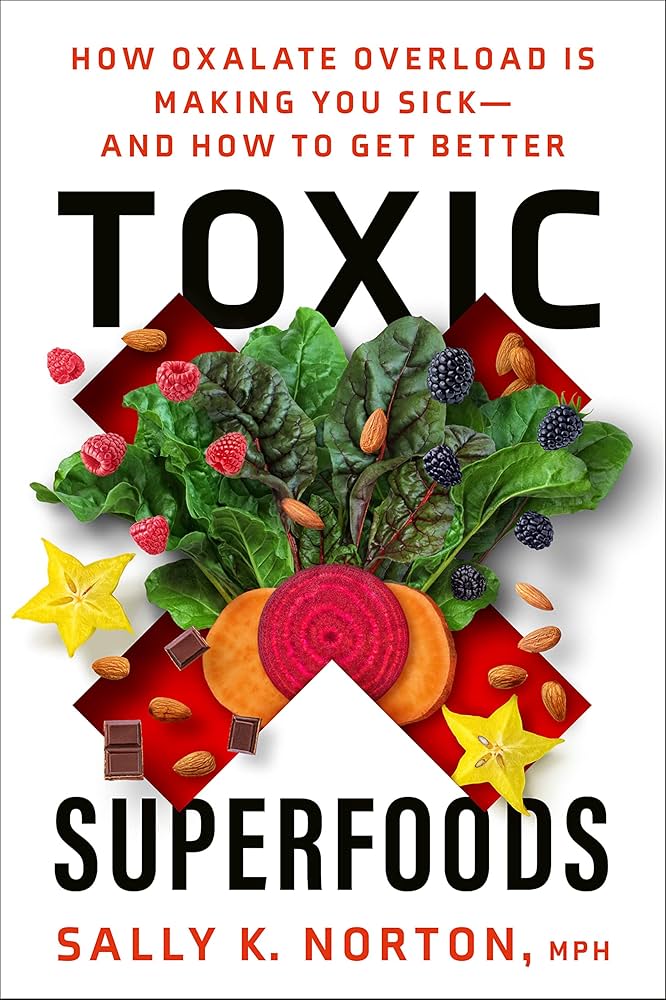
Spinach. Almonds. Dark chocolate. Beets. These are the foods you find on every "eat more of this" list. They appear in smoothie recipes designed by nutritionists, in detox meal plans that promise to support your liver, in the daily habits of people who feel like they're doing everything right.
Sally K. Norton's argument is that for some people, the foods they believe are healing them are quietly building a crystal burden inside their tissues that takes years to produce symptoms and years more to resolve.
The compound at the center of the book is oxalic acid, which plants use as a protective mechanism. When we eat high-oxalate foods regularly, oxalic acid binds to minerals like calcium, forming calcium oxalate crystals that are sharp, insoluble, and capable of lodging in kidneys, joints, connective tissue, bladder, gut lining, and eyes. In Norton's telling, these crystals do not pass through cleanly. They accumulate. They cause inflammation, nerve irritation, and eventually a range of chronic symptoms that rarely get traced back to the spinach smoothie.
Norton spent years in chronic pain before identifying oxalates as the source. She holds a Master of Public Health from Cornell University and spent years as a health promotion professional before turning her research toward this compound. The book is her attempt to take that experience and that research public.
This review covers the case she makes, the science that supports it, where it extrapolates beyond what the evidence currently shows, and how to read it without either dismissing a genuinely underexplored mechanism or adopting a dietary ideology built on a narrower evidence base than the book presents.
What Oxalates Are and Why Norton Thinks They Matter
Oxalic acid is produced by plants as part of their defense chemistry. The compound serves multiple functions in plant biology, and it's present in measurable quantities across many foods, but concentrated in a specific subset: spinach, Swiss chard, beet greens, rhubarb, almonds, cashews, peanuts, sweet potatoes, dark chocolate, and beets, among others.
When oxalic acid enters the human gut, it either binds to calcium in the digestive tract (forming insoluble calcium oxalate that passes through in stool) or gets absorbed into circulation, carried to tissues, and eventually excreted through the kidneys. This is where the standard story ends: some people absorb more, some have lower calcium intake to bind it in the gut, and some end up forming kidney stones. Most clinicians think of oxalate management as a kidney stone issue that applies to a subset of stone-formers.
Norton's thesis extends this significantly. She argues that the crystal formation is not only a kidney event. Calcium oxalate crystals can and do form in other tissues, including joints, connective tissue, the thyroid, the eyes, and the gut wall. When someone with a high lifetime oxalate load shifts to a low-oxalate diet, the body begins releasing stored crystals, a process Norton calls "dumping." This dumping can trigger a wave of transient symptoms: fatigue, mood shifts, pain flares, and a general feeling of destabilization before things improve.
The protocol the book offers follows from this framework. Move to a low-oxalate diet gradually (rapid shifts increase dumping intensity). Prioritize calcium-rich foods eaten with oxalate-containing ones to bind oxalate in the gut. Support the kidneys and the digestive system through the transition. Allow time, sometimes years, for crystal burden to reduce.
The Author's Case: Strongest Where It Lands
Norton's most solid ground is kidney-specific. Calcium oxalate kidney stones are among the most common urological conditions in the world, oxalate's role in their formation is well established, and low-oxalate dietary guidance is standard care for people with a history of calcium oxalate stones. The hyperoxaluria literature (cases of extreme oxalate overload, both genetic and dietary) documents severe tissue damage in kidneys and beyond. This is not fringe territory.
From there, the case for extra-renal crystal deposition has genuine support, though the research is thinner and more scattered. Calcium oxalate crystals have been identified in thyroid tissue, breast tissue, and joint synovial fluid in post-mortem and biopsy studies. Vulvodynia research has explored oxalate as one possible contributing factor, and some women with chronic vulvar pain report significant relief on low-oxalate diets. These are real threads in the medical literature, even if none of them has reached the level of established clinical guidelines.
The dumping hypothesis is the area with the least formal study, but it has mechanistic plausibility. Crystal mobilization during dietary change is documented in the context of gout, where shifts in uric acid levels trigger acute joint crises. If calcium oxalate crystals can be deposited in tissues over years, the possibility that they get dislodged and transit through tissues during a dietary shift is not biologically absurd. The symptom patterns Norton describes match what appears in online communities of people doing low-oxalate protocols, though self-reported community data is not the same as a controlled clinical observation.
The strongest version of the book's argument is this: if you've been eating a high-oxalate diet for years, particularly one that looks healthy on the surface, and if your gut health is compromised in ways that increase oxalate absorption, you may be carrying a crystal burden that is contributing to inflammatory pain, nerve symptoms, and kidney stress, and nobody thought to check the spinach.
That argument deserves to be taken seriously.
Where the Book Extrapolates Beyond Its Evidence
Honest assessment requires naming where the extrapolation runs ahead of the data.
The population claim is the weak link. Norton frames oxalate overload as a widespread, underdiagnosed problem affecting far more people than the current kidney stone population. That may be true. It may also not be. The evidence for crystal burden in otherwise-healthy people eating normal amounts of high-oxalate foods is much thinner than the evidence for oxalate problems in confirmed hyperoxaluria cases or recurrent stone formers. Moving from "this causes serious harm in pathological cases" to "most people eating spinach salad are accumulating a crystal burden" is a substantial jump that the current research base does not cleanly support.
Symptom attribution is difficult here. The list of symptoms Norton links to oxalate overload, including fatigue, brain fog, joint pain, mood instability, bladder irritation, and nerve pain, overlaps significantly with the symptom profiles of dozens of other conditions: mold illness, Lyme disease, thyroid dysfunction, gut dysbiosis, histamine intolerance, and more. A low-oxalate diet that produces improvement in someone with chronic fatigue may be doing so through oxalate reduction, or through the elimination of gut-irritating foods, or through improved calcium balance, or through a placebo mechanism tied to having found an answer. Isolating oxalate as the specific cause in a real patient is difficult without controlled elimination protocols.
No large controlled trials. The bulk of supporting evidence is mechanistic, observational, case-study, and community-reported. The book draws heavily on Norton's own case and the pattern she has observed in the people she works with. That is genuinely useful clinical observation, but it is not the same as a rigorous trial that tests the low-oxalate intervention against a matched control group across a heterogeneous population. The absence of that evidence does not make the hypothesis wrong. It means the confidence level warranted is lower than the book's tone sometimes conveys.
Cooking methods and food preparation affect absorption significantly. Boiling high-oxalate greens and discarding the water reduces oxalate content substantially. The calcium-pairing effect (eating calcium-rich foods alongside oxalate-rich ones) significantly reduces absorption at the gut level. Gut microbiome health determines how much oxalate gets absorbed versus degraded by bacteria like Oxalobacter formigenes. Norton acknowledges these factors, but a reader taking the headline argument could miss that the dose-response is highly variable depending on how the food is prepared and what else is eaten with it.
Who Benefits and Who Should Be Cautious
The people most likely to see real benefit from Norton's framework are those with:
Recurrent calcium oxalate kidney stones. This is the best-established indication. A low-oxalate dietary shift paired with adequate calcium intake and hydration is standard care, and this book covers the reasoning thoroughly.
Chronic pelvic pain, vulvodynia, or interstitial cystitis with no clear diagnosis. The oxalate connection in pelvic pain conditions has enough research support to make a structured low-oxalate trial worth attempting, ideally with monitoring.
A history of very high-oxalate dietary intake, particularly people who have spent years eating large quantities of raw spinach, nuts, and beet-based products as their "healthy" staples.
Joint or connective tissue pain that has not responded to other explanations. A time-limited elimination trial is low-risk and potentially revealing.
The people who should approach this cautiously are those using it as a diagnostic shortcut for complex chronic illness. Chronic fatigue, fibromyalgia, joint pain, and brain fog are multi-causal. Eliminating oxalates without working through other obvious candidates (gut dysbiosis, heavy metals, mold, thyroid) risks spending years on a dietary protocol that addresses one piece of a more complex picture.
There is also a restriction risk worth naming. Many high-oxalate foods (almonds, dark leafy greens, legumes) carry genuine nutritional value. A significant long-term restriction of these foods, without care around nutrient replacement, can create gaps, particularly for people already restricting gluten, dairy, or other food groups.
How This Fits a Real Detox Practice
Oxalate reduction does not fit neatly into a "do this detox" timeline. Norton is clear on this: the process of reducing crystal burden is slow, months to years, not a weekend cleanse.
But the framework connects to several threads already running through a serious detox practice.
Kidney support is the obvious link. The kidneys are filtering oxalate continuously, and supporting their capacity during any dietary transition is basic protocol. The kidney cleanse guide covers hydration, mineral balance, and herbal kidney support that applies here.
What real detox requires. Norton's book is a useful reminder that the word "detox" needs to include slow-accumulating compounds, not just acute exposures or microbial loads. Crystals building in tissues over years qualify as a toxic burden the body is managing. The what real detox requires guide addresses the category thinking that makes a protocol like this legible.
Binders play a role in the oxalate picture. Some practitioners use binders to capture oxalate in the gut during a low-oxalate transition, reducing the absorption that would otherwise add to the burden during a dietary shift. Calcium citrate is the most commonly cited mechanism here. The best binders for detox guide covers the binder landscape broadly.
Gut health determines oxalate destiny. Oxalobacter formigenes and other gut bacteria degrade oxalate before it can be absorbed. A disrupted gut microbiome loses this protection and becomes a higher-absorption environment. This means anything that has already damaged gut flora, including antibiotics, chronic stress, or years of processed food, increases the clinical relevance of oxalate exposure. The elimination diet detox guide addresses the gut-restoration side that determines how much this matters for any individual.
The Bottom Line
"Toxic Superfoods" makes a case that deserves a seat at the table. The kidney stone evidence is established, the extra-renal crystal deposition literature exists (if remains limited), and the dumping phenomenon is plausible even where unconfirmed. Sally K. Norton is drawing attention to something the standard nutrition conversation routinely ignores: that a compound's source in a healthy food does not make it safe at any dose for everyone, particularly when someone has spent years building up dietary exposure in a compromised gut environment.
The book's honest weakness is scope overreach. The population-wide claim, that most people eating conventional "health" diets are accumulating a problematic crystal burden, runs ahead of what the current evidence confirms. The symptom list is too broad for clean attribution. The confidence level throughout the book is higher than the evidence base strictly warrants.
MadWorldDetox's read: this belongs on the list of underexplored mechanisms worth a structured trial if you fit the profile, particularly recurrent kidney stones, chronic pelvic pain, or years of very high oxalate intake without clear diagnosis. It does not belong on the "everyone should eliminate spinach immediately" stack.
The practical move for anyone drawn to this framework is a short, structured low-oxalate elimination, with careful food logging, ideally while also supporting the gut and kidneys, and with the understanding that dumping symptoms are transient before improvement appears. If symptoms shift meaningfully during that trial, the mechanism is worth investigating further. If nothing changes, the picture is likely more complex.
Read it for the mechanism. Run a trial if the profile fits. Hold the "everyone is oxalate-toxic" thesis loosely.
Related MadWorldDetox Guides
- What Real Detox Requires - The category thinking that makes slow-accumulating burdens legible
- Kidney Cleanse Guide - Supporting filtration capacity through a low-oxalate transition
- Elimination Diet Detox Guide - Structured food removal as a diagnostic and therapeutic tool
- Best Binders for Detox - Capturing oxalate in the gut and managing what the body releases
Products Mentioned
The Book:
Toxic Superfoods: How Oxalate Overload Is Making You Sick and How to Get Better - Sally K. Norton, MPH. A detailed case for oxalate reduction as a path out of chronic pain and mystery symptoms, with protocols for a gradual low-oxalate dietary transition.
Affiliate Disclosure: This review contains affiliate links. We may earn a small commission on purchases made through these links at no additional cost to you. We only recommend books and products we've researched and believe provide value. Our assessment of the book itself is independent of any affiliate relationship.
Last updated: June 2026