Book Review: The Detox Miracle Sourcebook by Robert Morse
Last updated: June 2026 Reading time: 16 minutes
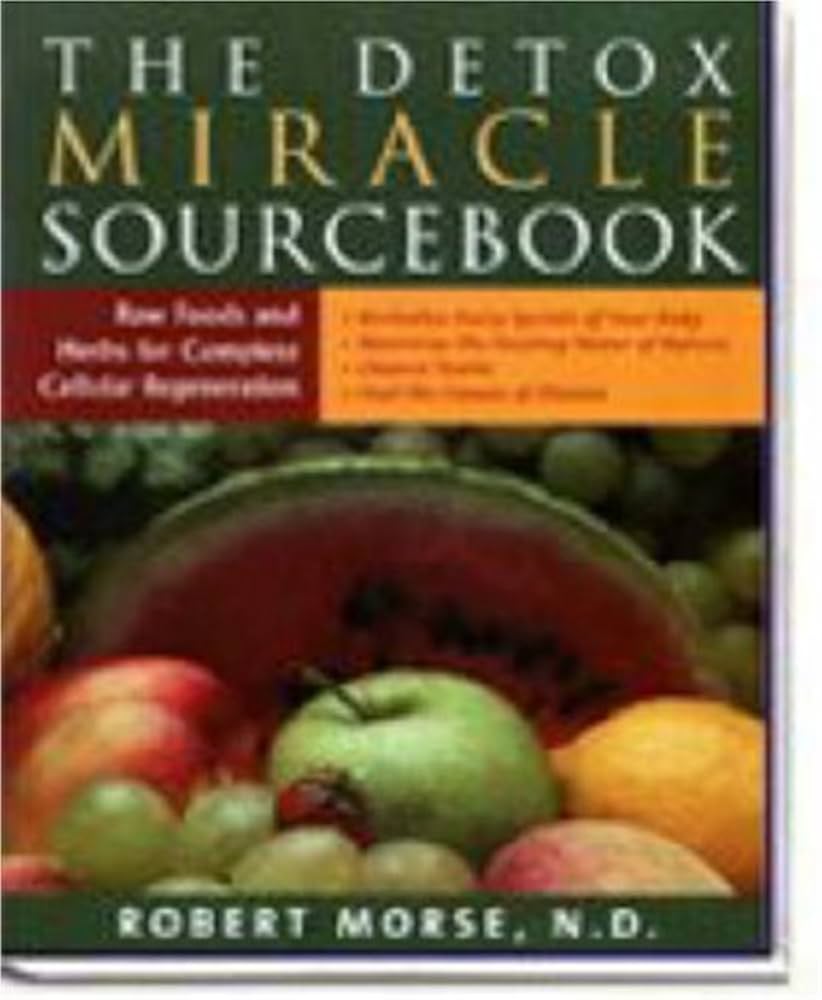
Robert Morse asks you to believe something the body of conventional medicine has no good framework for: that fruit is medicine, that the lymphatic system is the overlooked key to chronic illness, and that the path back to health runs through flooding your cells with the simplest sugars on earth. His clinic in Port Charlotte, Florida has reportedly seen thousands of cases. His YouTube channel attracted millions of views before repeated removals. The testimonials are, depending on your priors, either remarkable or deeply suspicious.
"The Detox Miracle Sourcebook" is the written distillation of his practice. Published by Kalindi Press in 2004 and still circulating widely, it presents a complete framework for understanding disease and a complete protocol for addressing it. That framework is radical enough to deserve the genuine steelman it rarely gets, and honest enough in its own terms to deserve the honest critique it also rarely gets.
This review tries to do both.
Who Is Robert Morse?
Robert Morse holds a doctorate in naturopathic medicine and has studied biochemistry, iridology, and herbal medicine over several decades. He is not an MD, and he does not practice conventional medicine. His background sits in the naturopathic and botanical traditions, and his framework draws explicitly on earlier fruitarian thinkers, particularly Arnold Ehret's mucus-free diet work from the early twentieth century.
Morse is not primarily an academic. His book is written for patients, not researchers. The case studies are anecdotal; the theories are not presented with the apparatus of peer-reviewed science. He makes this clear, and his audience accepts it as part of the contract.
What matters for a fair reading is understanding what kind of claim he is making. Morse is not arguing from RCTs. He is arguing from a model of physiology, from the traditional use of fruits and botanical herbs across many cultures, from his own clinical observation, and from a set of anatomical premises about the lymphatic system that are grounded, at least partially, in real anatomy.
The Core Thesis: Two Fluids, One Neglected System
The intellectual foundation of the book is a claim about the body's two internal fluid systems.
Everyone knows blood. The cardiovascular system moves oxygen and nutrients in and carries carbon dioxide out. Medical science has mapped it exhaustively.
The lymphatic system is the other fluid network, and Morse argues it is the one that determines health. Lymph is the interstitial fluid that surrounds every cell in the body. It carries cellular waste, protein fragments, lipids, immune cells, and debris away from tissue. Unlike blood, lymph has no pump. It moves through muscle contraction, breathing, and the one-way valves in the lymphatic vessels.
Here is where Morse's central premise enters: if the lymph cannot move and drain cellular waste efficiently, tissue begins to accumulate that waste. Acids, cellular byproducts, inflammatory molecules, and metabolic debris build up around cells. Over time, this congestion shows up as inflammation, organ dysfunction, and eventually diagnosable disease. Every chronic condition in the book is understood through this lens.
The claim is not pure invention. The lymphatic system's role in tissue health and immune surveillance is well established in anatomy. Lymphedema, when lymph fails to drain from a limb, is a recognized medical condition. The lymphatics around the gut are dense and well studied. The idea that systemic lymphatic sluggishness could contribute to chronic symptoms is mechanistically plausible in a way the medical establishment has underexplored.
What Morse adds, which is the controversial extension, is that the solution lies in fruit.
The Fruitarian Protocol
Morse's case for fruit runs on two tracks.
The first is chemical. He argues that the simple sugars in fruit, primarily glucose and fructose in their natural fruit context, are the native fuel of cells, and that the acids produced by grain, meat, and dairy digestion are the primary source of the acid load that acidifies lymph and congests tissues. Fruit, alkaline-forming and high in water content, clears that congestion. It pulls lymphatic waste toward the kidneys, which Morse considers the primary exit point for cellular garbage.
The second track is regenerative. He claims that the astringent properties of fruit, and the botanical herbs he uses alongside it, cause the lymphatic system to contract and purge. Fruit fasting, in his view, is not primarily about caloric restriction or ketosis. It is a targeted lymphatic flush.
His protocols run from moderate to intensive. At the gentler end, patients shift to mostly raw fruit and vegetables, cut processed food and animal products, and add specific herbal formulas targeting the kidneys and lymphatics. At the intensive end, patients do extended fruit-only fasting, sometimes for months, with herbal support. He reports reversals of conditions ranging from skin disorders to autoimmune diseases to conditions the book does not shy away from naming, including some that mainstream medicine considers irreversible.
The herbal component of his work is rooted in traditional botanical medicine. Many of the plants he uses have documented activity as lymphagogues (herbs traditionally said to move lymph) and kidney tonics. Cleavers, red clover, and echinacea, for example, have long histories of use in Western herbalism for lymphatic support. Plantain, nettle, and dandelion have established reputations as kidney herbs. This part of his toolkit sits in a continuous tradition, even when his interpretation of why those herbs work diverges from modern pharmacology.
The full protocol, including his kidney and lymphatic herbal sequences, is examined in more depth at the Robert Morse detox approach guide on this site. This review is a distinct node from that page and is the place to ask the harder evaluative questions.
What Traditional Evidence and Emerging Science Support
Fruit's real properties. Fruit contains water, simple carbohydrates, antioxidants, flavonoids, and a wide range of phytochemicals with anti-inflammatory activity. The research on polyphenols in berries, quercetin in apples, and ellagic acid in pomegranates is substantial. Eating more fruit is genuinely good for most people, and the Western diet is genuinely deficient in it. Morse's diagnosis of the problem, at the dietary level, is not fringe.
Lymphatic anatomy is real and underappreciated. The lymphatics are not a minor side system. They return fluid to circulation, carry dietary fat from the gut, host a large fraction of immune tissue, and drain the cellular environment of tissues throughout the body. The gut lymphatics (the lacteals and the mesenteric lymph nodes) are dense and heavily studied in immunology. Morse's emphasis on the lymphatic system as a key determinant of health is not physiologically absurd, even if his theory of how to clean it is not validated.
Kidney function and elimination. His emphasis on supporting kidney filtration as a route for cellular waste removal is physiologically reasonable. The kidneys are the primary organ for clearing water-soluble waste. Hydration, botanical diuretics with long traditional use, and reduction of protein load that stresses the kidneys are all legitimate areas of health practice.
Fasting literature. A substantial body of research on fasting and caloric restriction, while not specifically on fruit fasting, demonstrates that restricting food input triggers autophagy (cellular cleanup), reduces inflammatory markers, and allows tissue repair. Whether fruit fasting produces these effects in the same way as water fasting or time-restricted eating has not been studied directly. Our fruit fasting guide covers the landscape of evidence for this protocol. The adjacent literature on juice fasting and water fasting is more developed and worth reading alongside Morse's claims.
What Lacks Evidence or Overstates the Case
The acid-alkaline theory in the form Morse presents it. The body maintains blood pH within an extraordinarily tight range through multiple buffering systems. The idea that acidic food choices directly acidify blood or tissue fluid is not supported in the way Morse describes it. Urine pH does shift with diet, and tissue chemistry is real, but the mechanistic chain from dietary acid load to cellular lymphatic congestion to chronic disease has not been established.
Specific disease reversal claims. Morse makes claims about reversing conditions, including some serious ones, that are based on his clinical observation but have not been studied in controlled settings. The testimonials are striking. They do not constitute evidence at the level needed to recommend this path over evaluated treatments for serious illness. Some of what his patients experience as reversal may be genuine improvement from dietary change, reduced inflammatory load, weight loss, and removal of processed food. Some may be remission that would have occurred regardless. Some may not be as described.
Extended fruit-only fasting for everyone. The very low protein content of extended fruit fasts creates real physiological risks. Muscle wasting, micronutrient deficiencies, and blood sugar dysregulation are genuine concerns over long periods, particularly for people with metabolic conditions, diabetes, or eating disorder histories. Morse acknowledges that his protocols require commitment and often a guide, but the book does not always give adequate weight to the risks.
The mucus theory in its strong form. The idea that "mucus" from grain and dairy forms literal physical obstructions in organs and lymphatic channels borrows heavily from Ehret and is not well supported anatomically. The loose tissue metaphor does not translate straightforwardly to observable physiology.
Iridology as diagnosis. Morse uses iridology, reading the iris to identify organ conditions and constitutional states, as a diagnostic tool throughout the book. No scientific validation exists for iridology as a diagnostic method. This is the same problem the Hulda Clark syncrometer presents: treatments that might have real effects are attached to a diagnostic system with no independent validity.
What the Lymphatic Argument Gets Right (Even If the Solution Is Disputed)
Stepping back from whether fruit fasting is the right intervention, the underlying observation that the lymphatic system is neglected in mainstream chronic disease management has merit that deserves acknowledgment.
Mainstream medicine treats lymph primarily when it fails catastrophically: cancer has spread to lymph nodes, or a limb swells with lymphedema. The slow continuum between perfect lymphatic flow and obvious failure is rarely addressed. Practitioners working in manual lymphatic drainage, a thoroughly evidence-based therapy used in cancer care, report dramatic shifts in patient wellbeing. The hypothesis that chronic low-grade lymphatic congestion contributes to fatigue, inflammation, and systemic dysfunction is not testable with current standard panels, which is partly why it remains outside mainstream conversation.
Morse is, at minimum, pointing at a real gap in conventional medicine's diagnostic and therapeutic toolkit. The lymphatic detox guide on this site covers the established landscape of approaches, including rebounding, manual lymphatic drainage, and dry brushing, that the evidence is clearer on. These sit alongside, rather than instead of, the dietary approaches Morse advocates.
How This Fits a Real Detox Practice
Most people who come to Morse do not do extended fruit-only fasts for months. They shift toward more fruit, reduce processed food and animal products, add his herbal kidney support, and watch what changes. At that level of practice, the intervention is dietary improvement with botanical adjuncts, which is well within reasonable territory.
A few things from his framework translate directly into good practice:
Prioritize hydration and kidney support. Before intensive detox work of any kind, ensuring the kidneys are filtering well is sound practice. Juice fasting and gut detox work both depend on open elimination pathways. Morse's emphasis on the kidneys specifically is worth taking seriously even if you reject his full model.
Movement moves lymph. Because lymph has no pump, it requires movement to circulate. Rebounding, walking, and breathwork are the established ways to support lymphatic flow. This is not Morse's proprietary insight, but his framework gives it structural importance that the lymphatic detox guide expands on.
Fruit is not the enemy. Much of the low-carb and carnivore wellness world treats fruit as suspect because of its sugar content. Morse is a useful corrective to that overcorrection. Eating whole fruit, in its fiber context, behaves very differently metabolically than eating refined fructose. The phytochemical load in a diet rich in whole fruit is genuinely protective.
Botanical herbs for kidney and lymph support. The traditional herbal formulas Morse uses have a long record of use in Western herbalism and in several Asian traditions. Supporting kidney filtration and lymphatic drainage through herbs is a gentler, more sustainable lane than extended fruit fasting, and it is where the traditional evidence base is stronger.
If you want to explore this territory without committing to Morse's most demanding protocols, the water fasting guide and fruit fasting guide offer frameworks where the risks are better characterized.
Who Benefits from This Book
Chronic illness patients who have exhausted conventional options. Morse's audience, historically, is people with serious conditions who have been told nothing more can be done. For this population, his framework offers a model, a practice, and community. Whether it works in their specific case is unknown in advance, but the entry cost is lower than many alternatives.
People who respond well to a clean, total framework. Morse's system is internally coherent. You don't have to cherry-pick which parts to believe. Many people find a comprehensive, why-based model easier to follow than a disconnected list of health tips. If that describes you, this book delivers.
Practitioners in botanical and naturopathic medicine. The herbal material in the book is genuinely rich and draws on traditional sources. The clinical reasoning, even where unvalidated, illustrates a way of thinking about the body that differs from the conventional paradigm in useful ways.
Anyone underexplored on kidney and lymphatic health. If you've done gut work, liver support, and parasite cleansing without the results you expected, the renal-lymphatic angle Morse emphasizes might open a new angle.
Who Should Be Cautious
People with diabetes or blood sugar conditions. Extended fruit fasting on a diet very high in sugar, even natural fruit sugar, requires careful management for people with insulin resistance or diabetes. The blood sugar swings can be significant.
Anyone with a history of restrictive eating. The framework's emphasis on purity, on what foods corrupt the body, and on extended dietary restriction can feed unhealthy patterns in people already prone to orthorexia.
People managing serious illness with established treatment. Don't replace cancer treatment, immunosuppressants, or other evidence-based interventions with Morse's protocols without working with a clinician who knows both worlds. His claims about reversing serious conditions are compelling stories, not clinical evidence.
Anyone without a practitioner guide. Extended fruit fasting is not a casual experiment. Morse himself generally works with patients in an ongoing relationship. Reading the book and going straight into months of fruitarian eating without guidance carries real risks.
The Bottom Line
"The Detox Miracle Sourcebook" is the sincere, systematic expression of a model of the body that mainstream medicine does not take seriously and has not bothered to refute in controlled settings. That gap should make a thoughtful reader curious rather than dismissive.
Robert Morse is not a fraud. He is a naturopath with a genuine clinical framework, a botanical knowledge base rooted in real traditions, and a body of patient outcomes his critics have not studied. He is also a practitioner making very large claims on the basis of observation and theory, operating outside the evidentiary systems that would allow independent verification.
The fruit thesis and the lymphatic-acid model deserve the steelman treatment, which this review has tried to give them. The lymphatic system is real, underappreciated in chronic disease, and genuinely dependent on diet, movement, and elimination. Fruit contains real medicine. Botanical kidney and lymph herbs have centuries of use behind them.
What the book cannot deliver is proof that the specific mechanism Morse describes is correct, or that fruit fasting specifically, in the ways he prescribes, reverses the conditions he says it reverses.
The reader's practical question is whether to experiment. For a generally healthy person cleaning up their diet, shifting toward more fruit and adding a kidney herbal formula for a few weeks carries minimal risk and might surface useful information about their own body. For someone with a serious chronic condition, the honest answer is: read this book as one perspective, explore the lymphatic and renal angles with a knowledgeable practitioner, and treat the dietary foundation recommendations as broadly sound without staking a medical decision on the more extraordinary claims.
The framework is interesting. The protocols, in their gentler forms, are low-risk. The dramatic claims need more than one book and one man's clinic to earn full trust.
Related MadWorldDetox Guides
- Robert Morse Detox Approach - Full breakdown of his method and herbal formulas (the protocol companion to this review)
- Fruit Fasting Guide - The evidence and practice landscape for fruit-based fasting
- Lymphatic Detox Guide - Established approaches to lymphatic support, from rebounding to manual drainage
- Juice Fasting Complete Guide - Adjacent fasting method with a stronger evidence base
- Water Fasting Complete Guide - Comparing fasting approaches and where each has strongest support
- Gut Detox Complete Guide - The foundational elimination-pathway work before any intensive detox
Products Mentioned
The Book:
The Detox Miracle Sourcebook - Robert S. Morse N.D., Kalindi Press, 2004. 372 pages. The core text of his fruitarian-lymphatic model and clinical protocols.
Affiliate Disclosure: This review contains affiliate links. We may earn a small commission on purchases made through these links at no additional cost to you. We only recommend books and products we've researched and believe provide value. Our assessment of the book itself is independent of any affiliate relationship.
Last updated: June 2026