Book Review: Beyond the Pill by Jolene Brighten, ND
Last updated: June 2026 Reading time: 14 minutes
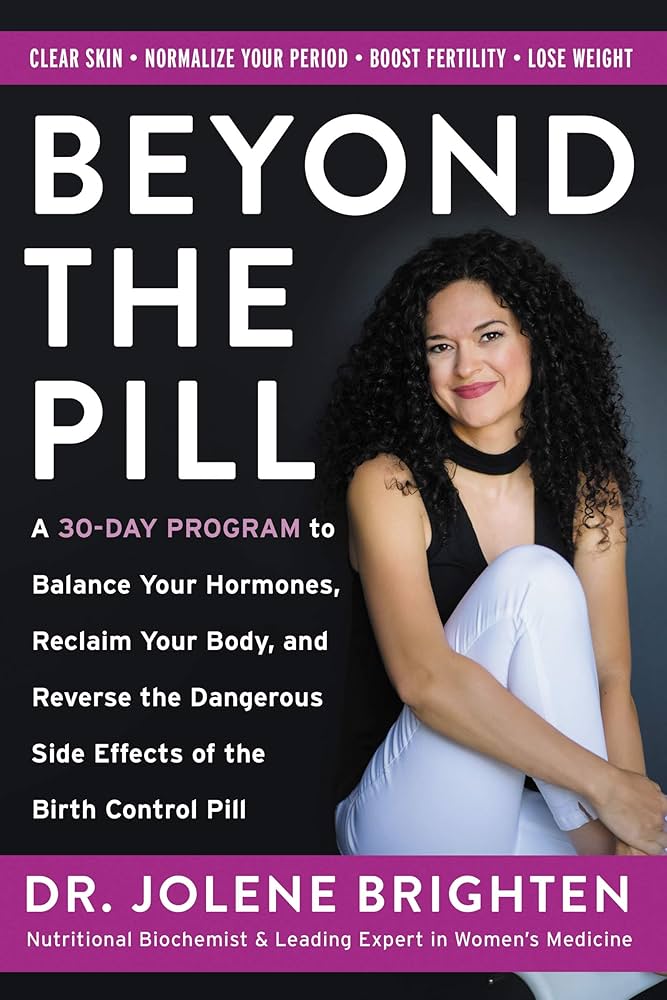
Millions of women come off hormonal birth control and find themselves in a gap medicine barely names. The period doesn't return on schedule. Energy collapses. Skin breaks out after years of clear skin on the pill. Anxiety shows up where calm used to be. The standard response from most doctors is to wait it out, or go back on the pill.
Jolene Brighten, ND, wrote "Beyond the Pill" for everyone who didn't find that answer satisfying.
The book operates on a premise that gynecology has been slow to take seriously: that synthetic hormones suppress the body's own hormone production over months and years, and coming off them isn't a neutral event. The ovarian-adrenal-thyroid axis needs to reboot. The liver has to resume clearing estrogen that was, on the pill, never building up in the first place. Nutrient stores depleted by oral contraceptives need replenishing. And a separate but related problem, the endocrine-disrupting chemicals accumulating in tissue from plastics, pesticides, and personal-care products, compounds whatever hormonal disarray the transition already created.
This is a book about hormone recovery. But it is also, structurally, a detox book: it centers the liver's role in estrogen clearance, the gut's role in recycling hormones that should be excreted, and the environmental chemicals that impersonate estrogen inside the body. For anyone working in that territory, it has things worth understanding and things worth examining carefully.
Who Jolene Brighten Is
Brighten is a naturopathic doctor and what she describes as a "functional medicine practitioner" with a clinical practice focused on hormonal health. She is not an academic researcher publishing in peer-reviewed journals. She is a clinician drawing on the functional medicine framework, her own patient population, and her reading of the endocrinology and toxicology literature. Her credential is the ND, a degree from an accredited naturopathic medical school, a category that sits outside the mainstream medical licensing structure in most of the US.
That context matters for how you read the book. Brighten is a skilled synthesizer and a credible voice for her clinical niche. She is not the researcher who ran the controlled trials. The distinction between "my clinical experience shows" and "the evidence demonstrates" does something important in a book like this, and she sometimes maintains it more clearly than other times.
Her patient community has made this book a reference for post-birth-control syndrome. The reader community that has coalesced around her work is real, the complaints they describe are real, and the absence of mainstream medicine's engagement with those complaints is also real. That's a meaningful endorsement of the gap she's addressing, even when specific protocol claims need scrutiny.
The Core Argument: The Body Has a Hormonal Recovery Problem
Brighten's central claim is that oral contraceptives (and other hormonal birth control methods) do more than prevent pregnancy. They suppress the hypothalamic-pituitary-ovarian axis, the hormonal signaling chain that runs from the brain to the ovaries. Over time, that suppression can leave the system slow to reboot when the pill is discontinued.
The specific downstream effects she documents in her patient population include: delayed return of menstruation, low libido, mood disruption, disrupted thyroid signaling, and what she terms post-birth-control syndrome, a cluster of symptoms that appear in the months after stopping hormonal contraceptives. The syndrome isn't in the DSM or formally recognized in mainstream gynecology, which is part of Brighten's argument rather than a point against her. She is describing a clinical pattern that medicine hasn't given a name to, not fabricating one.
The second layer of her argument is estrogen load. The liver processes estrogen through two phases of metabolism, converting it into forms that can be bound and excreted. When that process runs well, estrogen clears efficiently. When it's impaired, by genetic variation, nutrient depletion, poor diet, or a gut microbiome that reactivates estrogens that should have been eliminated, estrogen recirculates. She argues that many women dealing with hormonal symptoms are dealing partly with poor estrogen clearance, and that the liver and gut are the leverage points.
The third layer is endocrine-disrupting chemicals (EDCs). Bisphenol A (BPA), phthalates, certain pesticide residues, and parabens in personal care products can bind to estrogen receptors or disrupt hormonal signaling. These compounds have been measured in human tissue, their receptor-binding activity is documented in lab settings, and regulatory agencies in multiple countries treat EDC exposure as a genuine health concern. Brighten frames them as compounds that add to a woman's total estrogen burden, stacking on top of whatever hormonal transition the body is already navigating.
This three-part structure, hormonal suppression, impaired estrogen clearance, and EDC exposure, gives the book a coherent logic. Whether the clinical program she builds on top of it is as evidence-backed as the framework is a separate question.
The Steelman: What the Estrogen-Detox and EDC Case Has Going For It
The book's foundation rests on mechanisms that are genuinely established.
Liver estrogen clearance is real biochemistry. The liver metabolizes estrogens through Phase I and Phase II detoxification pathways. In Phase I, cytochrome P450 enzymes convert estrogens into metabolites, some more proliferative than others. In Phase II, those metabolites are conjugated, primarily through glucuronidation and sulfation, into water-soluble forms that can be excreted. This is documented biochemistry, not fringe naturopathy.
The gut-estrogen connection is real. A subset of gut bacteria express beta-glucuronidase, an enzyme that cleaves the conjugate from estrogen metabolites, freeing them to be reabsorbed rather than excreted. The collection of gut bacteria expressing this enzyme is called the estrobolome. Research on the estrobolome is active and credible: dysbiosis that shifts the estrobolome toward higher beta-glucuronidase activity has been associated with altered estrogen levels. Brighten covers this and gets the mechanism right.
Nutritional depletion by oral contraceptives has published support. Studies have found that oral contraceptive use is associated with lower levels of several B vitamins, including B6, B12, and folate, as well as zinc and magnesium. These nutrients are involved in liver detoxification, mood regulation, and thyroid function. The depletion finding is not Brighten's invention.
The EDC evidence is substantial at the category level. BPA's estrogenic activity is one of the most studied topics in environmental endocrinology. Phthalates have been associated with disrupted androgen and estrogen signaling in multiple human studies. The cumulative exposure question, whether the real-world mixture of low-dose EDCs in food, water, plastics, and personal care products causes harm, remains contested in terms of dose-response, but the biological activity of these compounds at cell and receptor level is not in serious doubt. The precautionary logic Brighten advances has regulatory and research backing.
The elimination diet and liver-support nutrition she recommends are defensible. Cruciferous vegetables support detoxification enzyme activity. Fiber supports excretion. Reducing alcohol supports liver Phase I clearance. These recommendations map onto the published literature on liver function and nutrient support, even if the clinical program Brighten builds around them goes further than the research strictly validates.
Where Program Claims Outrun Evidence
The estrogen-detox framework is real. The clinical program Brighten constructs on top of it is something different.
"Post-birth-control syndrome" is a clinical pattern, not a validated diagnosis. Brighten is describing real symptoms that real patients experience. She isn't fabricating them. But the syndrome hasn't been formally studied as a distinct entity, its prevalence hasn't been established in controlled research, and the causal chain from pill-discontinuation to specific symptom clusters hasn't been rigorously demonstrated. She is working from clinical pattern recognition and plausible mechanism, which is a reasonable starting point, and also a shakier foundation than the book sometimes implies.
The 30-day protocol is more program than protocol. The dietary, supplement, and lifestyle interventions Brighten recommends are generally low-risk and broadly supportive of hormonal health. But they are presented as a targeted system for post-pill recovery when the evidence for most specific interventions in that specific context is thin. DIM (diindolylmethane) gets a prominent role in supporting estrogen clearance. The research on DIM is genuinely interesting, and in vitro and animal studies support its effects on estrogen metabolism. Human clinical trials are limited. The gap between "biologically plausible" and "clinically validated in this population" is real.
The EDC chapter risks scope creep. The evidence for BPA's estrogenic activity is strong. The evidence that eliminating BPA from personal care products measurably shifts hormone panels in otherwise healthy adults is weaker. Brighten's extrapolation from "these compounds are biologically active" to "this is a significant driver of your symptoms" outruns the dose-response data. The precautionary case is reasonable. The causal certainty sometimes implied in the chapter is not.
Naturopathic medicine's relationship to evidence is uneven. Brighten is more rigorous than many ND-authored books in this space. She cites published research throughout. But the functional medicine framework she works within has a documented pattern of recommending supplement protocols ahead of clinical validation, and some of her specific recommendations follow that pattern. A reader should distinguish the framework's sound mechanisms from the specific dosing and supplement claims, which haven't all been validated in the post-pill context she's addressing.
Who Benefits and Who Should Be Cautious
This book is worth reading if:
You came off hormonal birth control and experienced a disrupted cycle, mood changes, or symptoms that appeared shortly after stopping, and your doctor either dismissed them or sent you back to the pill. The framework Brighten provides for understanding why that transition isn't always smooth is genuinely useful and better than nothing. The lifestyle and dietary recommendations are broadly sound and unlikely to cause harm.
You're concerned about EDC exposure and want an accessible treatment of the biological mechanisms and practical reduction steps. Her guidance on reducing plastic use, filtering water, and replacing EDC-heavy personal care products is reasonable and actionable.
You want to understand the liver's role in estrogen clearance and how the gut interacts with hormonal balance. This is one of the better popular-level treatments of that subject.
Read it carefully if:
You're dealing with diagnosed hormonal conditions (PCOS, endometriosis, thyroid disease, a history of hormone-receptor-positive cancer). The book is not a substitute for specialist care in those contexts, and some recommendations may interact with ongoing treatment. Brighten says this herself, though she says it quietly.
You're inclined to adopt supplement protocols wholesale. The supplement chapter recommends specific nutrients and botanicals at specific doses that haven't all been validated in controlled trials. A practitioner familiar with your specific labs and history is a better guide to dosing than any book.
You're looking for definitive clinical evidence. Brighten's framework is mechanistically credible. The clinical evidence for the specific program in the specific population she's addressing is thin.
How This Fits a Real Detox Practice
For anyone already working on the liver or concerned about environmental chemical load, "Beyond the Pill" fills a specific gap: it brings hormonal clearance into the picture.
The liver is the central organ for both: it metabolizes estrogen, and it metabolizes most EDCs. If you're working on liver function, you're already working on the conditions Brighten addresses, whether or not hormonal recovery is your stated goal. The liver detox complete guide covers the Phase I and Phase II pathways in detail, and the estrogen-clearance mechanisms Brighten discusses slot directly into that framework.
The EDC side connects to a broader body of work on environmental estrogens. BPA, phthalates, and other plastics-derived compounds showing up in food and water are the same compounds covered in detail in the plastics and BPA xenoestrogen detox guide. What Brighten adds is the hormonal-context framing: these aren't abstract toxins, they're compounds competing for estrogen receptors in bodies that may already be dealing with a hormonal transition.
The dietary foundation she recommends, eliminating common triggers, supporting fiber intake, reducing processed food, is the same foundation for gut hormone clearance and general detox. The elimination diet detox guide covers that systematically.
Her chapter on glyphosate and pesticide residue in food overlaps with the EDC concern: pesticide-contaminated food adds to chemical estrogen burden and burdens the same liver detoxification pathways. The glyphosate detox protocol goes deeper on the mechanism and reduction strategy.
The practical intersection: if you're working on estrogen balance, liver clearance is the leverage point. The gut is the second lever (maintaining an estrobolome that doesn't reactivate cleared estrogens). Reducing EDC input is the third. Brighten's 30-day program covers all three, and the framework is sound even where the specific protocol exceeds its evidence base.
The Bottom Line
"Beyond the Pill" addresses a real problem in an underserved population, women experiencing a rocky transition off hormonal contraceptives in a medical environment that hasn't formally acknowledged the transition as a problem. Brighten's treatment of the underlying mechanisms, the liver's estrogen-clearance pathways, the estrobolome's role in hormone recycling, and the receptor-binding activity of common EDCs, is credible popular science and more rigorous than most writing in this genre.
Where the book earns appropriate skepticism is in the step from mechanism to clinical program. The 30-day protocol and the supplement recommendations are built on solid biological logic and thinner clinical validation. The gap between "biologically plausible" and "evidence-backed in this population" is real and the book doesn't always hold it clearly.
Read it for the framework. The case it builds for why hormonal health, liver function, and environmental chemical exposure are linked is worth having. Take the specific protocol as a starting hypothesis, not a finished prescription.
Related MadWorldDetox Guides
- Liver Detox Complete Guide - The Phase I and Phase II pathways Brighten's estrogen-clearance framework depends on
- Plastics, BPA and Xenoestrogen Detox Guide - The EDC evidence and practical reduction strategy
- Elimination Diet Detox Guide - The dietary foundation for gut hormone clearance and liver support
- Glyphosate Detox Protocol - Pesticide residue, chemical estrogen burden, and the same liver pathways
Products Mentioned
The Book:
Beyond the Pill - Jolene Brighten, ND. A naturopathic guide to post-birth-control recovery, estrogen clearance, and reducing endocrine-disruptor exposure.
Affiliate Disclosure: This review contains affiliate links. We may earn a small commission on purchases made through these links at no additional cost to you. We only recommend books and products we've researched and believe provide value. Our assessment of the book itself is independent of any affiliate relationship.
Last updated: June 2026