Book Review: The Complete Guide to Fasting by Jason Fung, MD with Jimmy Moore
Last updated: June 2026 Reading time: 15 minutes
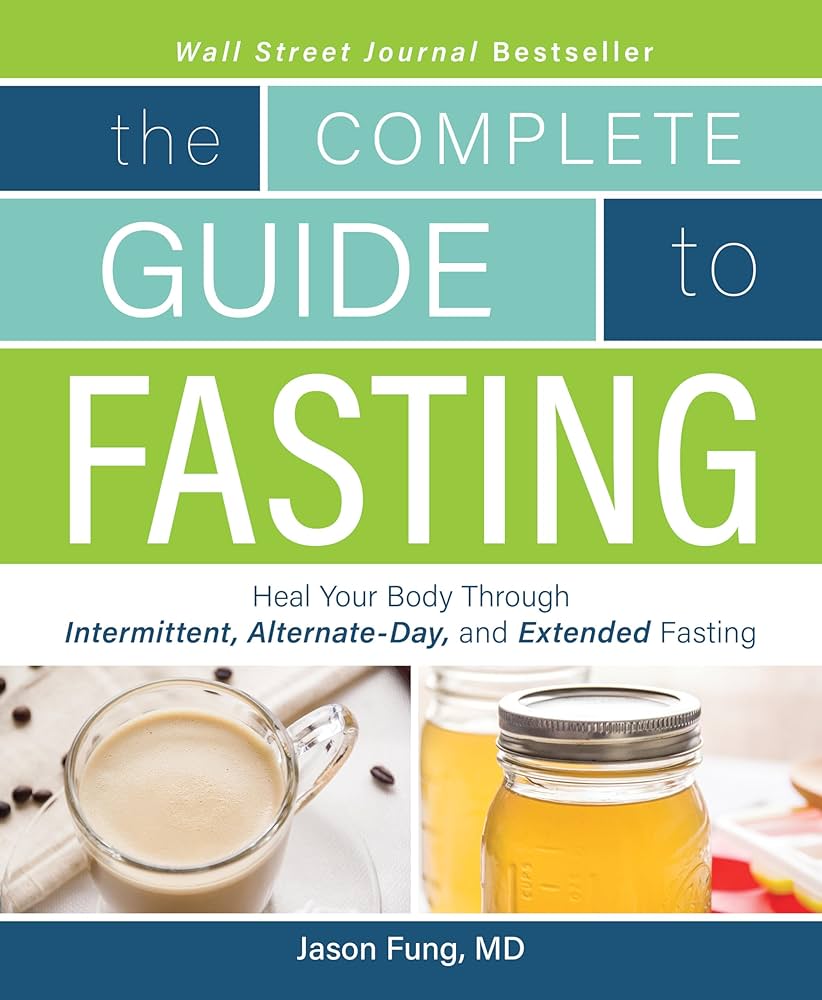
Most books on fasting are written by enthusiasts. Jason Fung is a kidney specialist who spent years watching patients with type 2 diabetes deteriorate on the standard protocol of medication escalation, until he started asking why their insulin resistance was there in the first place.
The answer he arrived at was not what his training said. Insulin resistance, he argues, is not a mystery. It's a predictable biological response to chronically elevated insulin, and chronically elevated insulin is the result of eating patterns that never allow the hormone to drop. The fix, logically, is to stop eating long enough for insulin to fall.
This is the origin of "The Complete Guide to Fasting," co-written with podcaster Jimmy Moore. Fung brings the clinical framework and the metabolic science. Moore brings the lived experience of an obese man who lost over a hundred pounds through fasting and kept it off. Together they cover the full range of fasting protocols, from the sixteen-hour overnight fast to extended multi-day fasting, with instructions specific enough to actually follow.
For a detox reader, this book matters because fasting is one of the few interventions that operates at every level simultaneously. It drops insulin. It activates autophagy. It shifts the body into fat-burning, which mobilizes stored toxins. It gives the digestive system a complete rest. Whether you come to fasting for weight, for metabolic health, or as a platform for a cleanse, this is the most organized evidence-grounded manual the genre has produced.
The review that follows covers what Fung gets right, where he overstates, who should approach this carefully, and how fasting fits a real detox practice.
Who Jason Fung Is
Fung is a nephrologist, not a metabolic researcher by academic training. He runs a kidney disease clinic in Toronto and watched the standard type 2 diabetes protocol fail patient after patient. The protocol was: diagnose, prescribe metformin, escalate to insulin injections when blood sugar climbed further. His patients got more medicated over time. Kidney function kept declining.
He started looking upstream. The kidneys of diabetics were failing not because of the diabetes itself, but because of chronically high blood sugar and the metabolic dysfunction behind it. If he wanted to preserve kidneys, he had to address the root. The root was insulin resistance. And insulin resistance, he concluded, responds to time without food far better than it responds to drugs.
Fung's clinic began prescribing fasting protocols to diabetic patients, often with dramatic reductions in medication requirements. He documented cases where patients were able to taper off insulin injections. These are not the kind of outcomes mainstream diabetology expects.
This is important context for reading the book. Fung is writing from clinical observation, not from controlled trials on fasting interventions. He is a credible clinician with a provocative clinical record, not a researcher with randomized data behind every claim. The distinction matters for how you read his confidence.
The Core Thesis: Insulin Is the Lever
Fung's argument rests on a model of obesity and metabolic disease that centers insulin rather than calories.
The conventional picture is a calorie-balance model: eat less than you burn, lose weight. Fung does not dispute that calories matter. He disputes that calorie counting is the correct intervention, because it ignores hormonal control of fat storage. When insulin is high, the body cannot access stored fat for fuel. The liver is told to store energy, not release it. You can eat less and still be metabolically stuck if insulin stays elevated.
The primary driver of chronically high insulin, in his model, is the pattern of eating common in modern life: frequent meals and snacks, all generating insulin pulses, with almost no time spent in a fasted, low-insulin state. The body adapts to persistent insulin by becoming resistant to its signal, requiring more insulin to do the same job. This is exactly the same mechanism as any other receptor downregulation in biology.
Fasting, then, is not a trick or a willpower game. It's the pharmacological opposite of what caused the problem. Extended periods without food allow insulin to drop, insulin resistance to reverse, and fat cells to release stored energy. The body moves from a storage mode to a burning mode, and stays there long enough to produce real metabolic shifts.
This model has genuine support in the metabolic literature. That insulin resistance drives fat accumulation, that insulin suppresses lipolysis (fat release), and that time-restricted eating lowers insulin are well-established. Fung synthesizes this evidence accessibly and connects it to fasting in a way that most general-reader books have not done before.
The Protocols
One of the book's genuine strengths is its practical range. Fung and Moore lay out fasting protocols from mild to intensive, with guidance on who they suit.
Intermittent fasting. A sixteen-hour daily fast (eating within an eight-hour window) is the entry point. Fung covers the evidence behind this pattern for insulin reduction, weight, and improved glycemic control. The case for this daily approach is solid and relatively uncontroversial; even mainstream dietetics now acknowledges time-restricted eating as a legitimate strategy.
Alternate-day fasting. Alternating full eating days with fasting days or heavily restricted days. Fung presents this as a step up for people who plateau on daily intermittent fasting. The evidence is reasonable, though less deep than for shorter fasting windows.
5:2 fasting. Two severely restricted days per week, five normal. The Mosley 5:2 protocol, which popularized this approach in the UK. Fung situates it within his framework and addresses its limits.
Extended fasting (24 to 36 hours). Where, he argues, more significant metabolic shifts occur. Not daily, but periodic. He covers when to do it, what to expect, how to break the fast.
Multi-day fasting (48 hours and beyond). The most intensive territory. This section is careful. Fung is explicit about the need for electrolyte management, medical supervision in most cases, and the contraindications that disqualify certain people from this approach. The guidance here is more qualified than earlier in the book, which is appropriate.
The book also covers bone broth fasting, fat fasting, and dry fasting briefly, though these are not Fung's primary recommendations. For each major protocol type, he includes sample schedules and real patient examples from his clinical practice.
What the Science Supports
Fung's insulin model for metabolic disease is the strongest part of the book and rests on legitimate ground.
Insulin resistance and fasting. Multiple lines of research confirm that time-restricted eating and fasting reduce insulin levels and improve insulin sensitivity in people with metabolic syndrome and type 2 diabetes. The direction of the effect Fung describes is real.
Weight and fat loss. Fasting produces weight loss primarily through caloric reduction, but also through hormonal shifts that Fung describes. The evidence that periodic fasting is at least as effective as daily caloric restriction for weight is well supported.
Blood glucose control. Studies in type 2 diabetics show meaningful reductions in fasting blood glucose and HbA1c from fasting protocols. Some patients are able to reduce medication under supervision. This is Fung's home territory and his clinical claims align with the research.
Simplicity as a real advantage. One of the most honest points in the book is that fasting is operationally simpler than caloric restriction. You don't count. You don't measure. The rule is binary: eat, or don't eat. This reduces the decision fatigue and tracking burden that derails most dietary interventions, which may explain some of the adherence advantage fasting shows in studies.
The Autophagy Gap
Here is where the book strains most, and where any reader should slow down.
Autophagy is the cellular process of breaking down and recycling damaged components. It ramps up during fasting and nutrient deprivation. The word means "self-eating," which sounds alarming but is deeply functional: cells clearing out dysfunctional proteins and organelles, reducing the debris that contributes to cancer, neurodegeneration, and aging pathology. [[Yoshinori Ohsumi]] won the Nobel Prize in Physiology or Medicine in 2016 for describing its molecular mechanisms, and Fung was writing in the period when autophagy suddenly became a major topic.
The problem is the gap between the mechanism and the clinical claims.
The autophagy evidence is largely from yeast, worms, and mice. In these organisms, the autophagy machinery is well mapped, and the benefits of upregulating it are clear. In humans, measuring autophagy in living tissue is technically difficult, and controlled trials that connect specific fasting durations to specific autophagic outcomes remain sparse.
Fung presents autophagy as a principal benefit of fasting in humans with considerable confidence. That confidence runs ahead of the human evidence. We know autophagy increases during fasting in human cells in vitro. We know the pathways are conserved. We do not yet have solid human trial data on how long you need to fast to produce therapeutically meaningful autophagy, how much it varies by individual, or whether the autophagic boost of a 24-hour fast in a healthy adult translates to the disease outcomes the mouse literature suggests.
This is not Fung's invention. The entire fasting wellness space overstates the human autophagy evidence, and he is part of that trend rather than the origin of it. But a fair reading of this book requires naming it: when Fung speaks about autophagy as a cancer prevention strategy or as cellular renewal with therapeutic implications in humans, the evidence has not caught up to the language.
The mechanism is real. The benefits in model organisms are real. The translation to specific human health outcomes at specific fasting durations is still being worked out. A reader can believe fasting promotes autophagy while recognizing that exactly how much, to what clinical effect, over what fasting window, remains genuinely uncertain.
The Contraindications Fung Takes Seriously
The book earns credibility for the seriousness with which it handles who should not fast, or who should fast only under supervision.
Type 1 diabetes. Fung is clear and firm here. Type 1 diabetics are insulin-dependent, and fasting without expert oversight can cause dangerous blood sugar swings. The metabolic dynamics are completely different from type 2. This is not the book for self-managing type 1 diabetes through fasting.
Eating disorder history. Fung flags this carefully. Fasting can become a vehicle for restriction-focused thinking, and for someone with a history of anorexia or bulimia, even a well-intentioned fasting protocol can feed a disordered relationship with food. He recommends working with a mental health professional who understands both the protocol and the history.
Pregnancy and breastfeeding. Caloric adequacy is a non-negotiable baseline during both. Extended fasting is contraindicated.
Medications that require food. Certain drugs, including some diabetes medications and blood pressure drugs, require food for safe use or can produce dangerous effects when taken fasted. Fung is direct about the need to work with a physician to adjust medications before starting extended fasting protocols.
Underweight individuals. The metabolic logic of fasting applies to people with excess metabolic storage. For someone already underweight, extended fasting carries real risk.
Fung's handling of these cases is one of the cleaner examples of a fasting book acknowledging its limits rather than papering over them.
Fasting as a Detox Platform
Most people approaching this book from a detox background are not primarily interested in insulin. They want to know what fasting does to toxic burden.
The answer is indirect but real.
Toxins accumulate in fat tissue. Adipose cells are a long-term storage site for fat-soluble compounds: pesticides, plasticizers, solvents, some heavy metals. When the body is running on fat for fuel during an extended fast, it is mobilizing those fat stores, and the toxins stored in them move with the fat into circulation. This is why fasting can trigger symptoms that look like a detox reaction: headache, fatigue, irritability, sometimes skin flares. Those symptoms are not illusion.
This also means fasting without support for the elimination pathways is incomplete at best and counterproductive at worst. If the liver, kidneys, and colon are not functioning well and moving toxins out, what fasting mobilizes can recirculate. Our water fasting complete guide covers the preparation and support protocols that make this process work rather than stall. Our intermittent-fasting detox guide addresses daily fasting specifically as a detox strategy.
Beyond fat mobilization, fasting gives the digestive system a genuine rest. The gut spends enormous energy on continuous digestion. During a fast, that energy is available for repair. The gut lining regenerates. Migrating motor complexes, the gut's self-cleaning wave action that operates primarily between meals, run more freely. For someone dealing with dysbiosis, permeability, or low-grade gut inflammation, this rest is not trivial.
Fasting also lowers systemic inflammation. Multiple inflammatory markers drop during fasting periods. For anyone doing a detox protocol, reducing the baseline inflammatory burden creates a better environment for the body's own clearing processes.
Fung does not foreground these points because his book is about metabolic health, not detox specifically. But the physiology is compatible, and the protocols translate.
Who Should Read It
Read it if:
- You have insulin resistance, metabolic syndrome, type 2 diabetes, or significant weight to lose, and you want the clearest evidence-based explanation of why fasting works for those conditions
- You want a practical manual with real protocols, not a theory-only book
- You are integrating fasting into a broader detox protocol and need to understand the metabolic mechanics
- You appreciate a clinician perspective: someone who prescribed this to real patients with real outcomes, not just a researcher or a wellness influencer
Read it carefully, or work with a practitioner, if:
- You have type 1 diabetes, an eating disorder history, or take medications that interact with fasting
- You plan extended fasting (more than 36 hours) for the first time without medical oversight
- You want to use fasting primarily for autophagy-driven cancer prevention: the mechanism is compelling but the human clinical evidence is not yet there to support that as a standalone strategy
This is not the right book if:
- You are looking for a spiritual or emotional relationship with fasting. Fung's approach is clinical and mechanistic. Books from traditions like Natalia Rose, or the extended fasting literature from religious traditions, address that dimension.
- You want the full spectrum of fasting types including juice fasting. Fung focuses on water fasting and modified protocols. Our juice fasting complete guide covers that territory, and our dry fasting benefits guide addresses the most intensive end of the spectrum that Fung only touches.
The Bottom Line
"The Complete Guide to Fasting" is the strongest evidence-based manual in the fasting genre, and it earns that position.
Fung's insulin model is coherent, grounded in metabolic science, and explained without jargon. The protocols are organized and genuinely practical. The contraindications are handled with clinical seriousness rather than dismissed. Moore's personal testimony adds texture without turning the book into a testimonial vehicle.
The overreach is the autophagy story. Fung presents it with more confidence than the human evidence supports, which is a common failure in fasting writing circa 2016 and not unique to him. A reader who understands that the mechanism is real, the clinical extrapolation is ahead of the evidence, and more human trials are needed will read this book accurately.
For a detox practice, the clinical core of the book is directly useful: fasting drops insulin, mobilizes fat stores (and the toxins in them), reduces inflammation, and gives the digestive system rest. These are real effects. They pair naturally with whatever else you're doing to support elimination and tissue repair.
Read this book for the metabolic framework and the protocol structure. Treat the autophagy sections as plausible and promising rather than proven. And before extending into multi-day fasting, read the preparation and support material the book complements but does not fully cover.
Related MadWorldDetox Guides
- Water Fasting Complete Guide - Preparation, electrolytes, and support protocols for extended fasts
- Intermittent Fasting Detox - Daily time-restricted eating as a detox strategy
- Juice Fasting Complete Guide - The modified fasting approach for those who want nutritional support during a fast
- Dry Fasting Benefits Guide - The most intensive end of the fasting spectrum
Products Mentioned
The Book:
The Complete Guide to Fasting, Jason Fung, MD with Jimmy Moore. The most complete evidence-grounded fasting manual available, covering every major protocol from 16-hour intermittent fasting to multi-day extended fasts.
Affiliate Disclosure: This review contains affiliate links. We may earn a small commission on purchases made through these links at no additional cost to you. We only recommend books and products we've researched and believe provide value. Our assessment of the book itself is independent of any affiliate relationship.
Last updated: June 2026