Book Review: The Plant Paradox by Steven Gundry, MD
Last updated: June 2026 Reading time: 16 minutes
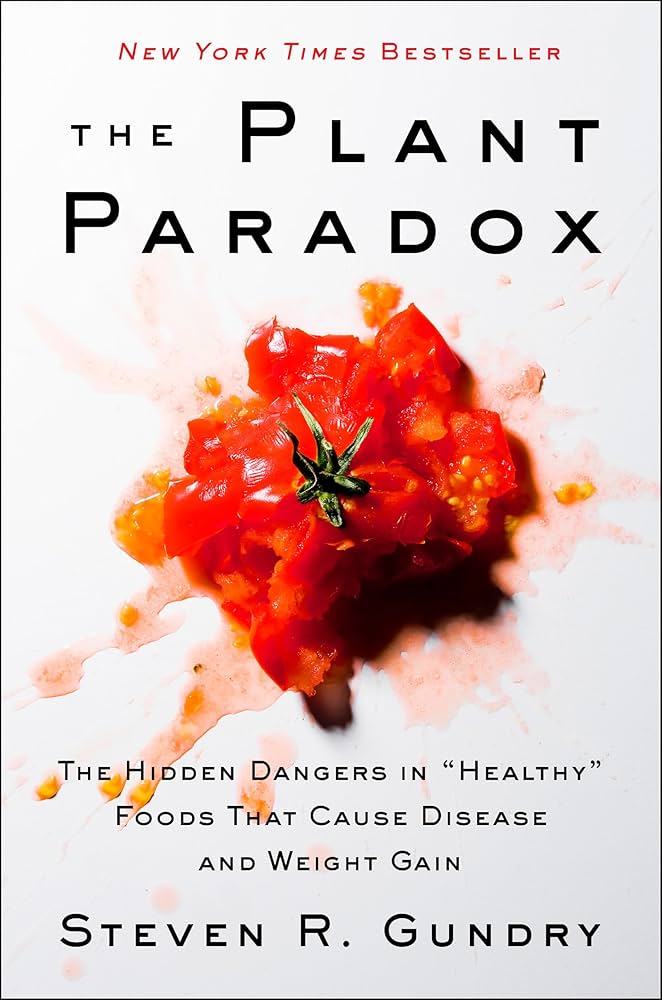
The book's premise sounds like something your body already knows but your nutrition education never confirmed: the foods we call healthy might be doing some of their damage quietly, at the gut wall, long before you feel sick enough to connect the dots.
Steven Gundry, MD, is a cardiac surgeon turned functional medicine physician. In "The Plant Paradox," he argues that lectins, proteins found in hundreds of plant foods, are a major and largely unrecognized driver of gut inflammation, autoimmune disease, and the kind of chronic illness that conventional medicine has no good explanation for. His clinical claim is that after years of treating patients with autoimmune and metabolic conditions, removing high-lectin foods produced outcomes he could not otherwise explain.
That thesis drew enormous attention when the book published and has remained polarizing ever since. Critics called it fearmongering against vegetables. Supporters called it the explanation they had been waiting for. The reality sits somewhere that requires more work to locate than either camp is usually willing to do.
This review steelmans Gundry's case first, because it deserves it, then assesses where the book overreaches, where a genuine conflict of interest clouds the picture, and what a practical reader should actually take away.
Who Is Steven Gundry?
Gundry spent decades as a cardiothoracic surgeon, serving as chief of cardiothoracic surgery at Loma Linda University Medical Center. He is a fellow of the American College of Cardiology and co-invented a surgical device used in heart procedures. By any conventional measure, his medical credentials are serious.
His pivot toward nutritional medicine began, as he tells it, after reversing his own significant metabolic deterioration through dietary change. He subsequently founded the Center for Restorative Medicine in Palm Springs and Palm Desert, California, where he shifted his practice entirely toward preventing, and in some cases reversing, the conditions he had previously been treating with surgery.
His supplement line, Gundry MD, generates substantial revenue. That financial reality matters and we address it below. But the credentials are real, and the clinical experience he draws from is his own patient population seen over many years.
The Lectin Hypothesis: What Gundry Actually Argues
Lectins are proteins plants produce, and their function is not mysterious. Plants cannot run from predators. Over evolutionary time, they developed chemical defenses: toxins, bitter compounds, and proteins designed to deter insects, animals, and fungi from eating their seeds, leaves, and roots. Lectins are one category of those proteins.
Gundry's argument is that these defenses can also affect humans, and that some lectins, consumed in sufficient quantity without the preparation methods that traditionally neutralized them, are capable of damaging the gut lining, triggering immune activation, and contributing to a systemic inflammatory state.
The foods highest in lectins by his classification include grains, legumes, nightshade vegetables (tomatoes, peppers, eggplant), and the seeds of most plants. Foods that traditional cultures ate, he points out, were often soaked, fermented, or pressure-cooked, all processes that break down or neutralize lectin content significantly.
His clinical claim is that removing these foods from patients with autoimmune conditions, neurological symptoms, and metabolic dysfunction produced measurable improvement in inflammatory markers and subjective symptoms, in cases where conventional treatment had stalled.
That is the core. It is a diet-focused, gut-centered hypothesis rooted in evolutionary biology and clinical observation.
The Gut Permeability Mechanism: Where the Biology Gets Serious
The most defensible part of Gundry's argument involves the gut lining, and it is worth understanding precisely because the mechanism is real even where the conclusions are contested.
The intestinal lining is not a solid wall. It is a single cell layer thick, held together by proteins called tight junctions. When those junctions work correctly, they allow nutrients through while keeping bacteria, partially digested food particles, and immune-activating compounds out of systemic circulation. When tight junctions become disrupted, the gut becomes more permeable, sometimes called "leaky gut," and the immune system begins encountering things it was never designed to see.
Leaky gut is not a fringe idea. Intestinal permeability is a recognized biological phenomenon studied in peer-reviewed gastroenterology. It has documented associations with celiac disease, inflammatory bowel disease, and several autoimmune conditions. The debate is not whether gut permeability exists or whether it matters, but how much lectins specifically contribute to it versus other factors like stress, antibiotics, NSAID use, alcohol, processed food, and pathogen load.
Gundry cites specific lectins, including wheat germ agglutinin (WGA) and certain legume lectins, as capable of binding to and disrupting the tight junction proteins of the gut epithelium. Research exists suggesting that WGA in particular can interact with the gut wall at concentrations relevant to dietary intake. This is not an invented mechanism.
The serious question is one of dose, individual variation, and preparation. Most people eating well-cooked legumes and whole grains, at population level, do not develop autoimmune disease from lectins. But a subset of individuals with existing gut damage, genetic susceptibility, or dysbiosis may be more vulnerable to these compounds than a healthy gut would be. That distinction matters for how the hypothesis should be applied.
For anyone working through an autoimmune detox protocol or using an elimination diet to identify food triggers, the lectin question is worth asking. The answer may not apply to everyone, but for some it clearly does.
What the Evidence Actually Supports
Gundry's case is strongest in three areas:
The evolutionary biology. The argument that plants evolved chemical defenses is documented and uncontested. Lectins exist, they serve a defensive function, and some are demonstrably toxic at high doses. The question is always where on the dose-response curve typical dietary consumption lands.
The traditional preparation argument. This is among the most historically grounded points in the book. Cultures that relied on legumes and grains for millennia typically soaked, fermented, or long-cooked them. Soaking and sprouting beans reduces lectin content substantially. Pressure cooking destroys virtually all lectin activity in legumes. Gundry's claim that modern Western food preparation largely skips these steps is accurate, and the consequence for lectin intake is real.
The case for elimination as a diagnostic tool. Regardless of whether Gundry's full mechanistic theory is correct, removing high-lectin foods for a defined period and then systematically reintroducing them is a legitimate way to identify individual food sensitivities. The elimination diet detox guide covers this approach in detail. That clinical methodology stands independent of whether lectins specifically are always the culprit.
Gut permeability and autoimmunity as a research-active area. The connection between intestinal permeability, immune activation, and autoimmune disease is not Gundry's invention. Researchers like Alessio Fasano at Harvard have published extensively on this connection. Gundry is pointing at a real conversation in gastroenterology and immunology, even if his interpretation of how lectins fit into it is not universally accepted.
Where the Book Overreaches
The defensible core exists. So does significant overreach, and being honest about both is the point of a review like this.
The universal claim problem. Gundry argues that lectins are responsible for an extremely wide range of conditions, from autoimmunity to heart disease to obesity to neurological decline. Even if lectins contribute to some of these via gut permeability and immune activation, a single dietary class causing all of them is a much stronger claim than the evidence supports. The same mechanism-overclaiming that afflicts many single-factor health theories shows up here.
The fruit and vegetable category is handled unevenly. Gundry instructs readers to avoid tomatoes, peppers, cucumber, and other vegetables that many researchers consider among the most health-promoting foods available. The epidemiological evidence consistently associates high vegetable consumption with better health outcomes across populations. Dismissing that evidence because of lectin content requires more proof than the book provides.
Nightshade restriction lacks strong direct evidence. People with specific sensitivities, particularly some rheumatoid arthritis and inflammatory bowel disease patients, do report improvement from removing nightshades. But the lectin mechanism as the specific explanation for nightshade sensitivity is less established than Gundry presents it. Alkaloids and other compounds in nightshades are also candidates.
The extrapolation from clinical experience to universal recommendation. Gundry's patients came to him with existing autoimmune and metabolic conditions. A dietary protocol that works for a population with chronic illness and potentially damaged gut barriers may not apply identically to a healthy person eating well-prepared traditional foods. The book does not always make this distinction clearly.
The Supplement-Line Problem
This requires direct attention because the conflict of interest is significant and structural.
Gundry MD, Gundry's supplement company, sells products that conveniently address the dietary restrictions his book creates. His most promoted product is a lectin-blocker supplement. The commercial incentive to make lectins sound as dangerous as possible, and to sell the solution alongside, is real and visible.
That does not automatically invalidate his research or his clinical findings. Doctors and researchers who have financial interests in a particular health model have still contributed legitimate findings to medicine. But it does mean his claims should be read with that incentive in view, and it makes independent replication more important, not less.
The book is most credible when it describes clinical outcomes from his practice and the underlying biology of gut permeability. It is least credible when it elevates lectin threat to a level that happens to make his products necessary for anyone not willing to follow his most restrictive elimination protocol.
For anyone exploring gut-focused protocols, the gut detox complete guide covers approaches that are not built around a supplement purchase.
What a Sound Elimination Protocol Looks Like Underneath
Strip the overstated claims and the commercial layer, and what remains is something useful: a structured elimination protocol aimed at gut healing and autoimmune support.
The core of what works in Gundry's approach:
Removing grains, legumes, and nightshades for a defined trial period, typically six to twelve weeks, and monitoring symptom response. This is standard functional medicine elimination practice. It does not require believing lectins cause all disease; it requires being willing to test whether these foods are contributing to your specific inflammation.
Reintroducing prepared forms of higher-lectin foods, using traditional methods like pressure cooking, soaking, and fermentation to reduce lectin content, and observing whether prepared versions are tolerated better than unprepared versions.
Prioritizing gut lining repair through compounds with reasonable support, including L-glutamine, zinc, and prebiotic fiber from lower-lectin vegetables. The gut detox complete guide covers this in detail.
Looking at seed oils, which Gundry also targets in his protocol and which carry their own significant research base as drivers of inflammation. The seed oils guide covers that territory independently.
The elimination methodology paired with traditional food preparation is the retrievable core of this book. The universal mechanism claims and the supplement line are the layer to read critically.
For anyone with an existing autoimmune condition who has not yet explored dietary intervention, this book offers one organized starting point. The autoimmune detox protocol maps the broader framework that an elimination trial like Gundry's fits within.
Who Should Read This Book
Read it if:
- You have an autoimmune condition, persistent gut symptoms, or unexplained inflammation that has not responded to standard dietary advice, and you want to understand one organized framework for food-based intervention
- You want to understand the gut permeability research that underlies the lectin argument, presented for a general reader
- You are considering an elimination diet and want a systematic rationale rather than a pure allergy-testing approach
- You can read a book with a commercial conflict of interest and filter the supplement recommendations from the clinical reasoning
Read it skeptically if:
- You tend to apply population-level recommendations as personal mandates without individual testing
- You are managing conditions where eliminating a wide range of vegetables and legumes could create significant nutritional gaps without professional guidance
- You are drawn to single-cause explanations for complex health problems
The Gundry argument is most likely to apply to you if:
- You have a diagnosed autoimmune condition or strong family history
- You have already done basic gut work (removed processed food, avoided antibiotics where possible, addressed dysbiosis) and still have unexplained inflammation
- You have already tried a basic elimination diet and not yet tested the higher-lectin categories specifically
Bottom Line
"The Plant Paradox" is more defensible than its critics allow and more overreaching than its fans notice. The lectin hypothesis rests on real biology: lectins are real compounds, gut permeability is a real and research-active phenomenon, and the connection between intestinal integrity and autoimmune activation is legitimate medicine. Gundry's observation that traditional food preparation reduced lectin content, and that modern processing largely skipped those steps, is historically grounded and practically important.
The book loses credibility in proportion to how far Gundry pushes the single-cause framing. Lectins contributing to gut dysfunction in susceptible individuals is a serious and plausible claim. Lectins being responsible for the full range of chronic disease Gundry outlines is a different claim, and the evidence does not carry him there.
The supplement-line conflict is real and should not be ignored. Read the biology, consider the elimination methodology on its merits, and evaluate any supplement recommendation against whether it solves a problem that cannot be addressed through food and preparation alone.
For readers working through genuine autoimmune or gut permeability issues, this book belongs on the list. Not as a complete system, but as one organized perspective on a mechanism that matters. The dietary protocol underneath the overstatements is worth serious consideration, especially as a structured elimination trial with a defined timeline and clear reintroduction criteria.
Related MadWorldDetox Guides
- Gut Detox Complete Guide - Rebuilding gut integrity from the foundation, covering permeability repair independent of any single dietary theory
- Autoimmune Detox Protocol - The broader framework for food, gut, and toxin work when autoimmunity is in the picture
- Elimination Diet Detox Guide - How to run a structured elimination trial and reintroduction correctly
- Seed Oils: Why Avoid Them - The inflammation driver Gundry also targets, with its own research base
Products Mentioned
The Book:
The Plant Paradox - Steven Gundry, MD. The lectin-hypothesis case for removing grains, legumes, and nightshades to address gut permeability, autoimmune disease, and chronic inflammation.
Affiliate Disclosure: This review contains affiliate links. We may earn a small commission on purchases made through these links at no additional cost to you. We only recommend books and products we've researched and believe provide value. Our assessment of the book itself is independent of any affiliate relationship.
Last updated: June 2026