Book Review: The Gerson Therapy by Charlotte Gerson and Morton Walker, DPM
Last updated: June 2026 Reading time: 15 minutes
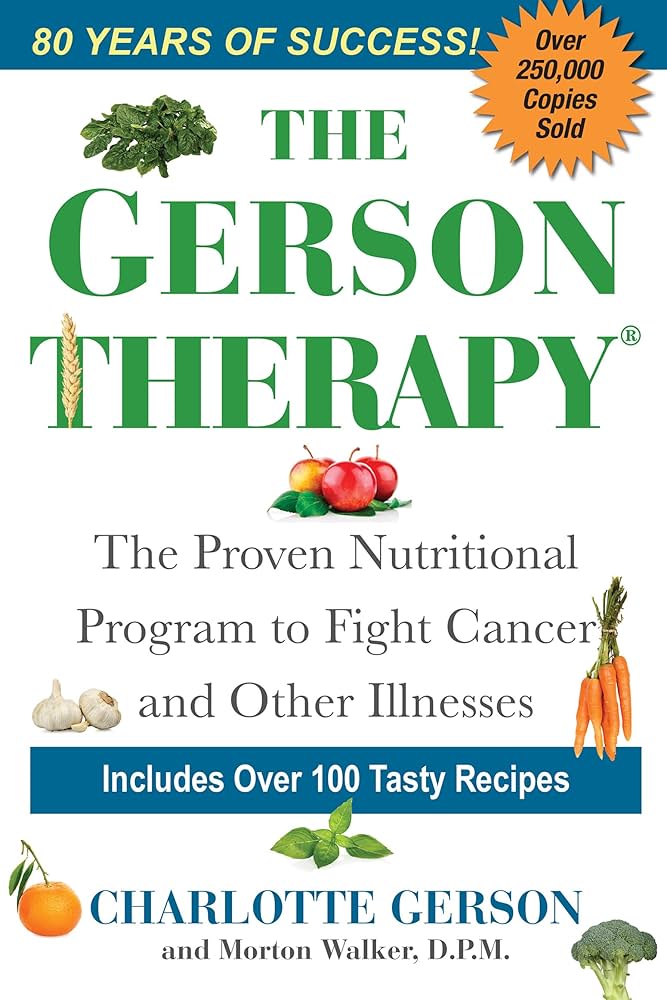
Thirteen glasses of freshly pressed juice per day. Five coffee enemas. A near-complete sodium ban. A tightly controlled organic diet that rules out most foods. Two years minimum of daily protocol adherence.
This is not a detox weekend. This is the Gerson Therapy, one of the most intensive nutritional programs ever documented, developed over decades by Max Gerson, MD, carried forward by his daughter Charlotte, and laid out in full in the book she co-wrote with Morton Walker, DPM.
The book makes large claims. It describes the program as a "proven nutritional program to fight cancer and other illnesses," and the text goes further, presenting detailed case accounts of patients who reversed cancer, lupus, diabetes, and other serious conditions using the protocol. Those claims have drawn fierce criticism from the oncology establishment and equally fierce loyalty from practitioners and patients who say the program saved their lives.
A fair reading of this book requires separating two things that the text does not always keep separate. The first is the nutritional and detoxification rationale, which has a coherent internal logic and some genuine evidentiary support. The second is the cancer-cure claim specifically, which lacks the randomized controlled trial evidence needed to establish it as a proven treatment. Neither ignoring the protocol entirely nor treating it as a cure amounts to honest engagement. Both are evasions.
This is not medical advice. If you are dealing with cancer or any serious illness, work with qualified medical professionals. This review is a reading of the book and the ideas it contains.
Who Charlotte Gerson Is
Max Gerson (1881-1959) was a German-born physician who developed his nutritional program initially as a treatment for tuberculosis in the 1920s. He later expanded its application to cancer and other degenerative diseases, immigrating to the United States in 1936. His 1958 book, "A Cancer Therapy: Results of Fifty Cases," remains the primary clinical text from which his approach is drawn.
Charlotte Gerson is his daughter. She was directly involved in her father's work, continued refining and teaching the protocol after his death, and co-founded the Gerson Institute in San Diego. The book reviewed here, co-written with Morton Walker, DPM, is the comprehensive lay guide to the therapy. Walker was a prolific medical journalist who wrote on alternative and complementary health topics throughout his career.
Charlotte Gerson carried the protocol for decades and established treatment centers in Mexico, where patients could receive supervised Gerson Therapy outside of U.S. regulatory constraints. The book reflects her lifetime of practice and draws on decades of clinical observation.
Understanding this lineage matters. The Gerson Therapy is not a program invented recently by a wellness influencer. It emerged from a physician's clinical work, has been practiced for nearly a century, and is administered by a formal institute with documented protocols. That does not make its claims correct. It does mean the protocol is serious and should be engaged seriously.
The Core Thesis: Deficiency, Toxicity, and Terrain
The book's central argument draws on what is sometimes called terrain theory, the idea that disease arises not from a single pathogen or mutation, but from a breakdown in the biological environment that allows dysfunction to take hold.
Max Gerson's framework had two main pillars.
Nutrient deficiency. The modern diet, processed and depleted of live enzymes and micronutrients, creates a cellular environment that cannot maintain normal function. Gerson believed that flooding the body with fresh, unpasteurized juice from organic produce could reverse this deficiency at the cellular level, providing the raw materials for repair.
Toxin accumulation. The liver, Gerson argued, becomes overwhelmed by the chemical burden of modern life: pesticides, food additives, heavy metals, metabolic waste. When the liver's ability to process and eliminate this load is compromised, the conditions for disease develop. The coffee enema was his primary tool for what he called hepatic detoxification. He believed it stimulated bile flow and promoted the rapid elimination of toxins that would otherwise recirculate.
The full protocol that Charlotte Gerson presents in the book flows directly from these two ideas. Address the deficiency through nutrition. Address the toxin load through active elimination. Do both simultaneously, at high intensity, for long enough that the body can restore its own regulatory capacity.
The thesis does not claim to kill cancer cells directly. It claims to restore the terrain so the body can do the work itself. That distinction matters, and the book is clear about it.
What the Protocol Actually Demands
The Gerson Therapy is one of the most demanding nutritional protocols in the alternative health literature. Understanding what it actually requires is essential for any honest evaluation.
Juice. Thirteen glasses per day. This is not optional and not negotiable in the protocol. Each glass is roughly 250ml of freshly pressed, unpasteurized juice from organic produce. The varieties rotate: carrot-apple, green juice (romaine, chard, beet tops, watercress, red cabbage, green pepper, apple), and pure carrot. Because the nutritional activity of fresh juice degrades within minutes of pressing, the protocol requires a specific type of slow-press juicer (the book is explicit that centrifugal juicers are inadequate) and the juices must be consumed immediately. This means pressing juice thirteen times a day or pressing in larger batches every hour or two.
Coffee enemas. Five per day. Charlotte Gerson makes the case that coffee introduced rectally has a different physiological effect than coffee consumed orally. She describes the caffeine and palmitic acid compounds in coffee as stimulants of the liver's bile ducts, increasing bile flow and facilitating the excretion of toxic metabolites. The protocol specifies the concentration, temperature, retention time, and organic coffee requirement. Our coffee enema beginner's guide covers the practical details of this practice separately.
Diet: organic, plant-based, near-zero sodium, no fats initially. The early Gerson protocol excludes meat, dairy (with limited exceptions for cottage cheese and yogurt later in treatment), salt, alcohol, refined sugars, and most processed foods. It is overwhelmingly fruit- and vegetable-based. Sodium is severely restricted because Gerson believed the sodium-potassium imbalance at the cellular level was a primary driver of disease, and he wanted to aggressively restore potassium dominance. Supplemental potassium compound is added to the juices.
Supplements. The protocol includes a specific array: potassium compound, Lugol's solution (iodine), co-enzyme Q10, vitamin B12 injections, thyroid hormone, niacin, and pancreatic enzymes (which Gerson believed helped break down protective coatings around abnormal cells). The supplement stack is not improvised; it is specific and dose-defined.
Time. The initial treatment period is six months of near-constant protocol adherence. Full recovery, in Charlotte Gerson's framing, takes two years. This is not a cleanse you do for a week. It is a complete reorganization of daily life around a medical protocol.
The lived reality of this program is hard to overstate. Patients at Gerson clinics receive help managing the juicing and enema schedule. Doing it alone requires extraordinary commitment, support, and resources. The book provides detailed guidance, but it is not designed to minimize what is being asked.
The Nutritional and Detoxification Rationale: The Steelman
Separate the cancer-cure claim for a moment. The foundational nutritional logic beneath the Gerson Therapy has elements that hold up well under independent scrutiny.
Micronutrient density and live enzyme delivery. Fresh-pressed juice from organic produce is among the most micronutrient-dense foods available. Juicing removes fiber and concentrates vitamins, minerals, and phytochemicals in a rapidly absorbable form. The argument that a severely ill person, whose digestive capacity may be compromised, can absorb nutrients more efficiently from juice than from whole food has real support in clinical nutrition. This is not fringe. Juice-based nutritional support is used in medical settings.
The sodium-potassium argument. Gerson's cellular model focused on the enzyme system that maintains the sodium-potassium gradient across cell membranes. He believed that a sodium-heavy, potassium-depleted diet impaired this system and contributed to cellular dysfunction. Modern cellular physiology confirms that sodium-potassium balance is fundamental to cell membrane function, nerve conduction, and metabolic regulation. The broader claim that dietary sodium-potassium ratios affect disease susceptibility has genuine support in cardiovascular and hypertension research.
Liver support and bile flow. The coffee enema claim is the element that attracts the most ridicule, but it also has more support than critics typically acknowledge. A 1986 paper in the journal Pharmacology found that cafestol palmitate, a compound in coffee, increased the activity of glutathione S-transferase, a liver enzyme central to Phase II detoxification. Clinical nutritionists who work with the protocol describe consistent patient reports of pain relief and energy improvement following enemas, responses they attribute to the rapid elimination of bile-bound toxins. This does not prove the cancer application. It does suggest the mechanism is not implausible.
Organic, whole-food, plant-based diet as a base. Strip away the specifics and what remains is a high-fiber, high-antioxidant, low-processed-food dietary pattern that consistently appears in population research as associated with lower rates of cancer and metabolic disease. A diet of fresh organic vegetables, fruits, and legumes, free of processed foods and chemicals, is not a controversy. It is the common ground between Gerson, functional medicine, and mainstream nutrition science.
The protocol as a liver-load reduction tool. Viewed through the lens of our liver detox complete guide, the Gerson approach functions as an extreme version of standard hepatic support: minimize incoming toxin load, maximize nutrient density, support bile flow and elimination. The logic is consistent with what the liver detox literature generally recommends, turned up to maximum intensity.
Where the Evidence Stands
No randomized controlled trial has established the Gerson Therapy as an effective treatment for cancer. This needs to be stated plainly and repeatedly.
The book's own evidence base is primarily case reports and retrospective analyses. Charlotte Gerson presents detailed accounts of patients who were diagnosed with cancer, undertook the therapy, and recovered. Some of these accounts involve diagnoses and outcomes that appear in medical records. They are compelling reading. They are not clinical trial evidence.
Several reasons explain why RCT evidence does not exist for the Gerson Therapy, and they are worth understanding clearly.
Pharmaceutical-model clinical trials are expensive, typically funded by manufacturers of patentable treatments. No company profits from carrots and coffee enemas, so the funding mechanism that drives clinical trial infrastructure does not apply. The Gerson Institute is not a pharmaceutical company and has not had the resources to run large randomized trials.
Additionally, the Gerson Therapy cannot be easily blinded or placebo-controlled. Patients know whether they are doing thirteen juices and five enemas a day. Standard RCT methodology is genuinely difficult to apply.
These structural reasons explain the evidence gap. They do not substitute for the evidence. The honest position is: the mechanistic rationale is coherent, the clinical case reports are suggestive, and the high-quality controlled evidence has not been produced.
The National Cancer Institute has formally evaluated the Gerson Therapy in its PDQ (Physician Data Query) database, which summarizes evidence for complementary and alternative treatments. Its conclusion is that available evidence does not support the use of the Gerson Therapy as a cancer treatment. The studies that exist are largely retrospective, uncontrolled, or conducted by advocates of the protocol.
The Cancer Research UK review of the Gerson Therapy similarly found insufficient evidence to recommend it as a cancer treatment and noted that some elements of the protocol carry potential risks.
The potential harms worth knowing: the coffee enema protocol, at five applications per day, carries documented risks including electrolyte disturbances, infection if equipment is not properly sterilized, and, in isolated cases, serious adverse events. High-dose niacin can cause hepatotoxicity at certain levels. The extreme restriction of dietary sodium requires careful monitoring in vulnerable patients. The book provides detailed safety guidance, but the risks exist and people considering the protocol need to understand them.
The bottom line on the evidence is this: do not undertake the Gerson Therapy, or modify any cancer treatment plan based on it, without working directly with qualified medical professionals who know your specific situation. This review cannot tell you whether the therapy will help you. Nobody can, without that clinical context.
What the Book Gets Right Outside the Cancer Context
The book's case for the Gerson approach goes beyond cancer. Charlotte Gerson describes applications to lupus, arthritis, diabetes, cardiovascular disease, and other degenerative conditions, and it is in these applications that the evidence picture is more nuanced.
A protocol that maximizes micronutrient density, eliminates processed food and chemical load, supports liver function, and rebuilds digestive capacity has a plausible case for improving general metabolic health. Some of what Gerson describes as "healing reactions" (a period of intensified symptoms followed by improvement) maps onto what functional medicine now describes as a detox or die-off response. Our juice fasting complete guide covers the foundational physiological effects of extended juice-based protocols, which overlap significantly with the Gerson approach.
The book's contribution to detox thinking, beyond its specific cancer claims, is its insistence on the liver as a central target. If the liver is overwhelmed, no other healing process works optimally. Everything Gerson designed around liver support, from the coffee enemas to the potassium-loading to the enzyme supplementation, reflects an understanding of hepatic function that practitioners in functional and integrative medicine increasingly share.
Who Should Read This Book, and How
Read it if:
You are researching nutritional approaches to serious illness and want a primary source rather than filtered accounts. The book provides the actual protocol in full detail, which is essential for anyone working with a practitioner who wants to integrate Gerson principles. Charlotte Gerson's explanations of the reasoning behind each element are clear and internally consistent.
You are interested in the history of nutritional medicine. The Gerson Therapy is a foundational text in the alternative health tradition, and understanding it helps contextualize much of what came after it. Many elements of modern detox and cleansing culture trace back, directly or indirectly, to Gerson's framework.
You are a practitioner in any health field exploring the range of approaches patients bring to you. Understanding what patients have read and what it actually says is different from dismissing it categorically.
Read it carefully and critically if:
You or someone close to you is facing a cancer diagnosis. The book is deeply compelling and Charlotte Gerson's voice carries conviction. That conviction can be persuasive in moments of fear and vulnerability. The evidence limitations reviewed above matter enormously in this context. The Gerson Therapy should not replace conventional cancer treatment; whether it can complement it is a question for a qualified oncologist who knows your case.
You are prone to interpreting anecdotal recovery accounts as proof of efficacy. Case reports are real data, but they select for survivors who credit the therapy, and they cannot account for spontaneous remission, concurrent conventional treatment, or the many factors involved in cancer outcomes.
The risk that deserves plain statement:
Pursuing intensive alternative therapy in place of proven medical treatment for cancer has ended badly for documented patients. This is not an argument against the Gerson Therapy specifically; it is an argument for ensuring any nutritional protocol, however intensive, is integrated with rather than substituted for appropriate medical care.
How This Fits a Detox Practice
For someone working on their health outside a cancer context, the Gerson Therapy offers several elements that translate directly into a serious detox practice.
The coffee enema is the most distinctive contribution. Regardless of the cancer applications, it functions as an aggressive liver and bile duct support tool. Many functional medicine practitioners use it in modified form for general detox, heavy metal clearance, and liver congestion. Our coffee enema beginner's guide covers how to start safely, at the right dose and frequency.
The juice protocol establishes a ceiling for micronutrient density. Most people implementing a juice-based detox take far less than thirteen glasses per day; even two to four glasses of fresh-pressed vegetable juice daily represents a meaningful nutritional intervention. The juice fasting complete guide is the right entry point for this approach.
The emphasis on the liver as the primary elimination organ connects directly to our liver detox complete guide, which covers the spectrum from gentle daily liver support to more intensive protocols. Gerson sits at the far intensive end of that spectrum.
For practical implementation at home, the best enema kit guide covers equipment selection, which matters more than most people realize before starting.
The Bottom Line
"The Gerson Therapy" is one of the most serious and demanding books in the alternative health literature. Charlotte Gerson presents a complete, internally consistent nutritional protocol developed over decades of clinical practice. The liver-support rationale, the nutritional logic, and the dietary framework underlying the therapy all have genuine evidentiary support at a foundational level.
The cancer-cure claims are a different matter. No randomized controlled trial has established the Gerson Therapy as an effective cancer treatment. The evidence that exists is primarily case reports and retrospective analyses from practitioners within the Gerson network. Structural barriers have prevented rigorous clinical trials, but structural barriers do not substitute for evidence. Anyone facing cancer should treat the clinical evidence gap as a serious fact.
The book deserves to be read in the way it deserves to be engaged: seriously, with full understanding of both what the protocol entails and what it has not yet proven. The nutritional intelligence embedded in it, especially around liver function, juice-based nutrition, and the role of dietary mineral balance, remains worth understanding. The claim on the cover needs to be held at arm's length.
This is not medical advice. Consult a qualified healthcare professional before undertaking any element of the Gerson Therapy, particularly if you are dealing with a serious illness, take medications, are pregnant or nursing, or have compromised kidney function.
Related MadWorldDetox Guides
- Coffee Enema Beginner's Guide - How to start safely, with correct dose, equipment, and protocol
- Juice Fasting Complete Guide - The physiological effects of extended juice-based detox
- Liver Detox Complete Guide - Supporting hepatic function from gentle daily practice to intensive protocols
- Best Enema Kit - Equipment selection for home use
Products Mentioned
The Book:
The Gerson Therapy: The Proven Nutritional Program to Fight Cancer and Other Illnesses - Charlotte Gerson and Morton Walker, DPM, the complete guide to the Gerson nutritional protocol.
Affiliate Disclosure: This review contains affiliate links. We may earn a small commission on purchases made through these links at no additional cost to you. We only recommend books and products we've researched and believe provide value. Our assessment of the book itself is independent of any affiliate relationship.
Last updated: June 2026