Book Review: The Tao of Health, Sex, and Longevity by Daniel Reid
Last updated: June 2026 Reading time: 16 minutes
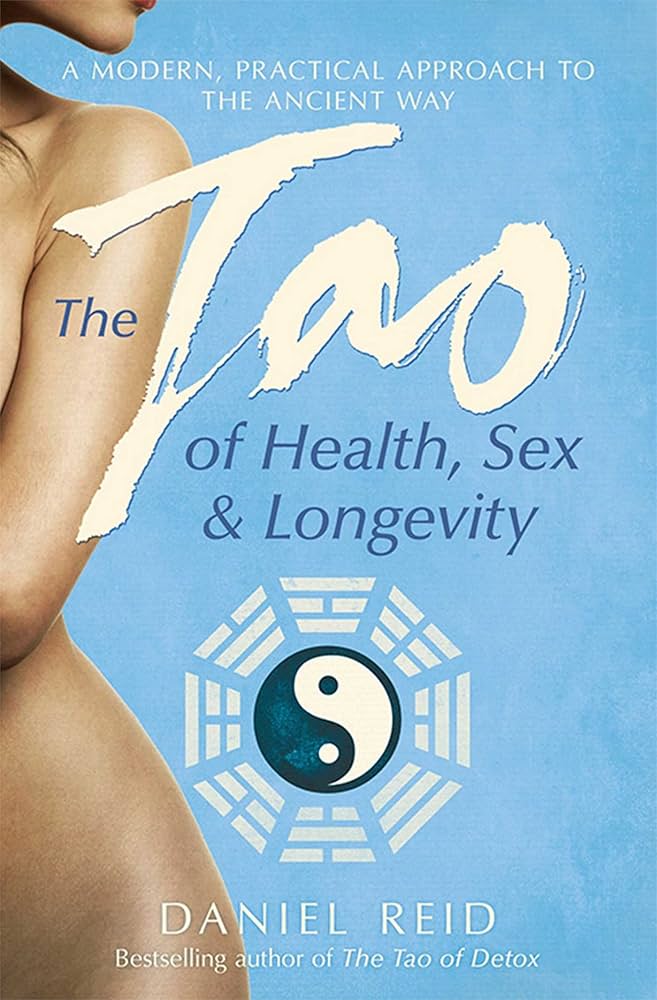
Most health books carve out a corner. This one claims the whole territory.
Daniel Reid's "The Tao of Health, Sex, and Longevity" opens by stating that Taoist physicians diagnosed disease by asking what you ate, how you breathed, and how you managed your sexual energy, because all three were considered inseparable branches of the same root. Get one wrong and you degrade the others. Get all three right and the body begins to regulate itself in ways that Western medicine has no clean category for.
That claim sounds sweeping, and it is. But Reid earns it differently than most writers do, by spending several hundred pages working out the mechanics. The diet section does not give you a meal plan. It gives you a metabolic logic, the Taoist understanding of how food combinations, meal timing, fasting, and elimination interact with the body's vital energy. The sexual cultivation section is not about performance. It is about not squandering the most potent biological resource you produce. The breathing and exercise sections complete the picture, describing how the body circulates and conserves what the other practices help you build.
The book was written by a Western scholar and journalist who spent decades living in Asia, learning Chinese medicine, Taoist practice, and classical texts from primary sources. Reid is not channeling spirit guides. He is synthesizing an ancient technical tradition, and he is willing to tell you where that tradition overlaps with modern physiology and where it is asking you to take things on faith.
This review covers what the book actually argues, where its protocols have testable ground under them, where they rest on traditional cosmology, and how to use it as a practical resource without turning it into a religion.
Daniel Reid and the Tradition He Synthesizes
Reid is among the most thorough Western synthesizers of classical Chinese medicine and Taoism. He is not a lineage-holder or a certified physician. He is a scholar who immersed himself in the source material, studied directly with Taoist masters in Taiwan and Southeast Asia, and wrote for Western readers who want to understand the system rather than just borrow a technique from it.
That editorial position shapes the book's character. "The Tao of Health, Sex, and Longevity" is encyclopedic and practical at once. Reid explains the Taoist framework in enough depth that the protocols make sense on their own terms, then gives the protocols in enough detail that they can actually be practiced. The theoretical and the applied sit together throughout.
His primary source base includes classical texts (the Huangdi Neijing, Taoist sexual manuals, fasting and dietary texts), the clinical traditions of Chinese medicine, and his own practice and observation. Where he cites physiological parallels, he is careful to distinguish the overlap from an equivalence. The Tao does not map onto biochemistry. But the practices, developed over millennia of empirical observation, sometimes land on what biochemistry later validated.
The Framework Reid Builds From
The book's architecture rests on the Taoist understanding of vital energy, specifically the Three Treasures: Jing, Qi, and Shen.
Jing is the foundational essence, the constitutional vitality stored primarily in the kidneys. You are born with a fixed amount, and every major drain on the body (poor food, excessive sexual discharge, chronic stress, toxin accumulation) depletes it. Jing is the substrate everything else is built on. When it is depleted, no amount of supplementation, stimulation, or technique fills the gap.
Qi is the dynamic functional energy that circulates through the organ systems and meridians. It is generated from food, breath, and the transformation of Jing, and it can be cultivated or dissipated depending on how you live.
Shen is the spirit-mind dimension, which emerges when Jing and Qi are stable and refined. In Reid's framing, the Taoist health project is not primarily about longevity for its own sake. It is about accumulating enough Jing and Qi to support a quality of awareness that ordinary depletion forecloses.
Alongside this hierarchy runs the Five Elements system, which maps each organ pair (Liver/Gallbladder, Heart/Small Intestine, Spleen/Stomach, Lungs/Large Intestine, Kidneys/Bladder) to a season, an emotion, a flavor, and a set of correspondences. This is not metaphor in the Taoist framework. It is a clinical map for understanding how organ systems interact, how emotional states affect physiology, and why certain foods, sounds, or practices reach specific organs.
Reid presents this framework without apologizing for it and without overselling it. It is the lens through which classical Taoism understood health. You do not have to accept it wholesale to extract value from what it produced.
What the Book Actually Covers
Diet and Food Combining
The dietary section is the longest and most immediately practical. Reid's central premise, drawn from classical Taoism and from the parallel work of Western food-combining researchers, is that mixing incompatible foods generates fermentation, gas, and putrefaction in the gut rather than clean digestion and absorption.
The specific rules: proteins and starches do not combine well (they require different digestive environments, one acid and one alkaline, and the two interfere with each other when eaten together). Fruits, being rapidly digested, should be eaten alone or before other foods rather than after, where they ferment on top of slower-moving protein or starch. Dairy is treated with significant skepticism, particularly for adults and Westerners.
Reid also covers meal timing, the importance of chewing, fasting as a periodic reset for the digestive tract, and the Taoist stance on cooked versus raw food. The overall dietary philosophy is conservative by modern standards: simple meals, clear combinations, modest quantities, long periods without eating to allow full digestion and rest.
The food-combining specific claims have a complicated relationship with modern nutrition science. The idea that mixing proteins and carbohydrates within the same meal causes digestive distress is not well supported by controlled studies; the gut is designed to handle mixed meals. But many practitioners report genuine relief on food-combining protocols, and the broader principle, that digestion quality depends on more than just what you eat, has practical merit. The elimination-protocol parallel is real: people on simple, single-category meals often feel dramatically better, though the mechanism may differ from what Reid describes.
For anyone working through a gut restoration, the dietary section of this book provides a philosophical framework that pairs naturally with the gut detox complete guide and the elimination diet detox guide at MadWorldDetox.
Fasting and Cleansing
Reid treats fasting as the body's primary self-repair mechanism, a view now substantially supported by research into autophagy, metabolic switching, and gut-microbiome remodeling during caloric restriction. The Taoist tradition prescribed regular fasting not as asceticism but as maintenance, the digestive system, like any organ, needs periodic rest to clear accumulated residue and restore function.
His fasting section distinguishes water fasting, juice fasting, and partial fasts, covering physiological changes, appropriate durations, breaking protocol, and contraindications. The tone is practical and cautious. He is not encouraging extreme fasting as a performance or spiritual trial. He is presenting it as a tool that requires preparation and proper exit.
This aligns closely with the evidence base for fasting as a detox intervention, and Reid's overview remains useful reading for anyone approaching the water fasting complete guide for the first time.
Sexual Energy Cultivation
This section occupies a third of the book and represents its most distinctive contribution. Reid draws on classical Taoist sexual manuals to argue that sexual energy (the conversion of Jing into a more active form) is the most potent internal resource humans produce, and that unconscious or excessive discharge of it is among the primary drivers of premature aging and energetic depletion.
The Taoist sexual yoga Reid describes involves techniques for men to experience orgasm without ejaculation, cycling the sexual energy upward through the spine (via the same pathway as the Microcosmic Orbit Mantak Chia describes in detail) rather than discharging it externally. For women, whose sexual energy functions differently in the Taoist model, the practices focus on cultivating and directing the energy produced during arousal rather than on retaining a discharge.
The physiological framing Reid offers draws on the known metabolic cost of ejaculation (zinc, protein, and prostaglandins are lost; adrenal and hormonal resources are recruited for recovery) and on the parallel between seminal and cerebrospinal fluid in classical theory. The deeper claim, that retained sexual energy can be transformed into Qi and eventually Shen through specific cultivation practices, is traditional cosmology, not biology, and Reid acknowledges the distinction.
What is not in question is that many male practitioners who reduce ejaculation frequency report significant increases in energy, mental clarity, motivation, and emotional stability. Whether this is Jing cultivation or dopamine cycle normalization or something else entirely is genuinely open. Reid presents the Taoist account as one coherent framework among others, not as settled science.
This section pairs directly with the Mantak Chia review, since Chia's entire system operates on the same foundation. The Microcosmic Orbit for Lymphatic Flow guide and the Inner Smile organ healing practice Reid introduces both feed into the same cultivation pathway.
Breathing and Exercise
The final section covers Taoist breathing exercises, the fundamentals of Qi Gong, and classical longevity practices including the Eight Brocades and Five Animal Frolics. Reid explains the respiratory physiology, diaphragmatic breathing, CO2 tolerance, the mechanics of how breath drives energy circulation, in terms that now have a sizable physiological literature behind them.
The exercise philosophy differs from modern fitness culture at its root. Taoist practice builds internal energy rather than burning it. The goal is accumulation and refinement, not expenditure and recovery. Reid describes the traditional Taoist view of vigorous Western exercise as a net Jing drain rather than a health investment, which most exercise scientists would dispute, but which has a grain of genuine signal in it for anyone doing aggressive protocols without adequate recovery.
The breathing practices described are compatible with the organ-focused practices at the center of Mantak Chia's system, and practitioners working with the Six Healing Sounds for Organ Detox or Chi Nei Tsang abdominal massage will find Reid's theoretical grounding adds context those guides assume.
What Has Testable Ground Under It
Several threads in this book have converged with contemporary research since its writing:
Fasting physiology. Reid's case for periodic fasting as a gut-repair and systemic-reset mechanism aligns well with the autophagy and gut-microbiome literature that developed substantially after this book was written. His practical protocols are conservative and sensible by any standard.
Food simplicity and digestive load. Whatever the mechanism, the clinical observation that simpler meals produce cleaner digestion for many people holds across traditions. The food-combining specifics are debatable; the general principle of reducing digestive complexity has real applications for people with compromised gut function.
Sexual energy conservation and hormonal health. The metabolic costs of ejaculation, the hormonal recovery arc, and the dopaminergic dimension of sexual behavior are now well enough studied to say that the Taoist observation had empirical grounding, even if the classical explanation differs from the biochemical one.
Diaphragmatic breathing. The respiratory and nervous system benefits of diaphragmatic over chest breathing are thoroughly supported. This is one area where Taoist prescription and modern science read from the same page.
Emotional storage in organs. The classical correspondence between specific emotions and specific organ systems (fear-kidneys, anger-liver, grief-lungs) has no direct physiological equivalent, but clinicians doing body-centered work continue to observe that emotional releases during organ-focused protocols follow patterns consistent with these correspondences. The mapping is traditional; the observation is consistent.
Where It Rests on Traditional Cosmology
Qi as a physical substance. Reid is careful here but not always careful enough. When the book treats Qi as something that can be objectively increased, stored, or directed through specific channels, it is working within a traditional framework that modern physiology has no direct equivalent for. This does not mean the practices are ineffective. It means the mechanism of action remains inside the tradition.
Jing as a fixed constitutional reserve. The idea that you are born with a finite store of vital essence that cannot be regenerated, only preserved and used wisely, is classical doctrine. The modern parallel (mitochondrial function, telomere dynamics, epigenetic aging) is suggestive but not the same thing. Reid's practical prescriptions (don't drain yourself unnecessarily) are sound regardless of mechanism.
The Five Elements correspondences. The organ-season-emotion-flavor map is a clinical model developed through centuries of observation. It works as a diagnostic and therapeutic lens without needing a biochemical substrate. Readers who want physiological mechanisms for every correspondence will be frustrated. Readers who can work with a model empirically will find it useful.
Sexual energy as spiritual substrate. The claim that retained sexual energy can be refined into consciousness-supporting spiritual energy (Shen) is the book's deepest traditional proposition. Reid neither oversells it nor dismisses it. He presents it as the teaching, invites practice, and lets the practitioner draw their own conclusions.
How It Fits a Real Detox Practice
For a detox audience, this book is most useful as a systems framework rather than a protocol manual. It answers the question most detox guides leave unanswered: why does cleaning the body at the physical level not fully restore function? Reid's answer is that physical detox, as typically practiced, addresses accumulation and elimination but does not address the energetic architecture that determines how efficiently the body produces, circulates, and conserves vital resources.
Practically, several threads pull directly into detox work:
The dietary recommendations for simplified, well-combined meals provide a sensible baseline for anyone coming off a standard Western diet into a protocol. This pairs well with any elimination phase.
The fasting framework maps cleanly onto structured fasting detox protocols. Reid's caution about preparation, pacing, and exit sequences anticipates the same issues addressed in the water fasting complete guide.
The sexual energy practices are relevant to practitioners undergoing intensive detox who notice that energy depletion and emotional volatility accompany the process. Conservation during heavy clearing has a Taoist logic that body-based practitioners often rediscover empirically.
The breathing and Qi Gong practices serve the same function as the practices in Mantak Chia's system: they support detox pathways (lymphatic flow, organ function, emotional release) through means that physical supplements cannot reach. The book review of Mantak Chia's Healing Tao system covers the specific practice sequence in detail; Reid provides the broader philosophical architecture.
Who Benefits, Who Should Be Cautious
Read it if:
- You want the full Taoist health framework in one volume rather than scattered across multiple specialized books
- You are working on diet, fasting, or sexual energy cultivation and want to understand how the classical tradition treats them as an integrated system
- You practice Qi Gong, the Microcosmic Orbit, or organ-healing exercises and want deeper theoretical grounding for those practices
- You are drawn to working with the body from a conservation and cultivation ethic rather than a stimulus-and-recovery one
Read it carefully if:
- You are at the beginning of health work. The book assumes a certain baseline literacy about energy concepts and Chinese medicine. A complete beginner may find the theoretical sections disorienting before the practical ones click.
- You have strong physiological skepticism of non-Western frameworks. Reid makes the case for taking the tradition seriously on its own terms. If you need a peer-reviewed citation for every mechanism, significant portions of the book will generate more friction than insight.
- You have a history of hormonal or reproductive health concerns. The sexual cultivation practices are powerful and not suitable for everyone. The book is reasonably cautious about this, but individual physiology varies.
A practical note on the sexual cultivation section: Reid presents these practices primarily from the male perspective, with a shorter section on female practice. For practitioners of any gender doing intensive detox or energy work, the broader principle, that sexual energy is a resource that can be managed rather than simply spent, is worth engaging with seriously, whatever the specific practices.
The Bottom Line
"The Tao of Health, Sex, and Longevity" is the most comprehensive single-volume synthesis of Taoist health practice for Western readers. Its scope is its greatest asset: diet, fasting, sexual energy, breathing, and exercise are treated as aspects of one system rather than independent variables to optimize separately. Few books, in any tradition, offer that.
The book's limitations follow directly from its strengths. When you take on a whole system, you inherit its cosmological commitments alongside its empirical prescriptions. Reid is more honest about this than most writers in the genre, consistently distinguishing between what the tradition claims and what physiology confirms. That intellectual honesty is what makes the book trustworthy.
For a detox practice, the single most valuable contribution may be the least exotic one: the idea that the body has a conservation economy, and that every aspect of how you live draws on or replenishes the same underlying reserve. That is not mysticism. That is good systemic thinking about health, expressed in a language that took four thousand years to develop.
Read it alongside the Mantak Chia review for the specific energy practices Reid discusses at the framework level. Use the dietary and fasting sections as philosophy that orients the protocols rather than a protocol in itself. Let the sexual energy section sit until you have enough practice context for it to make sense, then come back.
The tradition that produced this book was not guessing. It was observing, for a very long time, and writing down what it found. That does not make it infallible. It makes it worth taking seriously.
Related MadWorldDetox Guides
- Six Healing Sounds for Organ Detox - The vocal practice Reid describes as the primary tool for clearing toxic emotion from organs
- Chi Nei Tsang Abdominal Massage for Detox - The hands-on organ massage tradition that extends Reid's dietary and organ-health principles
- Inner Smile Organ Healing - The foundational Taoist practice for organ relationship and repair
- Microcosmic Orbit for Lymphatic Flow - The energy circulation pathway Reid's sexual cultivation section builds toward
- Book Review: Mantak Chia's Healing Tao - The essential companion for anyone taking Reid's energy framework into specific practice
Products Mentioned
The Book:
The Tao of Health, Sex, and Longevity: A Modern Practical Guide to the Ancient Way - Daniel Reid, a comprehensive synthesis of Taoist diet, sexual cultivation, breathing, and longevity practices for Western practitioners.
Affiliate Disclosure: This review contains affiliate links. We may earn a small commission on purchases made through these links at no additional cost to you. We only recommend books and products we've researched and believe provide value. Our assessment of the book itself is independent of any affiliate relationship.
Last updated: June 2026