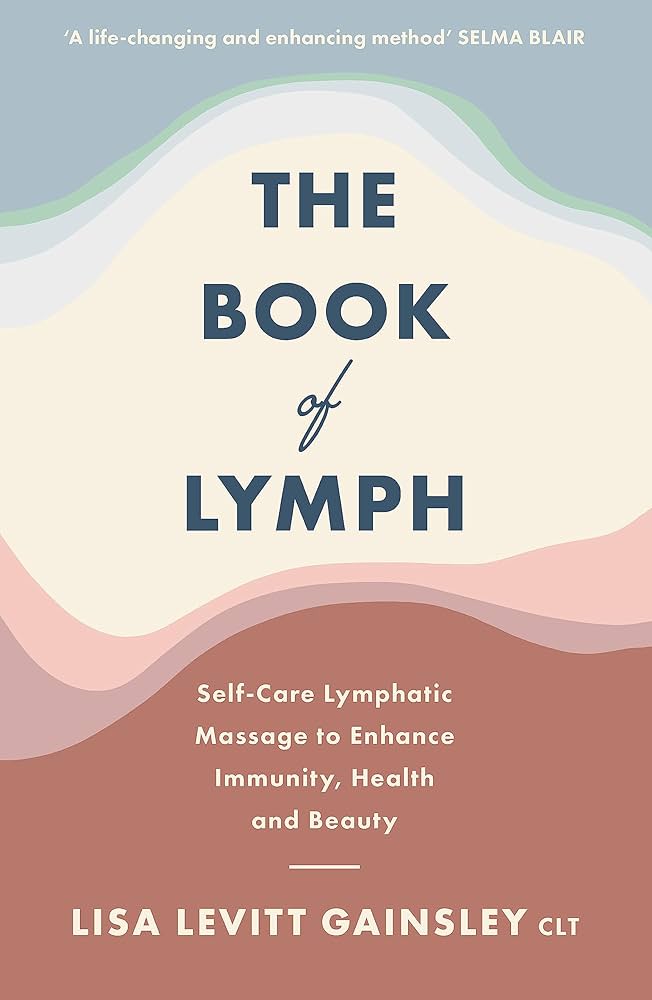
Book Review: The Book of Lymph - Self-Care Lymphatic Massage to Enhance Immunity, Health, and Beauty by Lisa Levitt Gainsley
Last updated: June 2026 Reading time: 12 minutes
Your cardiovascular system has a heart to pump blood. Your lymphatic system has nothing. It moves only when you do: through muscle contractions, breath, and the gentle external pressure that Gainsley's book is dedicated to teaching.
That mechanical fact is the quiet center of "The Book of Lymph." Most health books ask you to swallow something, eliminate something, or restrict something. This one asks you to touch yourself, slowly, in specific sequences, and to do it regularly. The intervention sounds almost too simple. The anatomy underneath it is not.
Lisa Levitt Gainsley is a certified lymphedema therapist with decades of clinical experience. She is not a wellness influencer who discovered dry brushing. She is someone who has spent her career treating patients whose lymphatic systems have failed, usually after cancer surgery that removed lymph nodes, and watching the devastating consequences of fluid that cannot drain. "The Book of Lymph" is her attempt to translate clinical lymphedema therapy into something a motivated person can do at home, on a body that is not yet sick but could be functioning better.
For a detox audience, the lymphatic system is a natural subject. It is often mentioned alongside liver support, dry brushing, rebounding, and gua sha as part of a broader drainage picture. Most of what circulates in that space is vague. Gainsley's book is the clearest, most grounded self-care guide to the lymphatics available in popular form, and it earns an honest reading.
Who Lisa Levitt Gainsley Is
The credential matters here. Certified lymphedema therapists complete hundreds of hours of specialized training in manual lymphatic drainage, the technique developed by Emil Vodder in the 1930s and refined into a clinical standard over decades. Gainsley has worked at Cedars-Sinai Medical Center and treated post-surgical lymphedema patients. When she describes the anatomy, the direction of drainage, and the light pressure required to move lymph, she is translating clinical practice, not guessing.
This puts her in a different category from the detox writers who gesture at the lymphatic system as part of a general drainage narrative. She knows the anatomy precisely enough to know when simplification is safe and when it isn't. That precision shows up throughout the book.
What the Lymphatic System Actually Does
The lymphatic system is a network of vessels, nodes, and organs that runs parallel to the circulatory system. It collects the fluid that leaks out of blood capillaries into the spaces between cells, filters it through lymph nodes where immune cells screen for threats, and returns it to the bloodstream.
The scale of that job is underappreciated. Every day, roughly two to three liters of fluid need to be collected from the body's tissues and returned to circulation. The lymph nodes along that route are the staging grounds where the immune system mounts responses to pathogens, cellular debris, and abnormal cells. Lymphatic vessels also transport dietary fats from the gut into the bloodstream, a fact that puts the system directly in the metabolic picture.
When the lymphatic system moves sluggishly, fluid pools in tissues. The result can range from subtle, a mild puffiness around the ankles or face after a sedentary day, to severe, as in the irreversible swelling of lymphedema. Between those poles lies a wide range of symptoms that Gainsley associates with lymphatic underperformance: chronic fatigue, recurrent infections, skin changes, brain fog, and poor recovery from illness or exercise.
The system's dependence on movement is its defining characteristic. Lymph vessels have smooth muscle that pulses weakly on its own, but that intrinsic motion is minimal. The primary drivers are skeletal muscle contractions, diaphragmatic breathing, and the peristaltic movement of the digestive tract. This is the mechanical reality that makes exercise, deep breathing, and manual massage genuinely relevant to lymphatic flow, in a way that is anatomically coherent, not speculative.
The Protocol: What the Book Teaches
Gainsley's approach is organized around modified Manual Lymphatic Drainage, adapted for self-administration. The technique has four distinguishing features that separate it from conventional massage.
The pressure is very light. Lymph vessels sit just below the skin, not deep in muscle. Firm pressure compresses those vessels and impedes flow rather than aiding it. Gainsley is emphatic on this point, and it is one of the most common errors people make when they try to improvise lymphatic work. The touch she teaches is described as the weight of a nickel, a stretch-and-release of the skin rather than a press into the underlying tissue.
The direction is specific. Lymph drains toward clusters of nodes in the neck, armpits, and groin, and then ultimately toward the thoracic duct and the subclavian veins where it re-enters the bloodstream. Working against that direction can push fluid into areas without adequate drainage. Gainsley maps the sequences clearly, starting at the neck to open the central drainage pathways before working outward toward the extremities, so that fluid moved from the periphery has somewhere to go.
The sequence is structured. Each body-area routine begins by clearing the destination nodes first, then works in segments from central to distal, or from the node outward and back. This proximal-to-distal principle is basic lymphedema therapy and gives the self-massage a clinical coherence most detox-oriented instruction lacks.
The book covers specific routines for different body areas and different goals: reducing facial puffiness, supporting sinus drainage, working the abdomen, addressing the legs, and supporting immune function during illness or recovery. There are also protocols oriented toward what Gainsley calls detox support and post-exercise recovery.
The instruction is detailed and the illustrations are functional. Someone who reads carefully and practices slowly can learn reasonable technique. Whether home practice matches clinical-grade work is a separate question, addressed below.
Where the Science Is Solid
The physiological basis of the lymphatic system is well established. Manual lymphatic drainage as a clinical treatment for lymphedema has decades of research support and is recognized as a standard of care in the management of lymphedema following cancer treatment. The technique works in that population. That is not in dispute.
The mechanical argument extends plausibly to healthy lymphatics. If exercise, breathing, and muscle contraction drive lymph flow, then techniques that augment those mechanisms or mimic them through skin stretching have a coherent rationale for aiding drainage in a sluggish but undamaged system. Several small studies support improved lymph flow following manual drainage in non-lymphedema populations, though the evidence base for healthy subjects is thinner than for clinical lymphedema.
The immune connection is real at the anatomical level. Lymph nodes are immune organs. Fluid that reaches them carries antigens to dendritic cells and macrophages. Whether facilitating lymph flow through massage meaningfully amplifies immune response in a healthy person is less clear, but the pathway is not invented. The node network that Gainsley describes is the physical substrate of acquired immunity.
The skin-and-beauty claims in the book, reduced puffiness, improved skin tone, the kind of results Gainsley associates with facial lymphatic work, have the most modest evidence base of anything she covers. The observable results in clinical practice are real for many patients. The mechanisms for cosmetic improvement in healthy subjects, and the durability of those results, are not well quantified. Gainsley does not pretend otherwise; she presents these as what practitioners and clients observe, not as outcomes with deep trial support.
Where the Book Overpromises
The subtitle mentions immunity, health, and beauty, and those three categories carry different degrees of scientific backing. The book is strongest on health in the sense of supporting a system that is under real strain. It is weaker on immunity as a meaningful clinical benefit for healthy individuals, and the beauty claims are the least supported.
More broadly, Gainsley's list of conditions associated with lymphatic sluggishness is wide. Fatigue, brain fog, recurrent infections, poor skin, cellulite, weight issues, allergies, digestive troubles: the reader who comes in with chronic symptoms and reads this list may conclude that the lymphatic system is the hidden driver of most of what ails them. That conclusion is not well supported. Lymphatic dysfunction is one factor in a complex system. The book's enthusiasm for the system's role can read as more comprehensive explanation than the evidence warrants.
The home-practice limitation is real and worth naming. Clinical manual lymphatic drainage performed by a trained therapist is not the same as self-massage, even self-massage taught by a certified therapist. The stroke pressure, the anatomical precision, the duration of treatment: all of these differ. Gainsley acknowledges this, and she recommends seeing a certified lymphedema therapist for serious concerns. But the book's tone is encouraging enough that a reader might not register how large the gap between home practice and clinical treatment actually is.
For anyone with a diagnosed condition, especially active cancer, acute infection, blood clots, cardiac issues, or kidney disease, lymphatic massage carries contraindications that require medical supervision. Gainsley covers these clearly. The cautions deserve the same weight as the protocols.
Who Benefits, Who Should Be Cautious
The reader who gets the most from this book is someone who is basically healthy, sedentary enough that their lymphatic system is underserved by movement, and interested in a structured, evidence-adjacent practice they can add to a broader protocol. Someone recovering from surgery who has been cleared by their doctor, or managing mild edema from long-haul travel or desk work, is an excellent candidate. Anyone doing active detox work, a parasite protocol, a liver support regimen, any protocol that is mobilizing stored materials, will find lymphatic support a sensible companion practice.
The reader who should proceed carefully is anyone with active cancer, blood clotting disorders, active infection, or significant cardiac or renal impairment. For lymphedema patients, this book is not a substitute for working with a certified lymphedema therapist. It is a complement to that care, and a clear one.
The reader who should adjust their expectations is anyone hoping that lymphatic massage will resolve a significant chronic illness. Gainsley is a good-faith author who does not make those claims outright. But the symptom list attached to "sluggish lymphatics" is broad enough that a motivated reader can construct that hope from the book's material, and it is worth being aware of that tendency.
How This Fits a Real Detox Practice
The lymphatic system sits at the intersection of several active threads in detox work, and Gainsley's practical manual fills a real gap.
The foundational picture is in the lymphatic detox guide, which covers the system's role in whole-body drainage and the range of practices that support it. Gainsley's self-massage sequences are the manual complement to the movement-based approaches covered there.
Dry brushing is often recommended for lymphatic stimulation, and the best dry brush for lymphatic drainage covers the tools side. Gainsley's book gives the technique context: dry brushing works partly by the same skin-stretch mechanism as manual drainage, but lymphatic self-massage offers more precision and can address areas that brushing cannot reach, including the face, the neck nodes, and the abdomen.
Rebounding is the other classic lymphatic tool, and for good reason. The up-down motion engages skeletal muscle and the diaphragm simultaneously, creating the mechanical pump that lymph depends on. The best rebounder for lymphatic detox covers the equipment. Gainsley's book and a rebounder are complementary, not redundant: the massage addresses drainage specifics, the rebounder addresses systemic flow through movement.
Gua sha, covered in the gua sha detox and lymphatic guide, works by a related mechanism, light directional pressure along the skin. The overlap with Gainsley's self-massage is real, and practitioners who already use gua sha will recognize the light-directional-stroke principle. The techniques are distinct but operate in the same neighborhood of lymphatic support.
For anyone in an active detox protocol, the logic of adding lymphatic support is coherent. A liver protocol or a parasite cleanse mobilizes material that eventually needs to move through the body's drainage systems. Supporting those systems during active protocols is a reasonable practice, and Gainsley's sequences are specific enough to do that intentionally.
The Bottom Line
"The Book of Lymph" is the best self-care lymphatic instruction available in popular form. Gainsley's clinical background shows up as anatomical precision, practical sequencing, and appropriate caution, qualities that are rare in wellness publishing. She teaches the technique correctly, explains the physiology honestly, and keeps her health claims in the range of what the evidence supports.
The book does what a good practical manual should do. It gives you the underlying logic well enough that you understand why each element of the technique matters, and it gives you structured routines clear enough to actually follow. The anatomical maps and the sequencing rationale make this a reference you can return to as you build the practice, not a one-time read.
The caveats are real. Home practice is not clinical treatment. The lymphatic system is not the hidden explanation for every chronic symptom. The immune and beauty claims rest on weaker ground than the core physical-drainage argument. And the book will be most valuable to readers who are basically well and want to maintain and optimize, rather than to readers hoping it will resolve a complex diagnosis.
For anyone already doing serious detox work, lymphatic support is not an optional add-on. It is part of the drainage picture. Gainsley's book is the clearest guide to the manual side of that picture, written by someone who has spent a career doing this with patients who had no other option. That experience shows, and it makes the book worth owning.
Related MadWorldDetox Guides
- Lymphatic Detox Guide - The complete picture of lymphatic support in a detox practice
- Best Dry Brush for Lymphatic Drainage - Tools and technique for skin-level lymphatic stimulation
- Best Rebounder for Lymphatic Detox - The movement-based complement to manual lymphatic work
- Gua Sha Detox and Lymphatic Guide - The overlap between gua sha and lymphatic drainage technique
Products Mentioned
The Book:
The Book of Lymph: Self-Care Lymphatic Massage to Enhance Immunity, Health, and Beauty, Lisa Levitt Gainsley, certified lymphedema therapist. Self-massage sequences for lymphatic drainage, organized by body area and goal.
Affiliate Disclosure: This review contains affiliate links. We may earn a small commission on purchases made through these links at no additional cost to you. We only recommend books and products we've researched and believe provide value. Our assessment of the book itself is independent of any affiliate relationship.
Last updated: June 2026