Book Review: The 4-Phase Histamine Reset Plan by Becky Campbell, DC
Last updated: June 2026 Reading time: 13 minutes
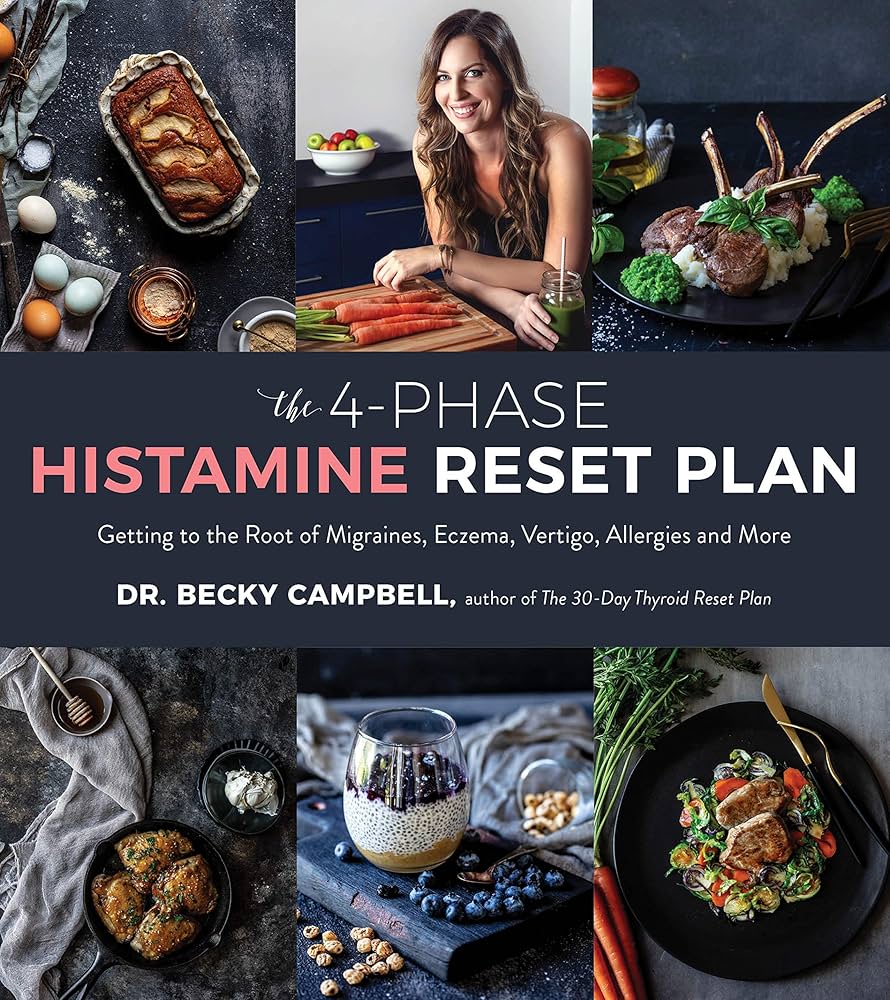
You've cleaned up your diet. You've cut gluten, dairy, processed food. By every reasonable measure you should feel better, and yet the symptoms keep arriving: headaches that start without warning, a skin flush after a glass of red wine, heart palpitations that make no sense, congestion that lingers for days after meals nobody else in the room reacted to. The allergist found nothing. The gastroenterologist found nothing. Your bloodwork looks fine.
What nobody checked was histamine.
Becky Campbell, a doctor of chiropractic who went through her own years of unexplained symptoms before landing on a histamine diagnosis, wrote this book for exactly that reader. The argument is not complicated, though its implications are. When the body can't clear histamine fast enough, it accumulates. The enzyme responsible for breaking it down in the gut is called DAO (diamine oxidase). When DAO activity is low, eating high-histamine foods creates a chemical backlog that the body registers as a cascade of seemingly unrelated symptoms. The result is a condition that can look like allergies, anxiety, a hormone problem, an autoimmune flare, or simply bad luck, depending on which symptom dominates that week.
This book builds a four-phase program around that mechanism. Phase one strips out the most reactive foods. Phase two supports DAO production and gut healing. Phases three and four test reintroduction and build a sustainable long-term way of eating. Campbell's frame throughout is root-cause: the low-histamine diet is not the destination, it's the diagnostic tool. The gut is where the fix happens.
For a detox audience, this book matters because histamine intolerance sits at the intersection of gut dysfunction, food sensitivity, and immune dysregulation. A compromised gut lining, a disrupted microbiome, parasites, chronic antibiotic use, mold exposure: all of these can deplete DAO and tilt the system toward accumulation. The people who find their way to this book often already know something is wrong with their gut. They just didn't know histamine was the middleman.
Who Becky Campbell Is
Campbell runs a functional medicine practice and has become one of the more prominent voices on histamine intolerance in the natural health space, largely because her credentials on this topic include having lived it. She was diagnosed with Hashimoto's thyroiditis and spent years working through protocols before identifying histamine as a central driver of her symptoms. That lived experience shapes the book's tone: this is a practitioner writing for people who've been dismissed by conventional medicine, not someone explaining a novel theory from the outside.
Her training is in chiropractic medicine with an emphasis on functional approaches. She doesn't carry the MD credential, and it's worth noting that distinction. The book operates in the functional medicine tradition, which treats the conventional-medicine framework as incomplete rather than wrong, and fills the gaps with dietary intervention, gut-healing protocols, and targeted supplementation. Readers who want a book authored by an MD or research scientist will find it elsewhere. Readers who want a practitioner who has worked extensively with this population will find it here.
The Core Thesis: Histamine Overload as a Root-Cause Problem
Histamine is a real molecule with a real and necessary job. Immune response, stomach acid production, neurotransmitter regulation, sleep-wake cycling: histamine handles a surprising range of functions in the body. The problem is not histamine itself. The problem is excess histamine that the body cannot clear.
There are two sides to the accumulation equation. Dietary load is one: fermented foods, aged cheeses, leftover meat, alcohol, vinegar, smoked fish, and a long list of other foods are either high in histamine or trigger its release from immune cells. Internal production is the other: the gut microbiome generates histamine, and a dysbiotic microbiome can generate too much of it.
The clearance side is where DAO comes in. This enzyme, produced primarily in the gut lining, breaks down histamine from food in the intestines before it can enter the bloodstream. When the gut lining is compromised, DAO production drops. Leaky gut, intestinal inflammation, chronic antibiotic use, and certain medications all suppress DAO activity. The result is that foods that would be tolerated in a healthy gut begin producing symptoms.
HNMT (histamine N-methyltransferase) is the other major histamine-clearing enzyme, working primarily intracellularly rather than in the gut. Campbell covers both, but DAO is the central character because it's the one most directly shaped by gut health and the one most amenable to dietary and supplemental intervention.
The book's steelman position is this: for people with genuine histamine intolerance, this framework explains what decades of other interventions failed to explain. The specificity of the symptom profile (flushing after alcohol, headaches after fermented foods, congestion after avocados, menstrual cycle-linked flares) is not random. It tracks histamine load with enough consistency that for many patients, the elimination phase produces a clarity of response that functions as diagnosis.
The 4-Phase Protocol
Phase 1: The Elimination Phase. For a defined window (Campbell specifies a structured duration in the book, longer than most elimination protocols), the reader removes high-histamine foods completely. This is a deliberately strict phase because the goal is to lower total histamine load far enough that the signal becomes clear. Foods cut include fermented foods, alcohol, vinegar, aged cheeses, leftovers, canned fish, processed meats, and a significant list of liberators (foods that trigger histamine release from mast cells even if they don't contain histamine themselves, including strawberries, tomatoes, spinach, avocado, and citrus). The restriction is real. It's meant to be.
Phase 2: Gut Healing. This is the phase that separates Campbell's approach from a simple low-histamine diet. The argument is that dietary restriction alone doesn't fix the underlying DAO deficiency. The gut lining must be repaired and the microbiome rebalanced for DAO production to recover. Campbell covers gut-supportive nutrients (L-glutamine, zinc, vitamin C, quercetin), DAO enzyme supplementation as a temporary bridge, and the broader terrain of leaky gut repair. She also addresses the microbiome angle, since certain bacterial strains are histamine producers and others are histamine degraders, making microbial composition relevant to long-term tolerance.
Phase 3: Strategic Reintroduction. Foods are reintroduced systematically, one at a time, with enough spacing to identify reactions clearly. This is the diagnostic function of the protocol: Phase 1 lowers the floor, Phase 3 finds the individual ceiling. Campbell is explicit that the goal is a personalized tolerance map, not a permanent low-histamine life.
Phase 4: The Long Game. Maintenance, continued gut support, and the dietary pattern that holds tolerances stable over time. Campbell's position is that most people with histamine intolerance can expand their diets substantially once gut healing is underway, but the gut health fundamentals need to remain in place.
What the Framework Gets Right
The gut-root-cause logic is the strongest part of this book, and it holds up.
DAO production is genuinely tied to intestinal integrity. The research on intestinal permeability (leaky gut) as a driver of increased food sensitivity is real, even if the clinical definition of "leaky gut" is still contested. The clinical observation that people with gut dysfunction often have unexplained food sensitivities, including histamine-type reactions, is well documented in the functional medicine literature and increasingly in conventional gastroenterology.
The connection between microbiome composition and histamine production is a real area of research. Some bacterial species produce histamine; others degrade it. A dysbiotic gut can shift the balance toward net histamine production in ways that a dietary approach alone may not fully address. Campbell integrates this into her protocol rather than ignoring it, which puts her ahead of sources that treat the low-histamine diet as a permanent lifestyle rather than an intervention point.
The symptom diversity of histamine intolerance is also clinically recognized, if not always tested for. The range of presentations (skin, respiratory, gastrointestinal, neurological, cardiovascular, hormonal) mirrors what practitioners working in this area actually see. The dismissal from conventional medicine is partly a function of the condition having no single clean diagnostic test, not a function of the underlying mechanism being implausible.
The connection to Mast Cell Activation Syndrome (MCAS) is real and worth knowing. Campbell addresses this overlap, since MCAS involves mast cells releasing histamine in response to triggers, producing a similar symptom profile through a different upstream mechanism. The distinction matters for treatment, and Campbell handles it with enough nuance to be useful without overcomplicating the book.
Where the Assessment Gets Complicated
The diagnostic murkiness is the honest problem with this whole area, and Campbell's framework doesn't entirely resolve it.
There is no reliable, validated, widely available blood test for histamine intolerance. DAO levels can be measured, but the correlation between low DAO on a lab panel and histamine intolerance symptoms is imperfect. A normal DAO level doesn't rule out the condition; a low one doesn't confirm it. In practice, this means the "diagnosis" is largely clinical: symptoms match the profile, symptoms improve on low-histamine elimination, therefore histamine intolerance. That logic is reasonable, but it's also circular enough that it can feel like a diagnosis when it may be correlation.
The restrictive nature of the Phase 1 diet is a real practical challenge. Removing fermented foods, aged proteins, most condiments, leftover anything, alcohol, and the histamine liberator list simultaneously is a significant dietary overhaul. For some readers, the relief it produces will make that worthwhile. For others, particularly those with multiple food sensitivities already, the diet can tip into a territory where social eating becomes nearly impossible and nutritional gaps start appearing. Campbell acknowledges this, but the severity of the restriction deserves more emphasis in the framing.
The supplement layer varies in evidence quality. Quercetin's effects on mast cell stabilization are genuinely studied, though human trial results are mixed. L-glutamine for gut lining support has a reasonable research basis. DAO enzyme supplements exist and have some trial support, but long-term evidence is limited and quality control across brands is inconsistent. Readers should not treat the supplement protocol as equivalently supported throughout, because it isn't.
Histamine intolerance also doesn't exist in isolation. Campbell covers the hormone connection (estrogen upregulates histamine release and downregulates DAO, which is why menstrual cycle flares are common), the thyroid connection (relevant to her own history), and the stress-mast cell link. The thoroughness is a strength, but it also means readers can chase a histamine thread that is actually downstream of another primary issue. If the root is unresolved mold exposure, untreated Lyme, or active parasitic infection, reducing histamine dietary load may produce partial relief without addressing what's driving the mast cell reactivity.
How This Fits a Real Detox Practice
Histamine intolerance rarely appears in a vacuum.
The gut damage that suppresses DAO is often the same gut damage that results from years of low-quality food, antibiotics, environmental exposures, and infections. If you're working through a serious gut repair, this book gives you a useful lens for a symptom cluster that can otherwise feel inexplicable. Our gut detox complete guide covers the foundational terrain, and the histamine framework slots into it as one possible downstream effect of intestinal compromise.
The elimination phase pairs well with broader elimination protocols. If you're already doing structured dietary work, adding histamine awareness can sharpen what you learn from it. The elimination diet detox guide covers the mechanics; the Campbell protocol provides the histamine-specific layer.
Antibiotic history deserves particular attention here. Repeated antibiotic use disrupts the microbial balance in ways that can both increase histamine-producing bacteria and damage the gut lining needed for DAO production. Anyone with significant antibiotic history and unexplained reactivity should read this book alongside guidance on detox after antibiotics.
The Lyme connection is relevant and often overlooked. Chronic Lyme and co-infections are associated with mast cell activation, and MCAS overlap with Lyme presentations is documented in the integrative medicine literature. If histamine-type reactivity sits alongside a history of tick exposure, fatigue, and neurological symptoms, the Lyme disease detox support guide is worth reading in parallel. These conditions intersect, and Campbell touches on this overlap.
Who Should Read This Book
Read it if:
- You have a cluster of seemingly unrelated symptoms (headaches, flushing, congestion, GI issues, skin reactions, palpitations) that no single conventional diagnosis has explained
- Your symptoms correlate with specific foods, alcohol, leftover meals, or your menstrual cycle, even if you haven't connected the pattern yet
- You've already done some gut repair work and want to understand why you're still reacting to foods you thought were clean
- You're working through mold exposure, Lyme, or MCAS and want a dietary framework that addresses the histamine piece specifically
- You want a root-cause approach rather than a permanent elimination diet
Read carefully, or read with additional sources, if:
- You're already dealing with multiple food restrictions and need to ensure nutritional adequacy before adding more
- You want MD-authored research-heavy clinical documentation rather than a functional medicine practitioner's protocol
- You're hoping the low-histamine diet alone (without the gut-healing phase) will be sufficient. Campbell's argument is that it won't be, and the evidence supports her on that
The Bottom Line
"The 4-Phase Histamine Reset Plan" fills a genuine gap. Histamine intolerance is real, underdiagnosed, and poorly served by conventional medicine's current diagnostic tools. The connection between gut health and DAO production gives the framework a mechanistic coherence that goes beyond simple dietary restriction. For readers who recognize their symptom cluster, this book provides the most organized and root-cause-aware protocol currently available in the popular press.
The honest limits are the diagnostic murkiness (no clean test, self-reported response as primary data), the severity of the Phase 1 restrictions, and the variable evidence base within the supplement protocol. These are not reasons to dismiss the book. They're reasons to use it as a structured investigative tool rather than a definitive verdict on your health picture.
Campbell's real contribution is insisting that the goal is gut healing, not a permanent low-histamine diet. Restriction gets you diagnostic clarity. Repair gets you back to a fuller life. That distinction is rare enough in this genre to be worth the read on its own.
Related MadWorldDetox Guides
- Gut Detox Complete Guide - The foundation for rebuilding gut integrity and DAO production
- Elimination Diet Detox Guide - Structured food removal protocols that pair with the histamine framework
- Detox After Antibiotics Guide - Repairing the microbial balance antibiotic use disrupts
- Lyme Disease Detox Support - Where MCAS and chronic Lyme intersect
Products Mentioned
The Book:
The 4-Phase Histamine Reset Plan - Becky Campbell, DC. A root-cause protocol for histamine intolerance covering elimination, gut healing, reintroduction, and long-term maintenance.
Affiliate Disclosure: This review contains affiliate links. We may earn a small commission on purchases made through these links at no additional cost to you. We only recommend books and products we've researched and believe provide value. Our assessment of the book itself is independent of any affiliate relationship.
Last updated: June 2026