Book Review: The Autoimmune Solution by Amy Myers, MD
Last updated: June 2026 Reading time: 15 minutes
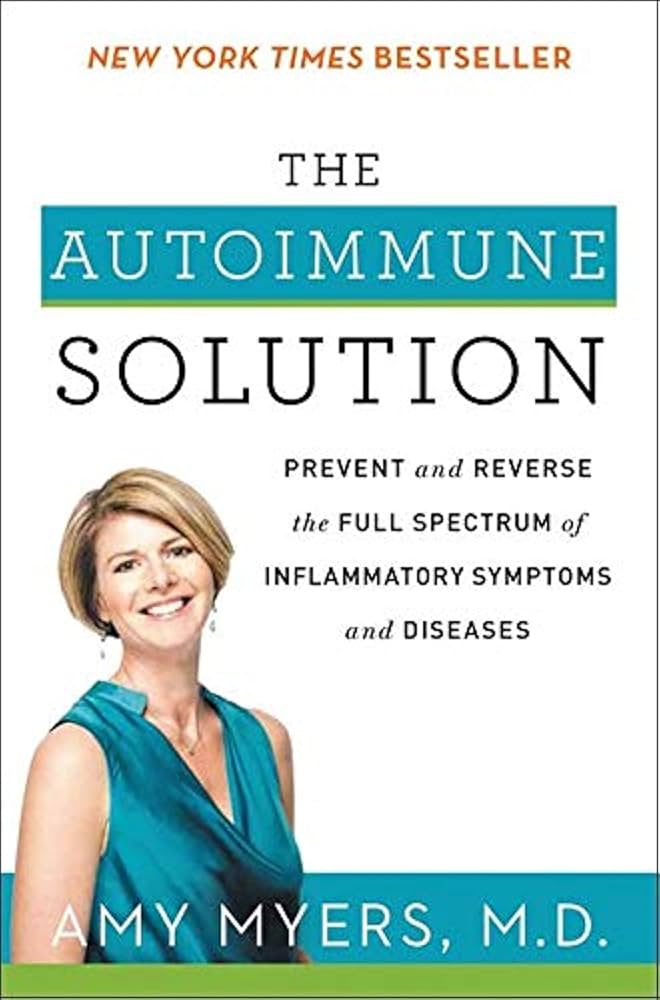
Autoimmune disease does not announce itself with a clear villain. What it does, instead, is make the body an enemy of itself: the immune system mistakes its own tissue for a foreign threat, mounts an attack, and keeps mounting it. The conventional model offers little beyond managing that attack with immunosuppressants, and mostly tells patients this is genetic fate, a done deal.
Amy Myers, MD, was one of those patients. She developed Graves' disease, an autoimmune thyroid condition, while in medical school, and conventional medicine offered her the standard options: radioactive iodine to destroy the thyroid, or drugs to suppress its function. She chose the radioactive iodine, spent years managing what followed, and eventually found a different model through functional medicine. That personal arc is not incidental to this book. It shapes the entire frame.
"The Autoimmune Solution," first published in 2015, advances a specific argument: autoimmune conditions are not inevitable genetic sentences. They arise from a set of identifiable, addressable root causes, and the body can substantially recover when those causes are removed. Myers built a clinic in Austin around this premise, and the book is the protocol she built from her patient work.
This review covers the parts of that argument that rest on solid ground, the parts that reach further than the evidence allows, and who is genuinely served by the approach she describes.
Who Amy Myers Is
Amy Myers trained as a conventional MD with an emergency medicine background before retooling into functional medicine. She co-founded Austin UltraHealth clinic and has built one of the larger functional-medicine platforms on the internet, with a substantial patient community and supplement line.
That supplement line matters to name upfront. Myers sells thyroid supplements, gut-support formulas, and products that map directly onto the protocol she recommends in this book. The financial relationship between the clinical guidance and the products she sells is real, and it is worth holding in mind when reading her recommendations, particularly in sections where she prescribes supplementation protocols with considerable specificity. The protocol itself can be evaluated on its own terms, but the reader who notices that the supplements the book recommends are available on her website is noticing something real.
On the science side, Myers writes accessibly and cites mechanisms clearly. She is not doing original research, and she frames the book as clinical practice made public rather than peer-reviewed science.
The Core Thesis: Five Root Causes of Autoimmunity
Myers organizes the book around five categories of root cause:
Diet and leaky gut. The gut lining, when healthy, forms a tight barrier. Gliadin from gluten, chronic stress, NSAID use, infections, and dysbiosis can open gaps in that lining, a state called intestinal permeability or "leaky gut." When the barrier fails, partially digested food particles and microbial fragments pass into the bloodstream. The immune system, encountering these substances in a place they should never appear, responds with inflammation. In people with genetic susceptibility, that inflammation can eventually turn on the body's own tissue through a process called molecular mimicry, where immune antibodies meant for a foreign protein also bind a structurally similar protein in the thyroid, joints, or myelin.
Gluten specifically. Myers goes harder on gluten than most functional practitioners. She recommends 100% elimination for everyone with autoimmune disease: not a reduction, not a trial removal, but complete and permanent elimination. Her argument is that partial exposure perpetuates the immune response and that whole-food elimination is the only way to break the cycle.
Toxins. Accumulated environmental toxins, heavy metals, mycotoxins, and chemical exposures impair immune regulation and drive inflammation. The body's detox capacity, primarily through the liver, can be overwhelmed by modern chemical load.
Infections. Viral, bacterial, and parasitic infections can trigger or sustain autoimmune reactions, either through molecular mimicry or by keeping the immune system in a state of chronic activation. Myers discusses Epstein-Barr virus, Candida overgrowth, and tick-borne illness as particular contributors.
Stress. Chronic psychological stress dysregulates the cortisol-immune axis. Cortisol is meant to be anti-inflammatory in acute doses and becomes pro-inflammatory in chronic dysregulation.
These five categories compose her "Five Pillars" model. The recovery plan, which she calls the Myers Way, addresses all five simultaneously.
The Gut as Ground Zero
The gut-autoimmune connection is the strongest pillar in this book, and it deserves a real look before any assessment.
Intestinal permeability is not fringe biology. Research on tight junction proteins, the gut epithelial barrier, and the role of zonulin (a protein discovered by Alessio Fasano, MD, that regulates intestinal permeability) has built a credible mechanistic case over the past two decades. Fasano's work specifically demonstrated that gliadin from wheat triggers zonulin release and temporarily increases intestinal permeability even in people without celiac disease, though the magnitude and clinical relevance differ across individuals.
The molecular mimicry hypothesis has also accumulated evidence. In conditions like Hashimoto's thyroiditis, Graves' disease, rheumatoid arthritis, and type 1 diabetes, researchers have found antibodies that react to both pathogen-derived proteins and human tissue proteins. The immune system, primed by chronic barrier breach and infection, mounts attacks that are mistaken in ways that damage the host.
Myers is not inventing these mechanisms. She is building a clinical protocol around real biology. If the gut barrier is the primary site where foreign antigens enter systemic circulation, and if molecular mimicry is a real driver of autoimmune initiation, then healing the barrier and removing dietary antigenic triggers should reduce the immune burden driving the disease. That logic is coherent. It is the basis for most elimination-based autoimmune protocols in functional medicine, including the AIP (Autoimmune Protocol) diet that predates and overlaps with Myers' approach.
Her clinical reports, while not controlled trials, align with what multiple functional-medicine practitioners have reported: patients with thyroid conditions, rheumatoid arthritis, lupus, and multiple sclerosis who implement comprehensive dietary and gut-healing protocols frequently see meaningful reductions in symptoms and, in some cases, in antibody levels. These are not cures in the conventional sense. They are modulations of an ongoing condition through sustained removal of what appears to be driving it.
The Myers Way Protocol in Practice
The practical program runs in stages.
Diet. Remove gluten completely, along with dairy, eggs, grains, legumes, nightshades, nuts and seeds, and all processed foods. This is a 30-day elimination phase that maps closely onto the AIP elimination phase. The goal is to remove potential triggers while the gut heals.
Gut healing. Myers builds her gut repair around a "4R" framework: Remove (pathogens, inflammatory foods), Replace (digestive enzymes, stomach acid), Reinoculate (probiotics, prebiotic fiber), and Repair (nutrients that support the gut lining, including L-glutamine, zinc, and collagen). This framework was developed in integrative medicine well before her book. She applies it clearly and practically.
Infection and toxin load. Myers recommends testing for Candida overgrowth, tick-borne illness, and other common infections before supplementing for them. On toxins, she recommends reducing ongoing exposures through clean personal care products, filtered water, and careful food sourcing.
Stress and sleep. The later sections address cortisol regulation through sleep hygiene, meditation, and pacing of physical activity. These are less developed than the dietary sections but included.
Supplements. Myers' supplement recommendations are extensive: fish oil, vitamin D, probiotics, L-glutamine, digestive enzymes, and condition-specific formulas. This is where the book's credibility as purely editorial guidance gets complicated by her product line. Most of the supplements she recommends are sold on her website. That does not make them wrong, but it is context the reader should have.
Where the Science Holds
The dietary foundation of this program has earned its standing.
Gluten removal in celiac and NCGS is well established. For people with celiac disease, complete gluten removal stops the autoimmune attack on the intestinal villi and allows healing. For non-celiac gluten sensitivity, the clinical reality is real even where the mechanism is less pinned down: many patients report significant symptom improvement on removal. Myers applies this to all autoimmune patients, which is a more expansive claim, but it is not an unreasonable clinical hypothesis.
The 4R gut-healing framework is a legitimate clinical tool. Removing pathogens, restoring digestion, reintroducing beneficial flora, and supporting barrier repair is a sensible staged approach with coherent mechanisms. Nutrients like zinc and glutamine have documented roles in intestinal epithelial function.
Dietary elimination as a diagnostic tool works. Removing common antigenic foods for 30 days and then systematically reintroducing them one at a time is the gold standard for identifying food sensitivities. The result, for many patients, is a clearer picture of individual triggers than any blood test delivers.
The lifestyle factors are real. Chronic stress, poor sleep, and sedentary behavior all have documented effects on immune regulation. Myers' inclusion of these does not rely on speculative mechanisms.
Where It Overreaches
"Leaky gut causes autoimmune disease" is stronger than the evidence. Intestinal permeability is real and mechanistically interesting, but the causal direction is genuinely contested. Does increased permeability drive autoimmune disease, or does autoimmune disease and its associated inflammation drive increased permeability? Both directions are plausible and likely contribute to each other. Myers presents permeability as the primary cause when it may be one element in a more complex, bidirectional system.
The Myers Way is presented as universally applicable. Myers does not strongly stratify her protocol by disease type, genetic background, or individual variation. Autoimmune thyroid disease, rheumatoid arthritis, and multiple sclerosis are different conditions with different immune mechanisms, different triggers, and different responses to dietary intervention. Some patients with autoimmune conditions do not improve on elimination-based diets, and the book does not adequately address what to do when they don't.
Supplement dosing is given as if well-validated. The specific supplement protocols are presented with clinical confidence that exceeds the research supporting them. Individual nutrients like vitamin D, zinc, and fish oil have solid evidence bases. The precise stacking, dosing, and sequencing Myers recommends carries a certainty the literature does not warrant.
The "it's not genetic fate" framing. Myers is right that genetic predisposition requires environmental inputs to produce disease, and right that removing those inputs can shift the disease trajectory. But some autoimmune conditions are strongly genetically driven, and some patients who implement every element of these protocols see limited benefit. The book does not help the reader understand when this approach is unlikely to be sufficient on its own.
Who Benefits
People in the early stages of autoimmune disease or with elevated antibodies without a full diagnosis. If immune dysregulation is just beginning, removing major dietary and environmental triggers before the disease process solidifies is a reasonable intervention. Myers' protocol gives this population something actionable before the next pharmaceutical escalation.
People with thyroid autoimmunity (Hashimoto's and Graves'). This is Myers' home ground. Her personal history, her clinical experience, and the available evidence all converge most strongly here. The gut-thyroid connection and gluten-thyroid molecular mimicry hypothesis have more research behind them than most areas she covers.
People who are already clean eaters and want a structured elimination framework. The AIP-adjacent protocol in this book is a well-organized version of something the functional medicine world has developed over many years. If you have not done a proper elimination and reintroduction, this book gives you a clear system.
People whose conventional care has plateaued on medications. Myers is explicit that this approach is meant to complement, not replace, pharmaceutical management, but for someone who has been told their only options are immunosuppressants in increasing doses, the protocol offers an additional lane.
Who Should Be Cautious
Anyone with a severe or rapidly progressing autoimmune condition should not substitute dietary protocols for medical monitoring. Myers says this, and it deserves emphasis.
The restriction protocol is demanding. Removing gluten, dairy, eggs, grains, legumes, nightshades, nuts, and seeds simultaneously for 30 days requires real dietary literacy and meal planning. People without the time or resources to execute it properly may do it partially, which can leave them feeling like they "tried it and it didn't work" without ever testing the full intervention.
People with a history of restrictive eating or orthorexia should approach a protocol this eliminative carefully. The book's framing around food purity can amplify food anxiety in people already prone to it.
The supplement stack is expensive, and the book does not clearly differentiate the essential core from the beneficial additions.
How This Fits a Real Detox Practice
The overlap between Myers' autoimmune protocol and a thorough detox practice is substantial.
The gut is the starting point in both. Healing the barrier, clearing dysbiosis, and rebuilding microbial diversity are the same first move whether you are addressing autoimmunity or general toxic load. The gut detox complete guide covers this foundation in depth.
Elimination diet is the diagnostic core. Removing major inflammatory foods and reintroducing them systematically is how you find your personal triggers: not by testing, not by guessing, but by controlled removal and challenge. The elimination diet detox guide walks through how to do this without guesswork.
The autoimmune detox protocol specifically addresses the immune-gut-toxin intersection that Myers covers. See the autoimmune detox protocol for the protocols that support immune regulation alongside dietary changes.
Antibiotic history matters here. Myers repeatedly notes that prior antibiotic use disrupts the gut flora in ways that can increase autoimmune susceptibility. If you have been through significant antibiotic exposure, the detox after antibiotics guide covers the gut-restoration work that needs to happen before autoimmune protocols can work at their best.
The Bottom Line
"The Autoimmune Solution" is one of the more coherent functional-medicine autoimmune books available, and its core program, diet, gut healing, toxin reduction, and stress management, rests on real mechanisms rather than invented ones.
Myers overreaches in places. She presents the leaky gut mechanism as more established than the literature warrants, applies a single protocol to highly diverse conditions, and sells supplements that create a financial interest in the program she recommends. None of this invalidates the dietary core. The elimination protocol is a legitimate tool. The gut-healing framework is sound. The instruction to remove gluten completely rather than partially is defensible, even if the supporting evidence is stronger for some patients than others.
The people most likely to benefit are those with thyroid autoimmunity, those in the early stages of an autoimmune condition who want to address root causes before escalating to stronger pharmaceuticals, and those who have never done a proper elimination-diet protocol and want a structured version of one. For people already managing established autoimmune disease with medication, the book is a reasonable adjunct, not a replacement for medical oversight.
Read it as a well-developed functional-medicine protocol from a practitioner who lived through what she is treating, with appropriate skepticism toward the more expansive causal claims and the supplement recommendations that align with her product line. The dietary and gut-healing foundation beneath those layers is the valuable core.
Related MadWorldDetox Guides
- Autoimmune Detox Protocol - Structured immune-gut-toxin approach to autoimmune management
- Elimination Diet Detox Guide - How to run a proper elimination and reintroduction to find your triggers
- Gut Detox Complete Guide - Rebuilding the gut barrier and microbial diversity from the ground up
- Detox After Antibiotics Guide - Restoring the gut flora that prior antibiotic use has flattened
Products Mentioned
The Book:
The Autoimmune Solution - Amy Myers, MD. Comprehensive functional-medicine protocol for reversing and preventing autoimmune conditions.
Affiliate Disclosure: This review contains affiliate links. We may earn a small commission on purchases made through these links at no additional cost to you. We only recommend books and products we've researched and believe provide value. Our assessment of the book itself is independent of any affiliate relationship.
Last updated: June 2026