Book Review: Clean: The Revolutionary Program to Restore the Body's Natural Ability to Heal Itself by Alejandro Junger, MD
Last updated: June 2026 Reading time: 15 minutes
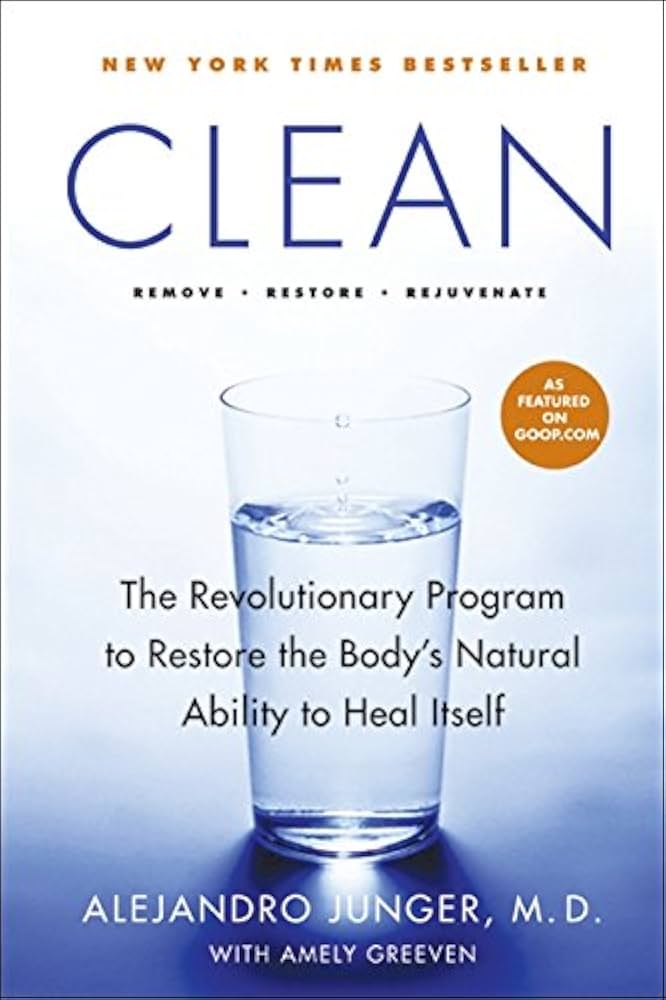
Alejandro Junger was a cardiologist working in a Manhattan hospital when his body started failing him. Irritable bowel. Depression. Insomnia. He was thirty-something, fit by most measures, and running on antidepressants, sleep aids, and allergy medication. He was the specialist writing the prescriptions and unable to fix himself.
What followed was a pivot most physicians don't make. Junger went back to school, essentially, studying Ayurvedic medicine, functional medicine, and the detoxification science he hadn't been taught at medical school. He moved from Manhattan to India to Los Angeles. He developed and ran the Clean Program on himself, on his patients, and eventually on a celebrity clientele that gave it reach. Gwyneth Paltrow credited it publicly. A Vogue feature arrived. The waiting list got long before the book existed.
"Clean" was published with that momentum behind it, and it became the most widely known detox program of its era. It introduced the elimination diet, intermittent fasting windows, and detox supplementation to a mainstream audience that would never have picked up a parasite cleanse manual or a colon hydrotherapy guide. Its genius, if you want to call it that, was translation. Junger took functional medicine thinking that had been developing in clinics for two decades and wrote it in plain English for people whose only prior detox framework was a juice cleanse they'd abandoned on day two.
The result is a program with real structure, real evidence behind its core pillars, and real limitations worth naming. This review covers what the Clean Program actually involves, where it holds up, where the marketing outpaces the science, and who it's genuinely built for.
Who Junger Is and Why It Matters
Junger's credentials matter because they set the frame for how to read the book.
He trained as a cardiologist and gastroenterologist. This is not a book written by a nutritionist or a health coach. His medical training is evident throughout in the way he explains physiology, discusses the liver's role in detoxification, and describes gut function. When he writes about the mechanisms behind an elimination diet, he's drawing on a clinical framework that predates the Clean Program.
After his own health crisis, he trained in Ayurvedic medicine and completed further study in functional medicine, a discipline that focuses on root-cause investigation rather than symptom management. Functional medicine tends to take seriously things like gut permeability, toxin accumulation, and the systemic effects of food sensitivities in ways conventional cardiology does not.
His clinic work preceded the book. The program in the book is a documented version of what he ran with patients, which means the protocols have been iterated against actual human responses, not just theorized on paper.
None of this makes every claim in the book correct. But it does mean this is worth distinguishing from the wellness books written by people with a podcast and a supplement line. Junger's starting point is clinical, and that shapes what the book gets right.
The Architecture of the Clean Program
The Clean Program rests on three structural pillars, and understanding each one separately is the cleaner way to evaluate the book than treating it as a single package.
The Elimination Diet
The program removes the foods most commonly associated with inflammatory responses and gut irritation for a sustained period. This includes gluten, dairy, corn, eggs, soy, processed sugar, alcohol, caffeine, and a handful of other items. The list covers most of what functional medicine practitioners have identified as high-sensitivity foods for many people.
The mechanism here is straightforward and well-supported. Many people carry undiagnosed food sensitivities that produce chronic low-grade inflammation without the immediate, dramatic symptoms of a true allergy. The only reliable way to identify these sensitivities is to remove the suspect foods, wait for the gut lining to settle, and then reintroduce them one at a time while watching for responses. This is the elimination-reintroduction protocol, and it has been standard in functional medicine and allergy medicine for decades. Junger did not invent it. He packaged it well and gave it a narrative.
The book's elimination diet is also a whole-foods diet by default. When you remove that many processed categories, what remains is fruits, vegetables, some grains, legumes, and clean proteins. People on the Clean Program frequently feel better not because toxins are leaving but because they've shifted from a processed-food diet to a nutrient-dense one. This is worth naming, because "feeling better" after elimination does not automatically confirm that those specific foods were problematic for you. The reintroduction phase is where the actual information lives, and it requires the discipline to run it properly.
Our elimination diet detox guide covers the full protocol, including how to run reintroduction correctly.
The Intermittent Fasting Window
The Clean Program structures two of the three daily meals as liquid (smoothies, soups, juices) and one as solid. More importantly, it schedules eating within a 12-hour window, with a 12-hour overnight fast between dinner and breakfast.
This was ahead of the mainstream curve when the book first appeared. Intermittent fasting research has since produced a substantial body of literature on metabolic effects, cellular cleanup processes, and the role of fasting in giving the digestive system genuine rest. The specific mechanism Junger emphasizes is the Migrating Motor Complex (MMC), the wave of muscular contractions that moves through the intestines during fasting states to sweep bacteria, debris, and matter downstream. The MMC requires roughly four hours of fasting to activate and runs in cycles through the night if you're not snacking. Grazing constantly suppresses it.
This is real physiology. The MMC is well-documented. Whether a 12-hour window is sufficient to produce therapeutic effects depends on the individual, their baseline metabolic state, and what they're trying to address. The fasting literature increasingly suggests that 16-hour windows produce more robust effects for certain goals. Junger's 12-hour target is the accessible, lowest-friction version rather than the most potent one.
For a deeper look at fasting applied to detox specifically, the intermittent fasting detox guide covers the range of protocols and what each window actually does.
The Supplement Stack
The third pillar is where the book gets more complicated. Junger recommends a supplement protocol to support liver phase-one and phase-two detoxification pathways, gut barrier repair, and overall cellular function during the program. The supplement stack in the book includes items like milk thistle, NAC (N-acetyl cysteine), magnesium, and other nutrients.
The case for this pillar is softer than the case for the first two. The liver detox pathway logic has mechanistic plausibility: phase-two conjugation reactions do require specific nutrients as cofactors, and deficiencies in those nutrients do impair the liver's ability to process and eliminate compounds. The question is whether most people doing a 21-day program have deficiencies significant enough to warrant supplementation, and whether the specific products Junger sells through his website are necessary versus a quality multivitamin and a clean diet accomplishing much of the same thing.
This is also where the business model appears. Junger offers branded supplement kits through the Clean Program website. The book was published before that business was fully developed, but the supplement narrative in the book clearly serves a commercial architecture. This doesn't make the supplements harmful or the supplements wrong, but it's worth holding the supplement claims to a higher standard than the elimination diet and fasting claims, which stand independent of any product purchase.
What the Science Actually Supports
Strip the Clean Program to its most verifiable components, and a clear picture emerges.
The elimination diet has strong clinical support. The elimination-reintroduction protocol is not alternative medicine. It is used by gastroenterologists, allergists, and functional medicine physicians to identify food sensitivities, manage irritable bowel syndrome, reduce migraine frequency, and address a range of inflammatory conditions. Junger's version is a legitimate adaptation of this tool. The 21-day window gives the gut wall time to settle after removal of irritants, which is appropriate.
The fasting window is supported. A 12-hour overnight fast is the minimum end of what the intermittent fasting literature studies, but the underlying physiology is real. Gut rest matters. The MMC exists. People who eat late, snack overnight, and wake to immediate breakfast give their intestines essentially no rest. The program's structure corrects this.
The whole-foods shift is doing a lot of work. This deserves its own acknowledgment. A meaningful fraction of the results attributed to the Clean Program likely comes from the shift away from processed food, seed oils, alcohol, and refined sugar, regardless of specific supplement protocols. Isolating which component is producing benefit in a 21-day combined intervention is not something the book attempts, and it's worth the reader holding that loosely.
The toxin elimination narrative is more speculative. Junger writes about the program helping the body eliminate accumulated environmental toxins through enhanced liver function and reduced toxic load from food. The liver does process environmental toxins; reducing dietary toxic load does give it more bandwidth; supporting phase-two pathways is mechanistically reasonable. But the specific claim that a 21-day program measurably reduces the body burden of accumulated environmental chemicals is not established by the book. There are no before-and-after biomarker studies showing reduced toxin levels in Clean Program participants. The narrative is plausible and partly grounded, but it outruns the evidence Junger can actually cite.
The Supplement Stack Question
The supplement angle deserves its own treatment because it's the most contested part of the book, commercially and scientifically.
Junger's argument for specific supplementation during a detox program is that modern food supply doesn't provide adequate cofactors for optimal liver detoxification, and that the Clean Program's increased mobilization of stored toxins requires extra support for phase-two elimination pathways. This is a standard functional medicine argument. It has legitimate practitioners behind it.
The problem is specificity. The argument for supporting liver detox pathways with nutrients is not the same as the argument for buying the Clean Program branded supplement kit. Many of the nutrients Junger recommends appear in high-quality whole foods. Others are available as single supplements far cheaper than branded bundles.
The more important supplement question: do you need anything beyond the elimination diet and fasting window? Probably not, for most people starting the program. The biggest changes happen from removing the inflammatory foods and implementing the fasting structure. From there, specific supplementation may help specific individuals with specific deficiencies. Whether those supplements should be Junger's products or individually sourced based on personal bloodwork is a question the book doesn't engage with neutrally, for obvious reasons.
For gut barrier support specifically, the gut detox complete guide covers the core interventions with and without supplements.
What the Book Gets Right That's Easy to Miss
The most underrated section in "Clean" is the opening argument about symptom normalization. Junger walks through a list of common complaints that most people have adapted to as simply how they feel: brain fog in the afternoon, poor sleep, low energy, bloating after meals, skin issues, mild depression, weight that doesn't move. He argues that these are not the baseline of a well human body. They are signals.
This reframing is clinically useful regardless of whether you do the Clean Program. The medical system tends to require symptoms to cross a pathological threshold before investigating them. Functional medicine operates on the premise that sub-threshold symptoms often have addressable causes. Junger makes that premise accessible to a lay reader in a way that doesn't require them to enter the world of parasite protocols or mold toxicity. That's a legitimate contribution.
The book also connects gut health to systemic symptoms effectively, especially for readers who've never encountered the concept that what happens in the intestine does not stay in the intestine. The leaky gut chapter, written in 2009 before the phrase was everywhere, reads as prescient. The gut barrier science has developed significantly since then, and the basic premise Junger outlines has held up.
Who Benefits and Who Should Be Cautious
The Clean Program tends to help:
People who are on the standard Western diet and have never done any structured elimination period. Even a modest version of the Clean Program represents a significant shift from processed food to whole food, and much of the benefit flows from that alone.
People with vague, chronic symptoms that haven't been investigated through a dietary lens. The elimination-reintroduction framework is genuinely diagnostic. If you complete it properly, you learn things about your own physiology.
People who need a social container for making dietary changes. The 21-day program with a community around it provides structure and accountability that pure willpower-based approaches don't.
People curious about fasting who want a very accessible entry point. The 12-hour window is the gentlest starting point in the literature.
The program is less suited for:
People with significant gut dysfunction, including SIBO, parasitic infection, or fungal overgrowth. The Clean Program is upstream of those conditions. Its elimination diet and fasting support a healthier gut environment, but the program is not designed to address active infections or dysbiosis. Before assuming the Clean Program will fix gut symptoms, it's worth ruling out those underlying issues.
People expecting weight loss as a primary outcome. Weight change happens, but the program is not designed as a weight-loss intervention, and framing it that way sets up outcomes that may not materialize reliably.
People who want peer-reviewed evidence for each specific claim. The elimination diet protocol has it; much of the supplement narrative does not.
Anyone with a history of disordered eating. The restrictive structure can be activating for people with that history, and the program doesn't address this adequately.
How It Fits a Real Detox Practice
For someone building a genuine, layered detox practice, the Clean Program works best as a foundation layer, not a destination.
The elimination diet and fasting window are legitimate first steps toward identifying food sensitivities and giving the gut wall a chance to settle. They create the cleaner baseline from which more specific work can happen. If you run a parasite protocol in a body still flooded with inflammatory food inputs, you're working against yourself. If you run a liver flush on a diet that keeps maxing out liver phase-one pathways, you're similarly working upstream. The Clean Program, taken as a dietary and metabolic reset rather than a complete detox system, earns its place.
After the 21-day elimination period and a proper reintroduction, the real work becomes clearer. The juice fasting complete guide covers how to extend the fasting component into more intensive territory. The elimination diet detox guide covers the reintroduction phase that the book underserves. From there, the more specific work, gut pathogens, binders, liver support, heavy metals, has a cleaner environment to operate in.
The Clean Program is a good first book for someone entering this world from the mainstream. It will not be the last book they need.
The Bottom Line
"Clean" is the most accessible serious entry point in the detox literature. Junger's medical background keeps it from drifting into territory that a layperson book on detox often reaches, and his personal story gives the protocols credibility that a purely clinical tone would lack. The elimination diet and fasting window are well-conceived and evidence-supported. The reframe of chronic sub-threshold symptoms as addressable rather than normal is genuinely useful.
The supplement stack is the weakest pillar, commercially motivated enough to hold at arm's length unless specific bloodwork or symptoms indicate a particular deficiency. The toxin elimination narrative is plausible but outruns the evidence the book can actually supply. The reintroduction phase is underserved relative to its diagnostic importance.
Read "Clean" as the legitimate clinical-mainstream bridge it is. The people who will benefit most are those who've never engaged with food as a therapeutic variable, who carry chronic low-grade symptoms they've normalized, and who need a 21-day structure to change patterns that willpower alone hasn't moved. For that audience, the program works well. For someone already past that threshold and working on more specific dysfunction, it's a good review of the foundations rather than the next step forward.
Related MadWorldDetox Guides
- Elimination Diet Detox Guide - How to run the elimination-reintroduction protocol properly, including the reintroduction phase the book underserves
- Intermittent Fasting and Detox - The fasting window research and which protocols produce which effects
- Gut Detox Complete Guide - Building on the Clean Program's gut foundation with more specific interventions
- Juice Fasting Complete Guide - Extending the liquid meal structure into more intensive fasting territory
Products Mentioned
The Book:
Clean: The Revolutionary Program to Restore the Body's Natural Ability to Heal Itself - Alejandro Junger, MD. The mainstream gateway detox program: elimination diet, intermittent fasting window, and supplement support, written by a cardiologist who developed the protocol in clinical practice.
Affiliate Disclosure: This review contains affiliate links. We may earn a small commission on purchases made through these links at no additional cost to you. We only recommend books and products we've researched and believe provide value. Our assessment of the book itself is independent of any affiliate relationship.
Last updated: June 2026